What does 1 Kings 16:6 mean?
“So Baasha slept with his fathers, and was buried in Tirzah: and Elah his son reigned in his stead.” — 1 Kings 16:6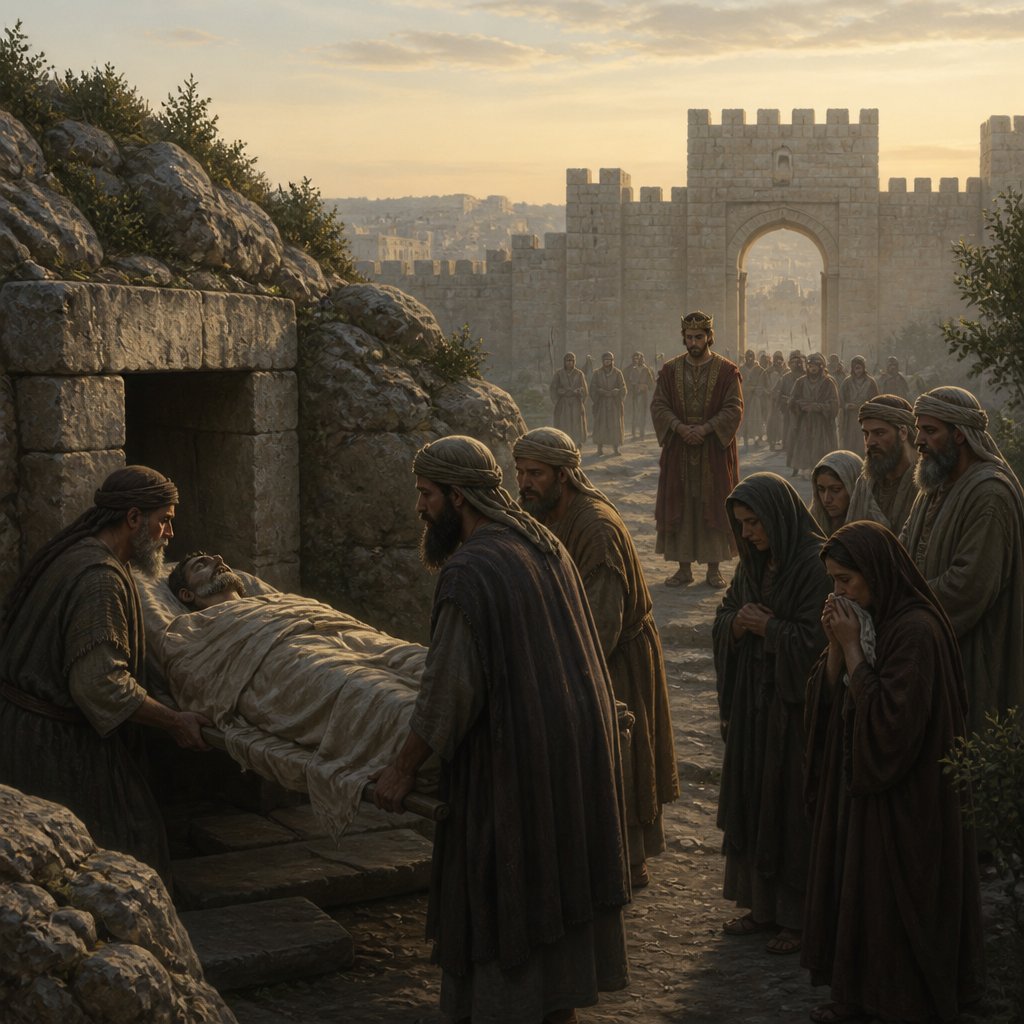
1 Kings 16:6 (KJV) - "So Baasha slept with his fathers, and was buried in Tirzah: and Elah his son reigned in his stead."
This verse comes from the Old Testament book of 1 Kings, which chronicles the history of the kings of Israel and Judah. In this specific verse, Baasha, the king of Israel, has died, and his son Elah has assumed the throne after him. This passage is significant in the context of 1 Kings 16, which describes the reigns of various kings and political turmoil in ancient Israel.
To fully comprehend the meaning and significance of 1 Kings 16:6, it is important to examine its context within the larger narrative of 1 Kings. In the preceding verses, the author describes the ascension of Baasha to the throne of Israel and his subsequent reign. Baasha is depicted as a tyrant who gains power through bloodshed and deception. His reign is marked by corruption and moral decay, leading to God's judgment against him and his dynasty. This sets the stage for the rise of his son Elah as the new king of Israel.
The verse 1 Kings 16:6 sheds light on the theme of succession and the consequences of leadership. It illustrates the transient nature of power and the succession of leaders in ancient Israel. Baasha's death and the ascension of Elah symbolize the cyclical nature of leadership and the inevitable passing of the torch from one generation to the next. This theme reinforces the idea that no earthly ruler is immune to mortality and that all leaders must eventually yield their power to their successors.
Additionally, the verse also highlights the concept of divine judgment and retribution. Baasha's death can be seen as a result of his sinful and oppressive rule, as God's punishment for his transgressions. This serves as a cautionary tale about the importance of righteous leadership and the consequences of moral corruption. The verse emphasizes that God holds rulers accountable for their actions and that divine justice will ultimately prevail.
Symbolism plays a significant role in this verse as well. The mention of Baasha being "buried in Tirzah" carries symbolic weight. Tirzah was a city associated with idolatry and immorality, and Baasha being buried there may symbolize his spiritual and moral degradation. It serves as a metaphor for the consequences of his sinful reign, as his legacy is left to decay in a place of spiritual corruption.
Furthermore, the succession of Elah as the new king also symbolizes hope for a fresh start and the potential for positive change. His reign represents the possibility of a new beginning and the chance to rectify the mistakes of his predecessor. This symbolizes the resilience and adaptability of the Israelite monarchy, as it continues to endure and evolve despite the challenges it faces.
In conclusion, 1 Kings 16:6 holds deep thematic, contextual, and symbolic significance within the larger narrative of 1 Kings. It serves as a poignant reminder of the transient nature of power, the consequences of leadership, and the enduring presence of divine justice. Through its exploration of succession, divine judgment, and symbolism, this verse provides timeless lessons about the nature of rulership and the importance of moral righteousness in leadership.
Get our apps


Artwork for 1 Kings 16:6

1 Kings 16:6 - "So Baasha slept with his fathers, and was buried in Tirzah: and Elah his son reigned in his stead."
"So Baasha slept with his fathers, and was buried in Tirzah: and Elah his son reigned in his stead." - 1 Kings 16:6

1 Timothy 6:15-16 – "God, the blessed and only Ruler, the King of kings and Lord of lords."

1 Timothy 6:15-16 – "God, the blessed and only Ruler, the King of kings and Lord of lords."
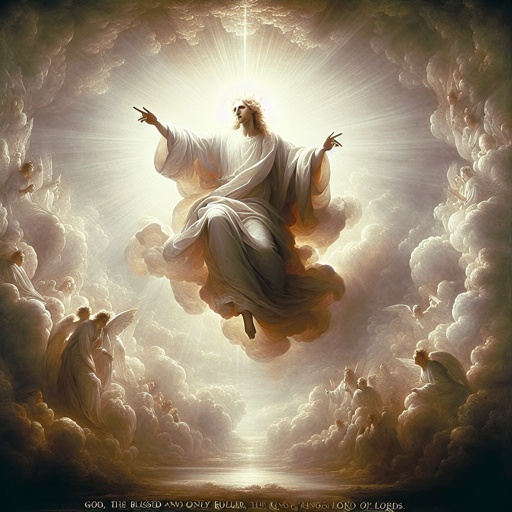
1 Timothy 6:15-16 – "God, the blessed and only Ruler, the King of kings and Lord of lords."

1 Timothy 6:15-16 – "God, the blessed and only Ruler, the King of kings and Lord of lords."

1 Timothy 6:15-16 – "God, the blessed and only Ruler, the King of kings and Lord of lords."

1 Kings 6:16 - "And he built twenty cubits on the sides of the house, both the floor and the walls with boards of cedar: he even built them for it within, even for the oracle, even for the most holy place."

2 Kings 6:16 - "And he answered, Fear not: for they that be with us are more than they that be with them."

1 Kings 20:16 - "And they went out at noon. But Ben-hadad was drinking himself drunk in the pavilions, he and the kings, the thirty and two kings that helped him."

2 Kings 16:6 - "At that time Rezin king of Syria recovered Elath to Syria, and drave the Jews from Elath: and the Syrians came to Elath, and dwelt there unto this day."

1 Kings 16:14 - "Now the rest of the acts of Elah, and all that he did, are they not written in the book of the chronicles of the kings of Israel?"

1 Kings 1:16 - "And Bath-sheba bowed, and did obeisance unto the king. And the king said, What wouldest thou?"

1 Kings 4:16 - "Baanah the son of Hushai was in Asher and in Aloth:"

1 Kings 16:1 - "Then the word of the LORD came to Jehu the son of Hanani against Baasha, saying,"

1 Kings 16:20 - "Now the rest of the acts of Zimri, and his treason that he wrought, are they not written in the book of the chronicles of the kings of Israel?"

1 Kings 16:5 - "Now the rest of the acts of Baasha, and what he did, and his might, are they not written in the book of the chronicles of the kings of Israel?"

1 Timothy 6:15-16 - "which God will bring about in his own time—God, the blessed and only Ruler, the King of kings and Lord of lords, who alone is immortal and who lives in unapproachable light, whom no one has seen or can see. To him be honor and might forever. Amen."

1 Kings 15:16 - "¶ And there was war between Asa and Baasha king of Israel all their days."

1 Kings 6:28 - "And he overlaid the cherubims with gold."

1 Kings 6:11-13

1 Kings 8:6-8

1 Kings 6:11-13

1 Kings 6:11-13

1 Kings 6:11-13

1 Kings 6:11-13

1 Kings 6:14 - "So Solomon built the house, and finished it."

1 Kings 6:11 - "¶ And the word of the LORD came to Solomon, saying,"

1 Kings 3:16 - "¶ Then came there two women, that were harlots, unto the king, and stood before him."

1 Kings 16:27 - "Now the rest of the acts of Omri which he did, and his might that he shewed, are they not written in the book of the chronicles of the kings of Israel?"