What does 1 Kings 17:7 mean?
“And it came to pass after a while, that the brook dried up, because there had been no rain in the land.” — 1 Kings 17:7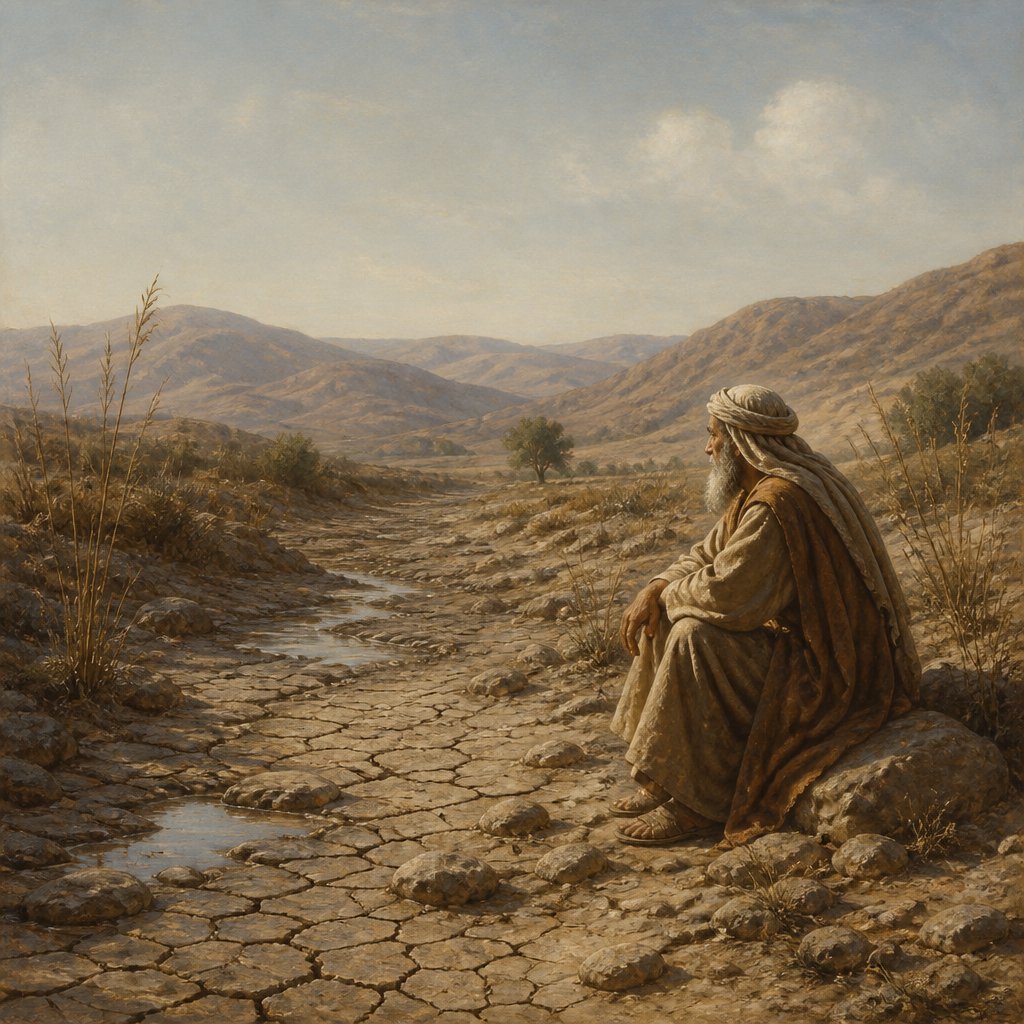
The Bible verse 1 Kings 17:7 in the King James Version reads, "And it came to pass after a while, that the brook dried up, because there had been no rain in the land." This verse is part of the story of the prophet Elijah, who was instructed by God to confront King Ahab and declare a drought in the land as a punishment for the people's disobedience.
This verse serves as a pivotal moment in the narrative, as it marks the culmination of the drought that was announced by Elijah. The drying up of the brook serves as a physical manifestation of the consequences of the people's disobedience and the fulfillment of God's judgment.
One of the central themes of this verse is the power and sovereignty of God. The drying up of the brook is a clear demonstration of God's ability to control the natural elements and to bring about consequences for human actions. It emphasizes the idea that God is in control of all things, and that His will and judgment will ultimately prevail. This can serve as a reminder for believers to trust in God's power and providence, even in times of difficulty and scarcity.
Another important theme in this verse is the concept of faith and obedience. In the preceding verses, Elijah obeyed God's command to declare a drought in the land, even though it was a difficult and risky task. The drying up of the brook represents the faithfulness of God to fulfill His promises, as well as the need for individuals to remain faithful and obedient to God's commandments, even in the face of adversity.
The context of this verse is also significant. It comes immediately after Elijah was sent by God to the Kerith Ravine, where he was commanded to drink from the brook and was provided with food by ravens. This miraculous provision demonstrated God's care and provision for Elijah, even in the midst of a widespread drought. However, when the brook dried up, it presented a new challenge for Elijah and required him to once again trust in God's provision and guidance.
In terms of symbolism, the brook drying up can be seen as a metaphor for the spiritual dryness that can occur in the lives of believers. Just as the physical sustenance provided by the brook came to an end, believers may encounter seasons of spiritual drought and difficulty. This verse can serve as a reminder that God is able to sustain and provide for His people even in the midst of scarcity, and that they can trust in His faithfulness to see them through challenging times.
Overall, 1 Kings 17:7 in the King James Version is a verse that carries profound themes of God's power and sovereignty, faith and obedience, as well as trust in His provision. It serves as a pivotal moment in the narrative of Elijah and the drought, and offers valuable insights for believers about the nature of God and His relationship with His people.
Get our apps


Artwork for 1 Kings 17:7

1 Kings 17:7 - "And it came to pass after a while, that the brook dried up, because there had been no rain in the land."
"And it came to pass after a while, that the brook dried up, because there had been no rain in the land." - 1 Kings 17:7

1 Kings 7:17 - "And nets of checker work, and wreaths of chain work, for the chapiters which were upon the top of the pillars; seven for the one chapiter, and seven for the other chapiter."

Daniel 7:17 - "These great beasts, which are four, are four kings, which shall arise out of the earth."

1 Kings 4:17 - "Jehoshaphat the son of Paruah, in Issachar:"

1 Kings 7:27-38

1 kings 8:7

1 Kings 21:17 - "¶ And the word of the LORD came to Elijah the Tishbite, saying,"

1 Kings 17:8 - "¶ And the word of the LORD came unto him, saying,"

1 Kings 6:17 - "And the house, that is, the temple before it, was forty cubits long."

1 Kings 17:2 - "And the word of the LORD came unto him, saying,"

1 Kings 9:17 - "And Solomon built Gezer, and Beth-horon the nether,"
1 kings 7:8

1 kings 8:7

1 Kings 8:7

1 Kings 7:27-38

1 Kings 17:17 - "¶ And it came to pass after these things, that the son of the woman, the mistress of the house, fell sick; and his sickness was so sore, that there was no breath left in him."

1 Kings 7:43 - "And the ten bases, and ten lavers on the bases;"

1 Kings 7:13 - "¶ And king Solomon sent and fetched Hiram out of Tyre."

1 Kings 16:17 - "And Omri went up from Gibbethon, and all Israel with him, and they besieged Tirzah."

1 Kings 12:17 - "But as for the children of Israel which dwelt in the cities of Judah, Rehoboam reigned over them."

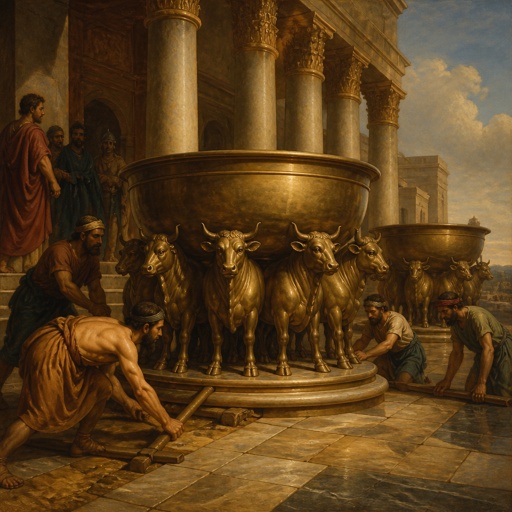
1 Kings 7:44 - "And one sea, and twelve oxen under the sea;"

1 Kings 8:17 - "And it was in the heart of David my father to build an house for the name of the LORD God of Israel."

1 Kings 5:17 - "And the king commanded, and they brought great stones, costly stones, and hewed stones, to lay the foundation of the house."

"Jehoshaphat the son of Paruah, in Issachar:" - 1 Kings 4:17
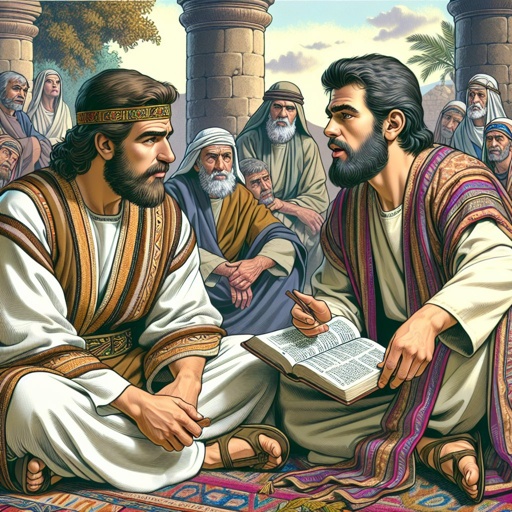
1 Kings 1:7 - "And he conferred with Joab the son of Zeruiah, and with Abiathar the priest: and they following Adonijah helped him."

1 Kings 17:22 - "And the LORD heard the voice of Elijah; and the soul of the child came into him again, and he revived."

1 Kings 17:4 - "And it shall be, that thou shalt drink of the brook; and I have commanded the ravens to feed thee there."

1 Kings 7:1 - "But Solomon was building his own house thirteen years, and he finished all his house."

1 Kings 15:7 - "Now the rest of the acts of Abijam, and all that he did, are they not written in the book of the chronicles of the kings of Judah? And there was war between Abijam and Jeroboam."