What does 1 Kings 18:18 mean?
“And he answered, I have not troubled Israel; but thou, and thy father’s house, in that ye have forsaken the commandments of the LORD, and thou hast followed Baalim.” — 1 Kings 18:18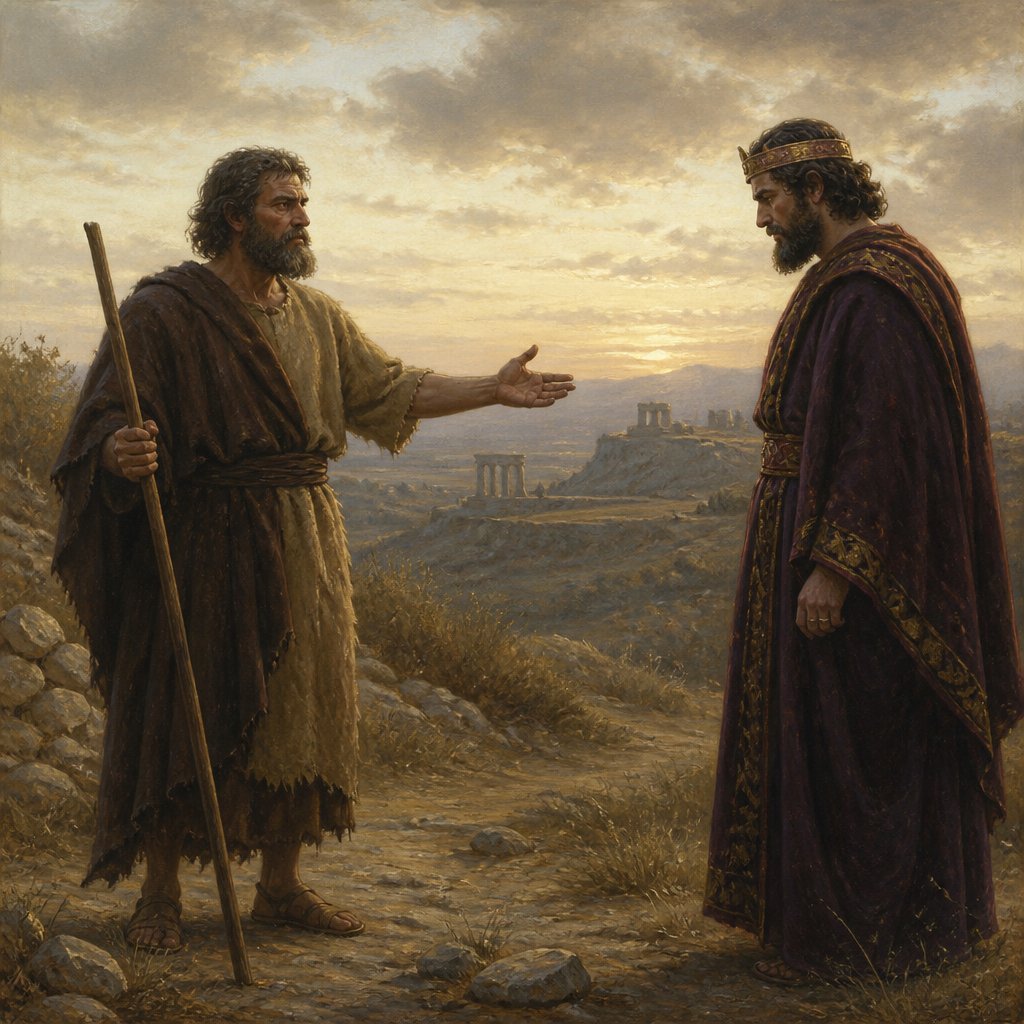
1 Kings 18:18 (KJV) says, "And he answered, I have not troubled Israel; but thou, and thy father's house, in that ye have forsaken the commandments of the Lord, and thou hast followed Baalim." This verse occurs during a pivotal and dramatic moment in the history of Israel, where the prophet Elijah confronts King Ahab and challenges the prophets of Baal on Mount Carmel. This verse encapsulates the conflict between the worship of the one true God and the idolatrous practices of the Israelites, and it sheds light on the themes of obedience, faithfulness, and the consequences of turning away from God.
The historical context of 1 Kings 18:18 is crucial for understanding its significance. During this time, Ahab was the king of Israel, and he and his wife, Jezebel, had led the nation into rampant idolatry. They had forsaken the true worship of God and had instead embraced the worship of Baal, a pagan Canaanite deity. This had led to a spiritual and moral decay within the nation, with widespread corruption and disobedience to the commandments of the Lord. In response to this widespread apostasy, God raised up the prophet Elijah to confront the king and the people and to call them to repentance.
In the verse, Elijah's words to Ahab are pointed and confrontational. He charges Ahab with being the cause of trouble in Israel, as he and his father's house had forsaken the commandments of the Lord and had followed Baalim. This accusation gets to the heart of the spiritual and moral crisis facing the nation. Ahab's leadership and personal choices had led the people astray, and the consequences were severe. The land was experiencing a severe drought, which was a direct result of the judgment of God for the nation's sin. As such, Elijah's words carry the weight of prophetic authority and divine judgment.
The themes of obedience and faithfulness to God are central to this verse. The contrast between the commandments of the Lord and the worship of Baalim highlights the importance of worshiping the one true God and following His ways. Throughout the Old Testament, God consistently calls His people to be faithful and to obey His commandments. The worship of false gods and the pursuit of worldly desires are seen as a betrayal of God and are met with divine judgment. Elijah's bold confrontation of Ahab serves as a powerful reminder of the consequences of turning away from God and the importance of remaining faithful to Him.
Furthermore, this verse also symbolizes the ongoing struggle between good and evil, between true worship and idolatry. Ahab and Jezebel's promotion of Baal worship represented a direct challenge to the authority and sovereignty of God. Their actions were seen as an affront to God's holiness, and He responded with judgment. The showdown on Mount Carmel, which follows this confrontation, serves as a dramatic demonstration of the power and supremacy of the one true God over false idols. Through fire from heaven, God confirms His presence and vindicates Elijah as His prophet, leading to a great revival among the people and the defeat of the prophets of Baal.
In conclusion, 1 Kings 18:18 is a powerful and confrontational verse that captures the overarching themes of obedience, faithfulness, and the consequences of turning away from God. It symbolizes the ongoing struggle between the worship of the one true God and the allure of idolatry. The historical context of the verse provides insight into the spiritual and moral crisis facing Israel and the prophetic call to repentance and revival. Ultimately, this verse underscores the importance of remaining faithful to God and the dire consequences of forsaking His commandments.
Get our apps


Artwork for 1 Kings 18:18

1 Kings 18:18 - "And he answered, I have not troubled Israel; but thou, and thy father's house, in that ye have forsaken the commandments of the LORD, and thou hast followed Baalim."
"And he answered, I have not troubled Israel; but thou, and thy father's house, in that ye have forsaken the commandments of the LORD, and thou hast followed Baalim." - 1 Kings 18:18

1 Kings 19:1-18

1 Kings 4:18 - "Shimei the son of Elah, in Benjamin:"

1 Kings 9:18 - "And Baalath, and Tadmor in the wilderness, in the land,"

1 Kings 1:18 - "And now, behold, Adonijah reigneth; and now, my lord the king, thou knowest it not:"

2 Kings 1:18 - "Now the rest of the acts of Ahaziah which he did, are they not written in the book of the chronicles of the kings of Israel?"

1 Kings 10:18 - "¶ Moreover the king made a great throne of ivory, and overlaid it with the best gold."

1 Kings 2:18 - "And Bath-sheba said, Well; I will speak for thee unto the king."

1 Kings 18:2 - "And Elijah went to shew himself unto Ahab. And there was a sore famine in Samaria."

Elijah in the scene 1 Kings 18:36–38

1 Kings 18:35 - "And the water ran round about the altar; and he filled the trench also with water."

1 Kings 18:11 - "And now thou sayest, Go, tell thy lord, Behold, Elijah is here."

"Shimei the son of Elah, in Benjamin:" - 1 Kings 4:18

"And Baalath, and Tadmor in the wilderness, in the land," - 1 Kings 9:18

1 Kings 18:16 - "So Obadiah went to meet Ahab, and told him: and Ahab went to meet Elijah."

1 Kings 6:18 - "And the cedar of the house within was carved with knops and open flowers: all was cedar; there was no stone seen."

1 Kings 18:8 - "And he answered him, I am: go, tell thy lord, Behold, Elijah is here."

1 Kings 18:41 - "¶ And Elijah said unto Ahab, Get thee up, eat and drink; for there is a sound of abundance of rain."

1 Kings 18:3 - "And Ahab called Obadiah, which was the governor of his house. (Now Obadiah feared the LORD greatly:"

1 Kings 18:38 - "Then the fire of the LORD fell, and consumed the burnt sacrifice, and the wood, and the stones, and the dust, and licked up the water that was in the trench."

1 Kings 18:39 - "And when all the people saw it, they fell on their faces: and they said, The LORD, he is the God; the LORD, he is the God."

1 Kings 18:46 - "And the hand of the LORD was on Elijah; and he girded up his loins, and ran before Ahab to the entrance of Jezreel."

1 Kings 18:20 - "So Ahab sent unto all the children of Israel, and gathered the prophets together unto mount Carmel."

1 Kings 5:18 - "And Solomon's builders and Hiram's builders did hew them, and the stonesquarers: so they prepared timber and stones to build the house."

1 Kings 18:14 - "And now thou sayest, Go, tell thy lord, Behold, Elijah is here: and he shall slay me."

1 Kings 18:45 - "And it came to pass in the mean while, that the heaven was black with clouds and wind, and there was a great rain. And Ahab rode, and went to Jezreel."

1 Kings 18:9 - "And he said, What have I sinned, that thou wouldest deliver thy servant into the hand of Ahab, to slay me?"

1 Kings 22:18 - "And the king of Israel said unto Jehoshaphat, Did I not tell thee that he would prophesy no good concerning me, but evil?"

1 Kings 18:17 - "¶ And it came to pass, when Ahab saw Elijah, that Ahab said unto him, Art thou he that troubleth Israel?"