What does 1 Kings 18:21 mean?
“And Elijah came unto all the people, and said, How long halt ye between two opinions? if the LORD be God, follow him: but if Baal, then follow him. And the people answered him not a word.” — 1 Kings 18:21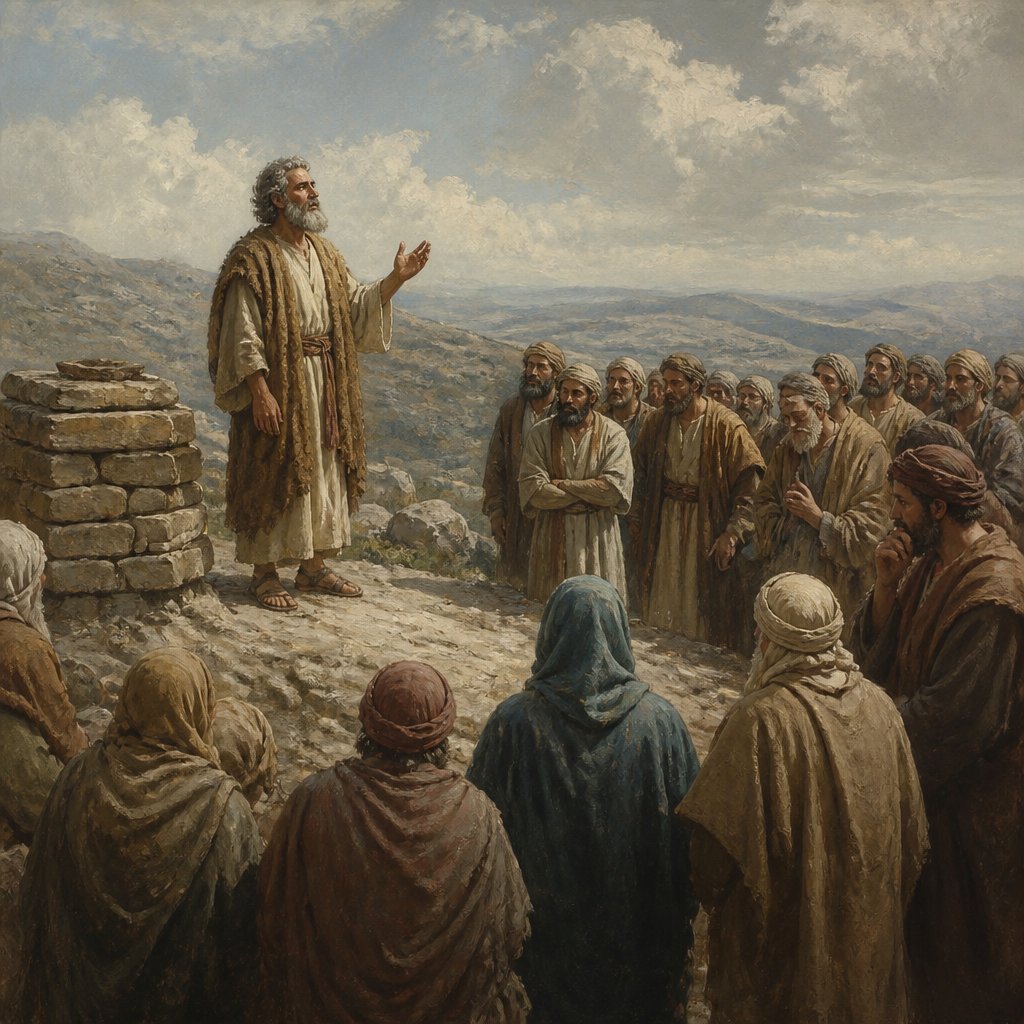
1 Kings 18:21 (KJV) states, "And Elijah came unto all the people, and said, How long halt ye between two opinions? if the Lord be God, follow him: but if Baal, then follow him. And the people answered him not a word."
This verse occurs in the context of a spiritual showdown between the prophet Elijah and the prophets of Baal. The people of Israel were divided in their loyalties, unsure whether to follow the Lord, as represented by Elijah, or the Canaanite god Baal. Elijah challenges the people to make a choice between the two, emphasizing that they cannot serve both.
The theme of this verse is the importance of making a definitive and unwavering commitment to God. Elijah's question, "How long halt ye between two opinions?" is a call for the people to stop vacillating and to decisively choose whom they will serve. This theme is relevant not only to the ancient Israelites but also to believers today, for it underscores the fundamental importance of wholehearted devotion to God.
Elijah's confrontation with the people also highlights the broader context of the Israelites' spiritual struggle during this time in history. They had turned away from the true worship of God and had been seduced by the pagan religions and practices of their Canaanite neighbors. The question Elijah poses is designed to confront their religious and moral indecision and to challenge them to recommit themselves to the Lord. This context serves to emphasize the urgency and significance of the choice that the people must make.
The symbolism in this verse is rich and multifaceted. First, it symbolizes the larger conflict between good and evil, with the choice between the Lord and Baal representing the choice between righteousness and sin. This symbolic conflict reflects the ongoing struggle of humanity to resist temptation and to remain faithful to God. The verse also symbolizes the need for individuals to take a stand for what they believe in and not simply to go along with the prevailing cultural or religious norms.
Another layer of symbolism in this verse is found in the contrast between the one true God, as represented by the Lord, and the false god Baal. The choice between the two is ultimately a choice between the genuine and the counterfeit, between the Creator and created beings. This symbolism underscores the fundamental truth that there is only one true God, worthy of our worship and devotion.
Furthermore, the silence of the people in response to Elijah's challenge symbolizes their reluctance to commit and their uncertainty. This silence serves as a powerful reminder that indecision and apathy are not acceptable in matters of faith, and that a lack of response to God's call is tantamount to choosing against Him.
In conclusion, 1 Kings 18:21 (KJV) encapsulates a timeless and profound message about the necessity of wholehearted commitment to God, the spiritual struggle between good and evil, and the urgency of making a definitive choice for righteousness. Its themes, context, and symbolism all contribute to a powerful and resonant call to faithfulness and devotion to the one true God. This verse challenges us to consider our own allegiances and to devote ourselves wholeheartedly to the Lord.
Get our apps


Artwork for 1 Kings 18:21

1 Kings 18:21 - "And Elijah came unto all the people, and said, How long halt ye between two opinions? if the LORD be God, follow him: but if Baal, then follow him. And the people answered him not a word."
"And Elijah came unto all the people, and said, How long halt ye between two opinions? if the LORD be God, follow him: but if Baal, then follow him. And the people answered him not a word." - 1 Kings 18:21

1 Kings 21:18 - "Arise, go down to meet Ahab king of Israel, which is in Samaria: behold, he is in the vineyard of Naboth, whither he is gone down to possess it."

1 Kings 19:1-18

1 Kings 8:21

1 Kings 8:21

1 Kings 8:21

1 Kings 8:21

2 Kings 21:18 - "And Manasseh slept with his fathers, and was buried in the garden of his own house, in the garden of Uzza: and Amon his son reigned in his stead."

1 Kings 4:18 - "Shimei the son of Elah, in Benjamin:"

1 Kings 9:18 - "And Baalath, and Tadmor in the wilderness, in the land,"

2 Kings 1:18 - "Now the rest of the acts of Ahaziah which he did, are they not written in the book of the chronicles of the kings of Israel?"

1 Kings 1:18 - "And now, behold, Adonijah reigneth; and now, my lord the king, thou knowest it not:"

1 Kings 21:14 - "Then they sent to Jezebel, saying, Naboth is stoned, and is dead."

1 Kings 21:28 - "And the word of the LORD came to Elijah the Tishbite, saying,"

1 Kings 21:17 - "¶ And the word of the LORD came to Elijah the Tishbite, saying,"

1 Kings 21:12 - "They proclaimed a fast, and set Naboth on high among the people."

1 Kings 10:18 - "¶ Moreover the king made a great throne of ivory, and overlaid it with the best gold."

1 Kings 2:18 - "And Bath-sheba said, Well; I will speak for thee unto the king."

1 Kings 21:1 - "And it came to pass after these things, that Naboth the Jezreelite had a vineyard, which was in Jezreel, hard by the palace of Ahab king of Samaria."

1 Kings 20:21 - "And the king of Israel went out, and smote the horses and chariots, and slew the Syrians with a great slaughter."
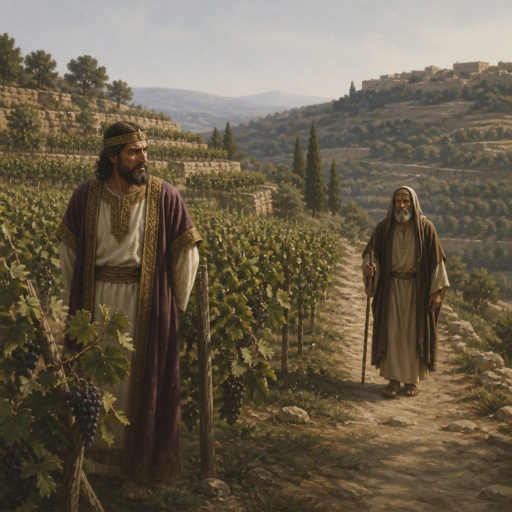
"Arise, go down to meet Ahab king of Israel, which is in Samaria: behold, he is in the vineyard of Naboth, whither he is gone down to possess it." - 1 Kings 21:18

Elijah in the scene 1 Kings 18:36–38

1 Kings 22:21 - "And there came forth a spirit, and stood before the LORD, and said, I will persuade him."

1 Kings 18:2 - "And Elijah went to shew himself unto Ahab. And there was a sore famine in Samaria."
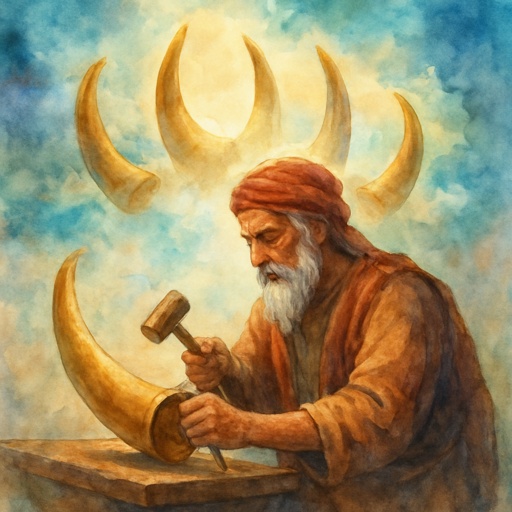
create an image of the vision of the four horns and the craftsman in zachariah 1:18-21

1 Kings 2:21 - "And she said, Let Abishag the Shunammite be given to Adonijah thy brother to wife."

1 Chronicles 16:21 - "He suffered no man to do them wrong: yea, he reproved kings for their sakes,"

1 Kings 21:9 - "And she wrote in the letters, saying, Proclaim a fast, and set Naboth on high among the people:"

1 Kings 18:35 - "And the water ran round about the altar; and he filled the trench also with water."