What does 1 Kings 19:20 mean?
“And he left the oxen, and ran after Elijah, and said, Let me, I pray thee, kiss my father and my mother, and then I will follow thee. And he said unto him, Go back again: for what have I done to thee?” — 1 Kings 19:20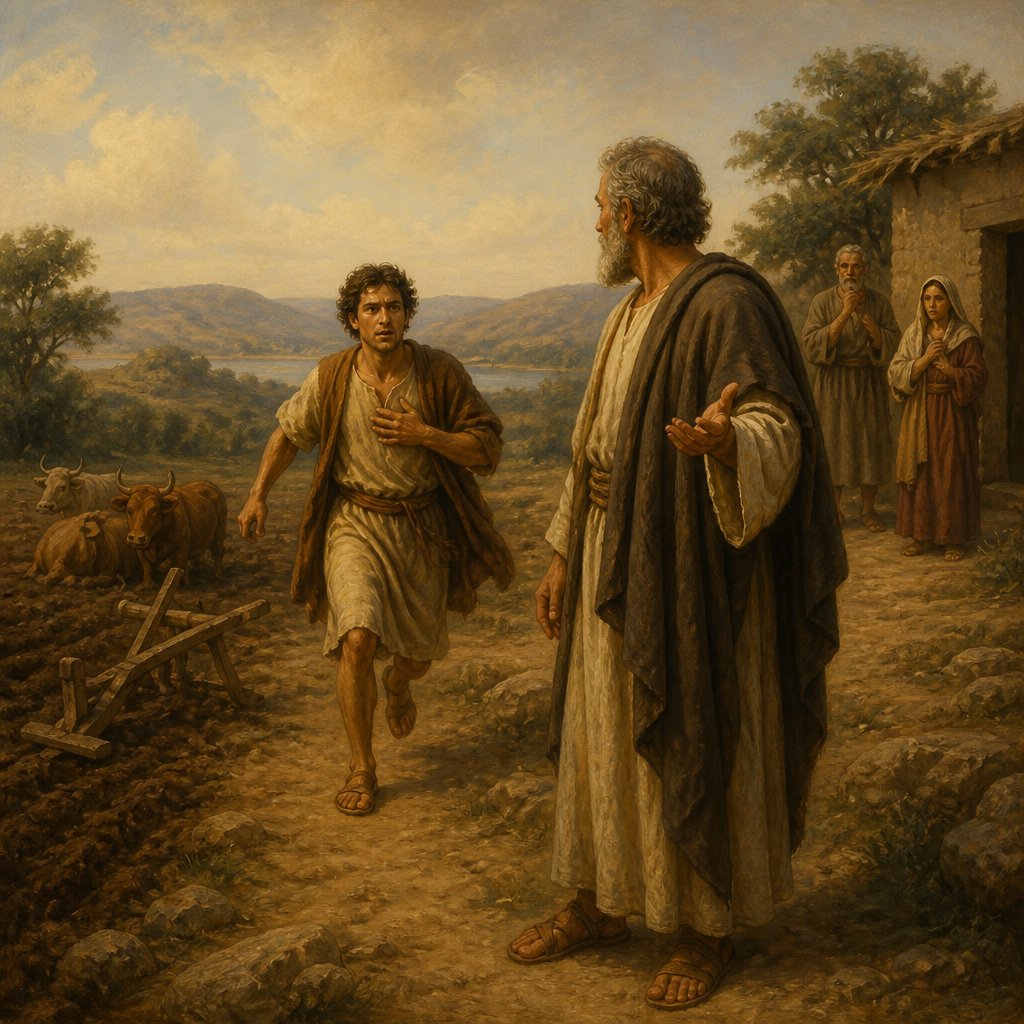
1 Kings 19:20 (KJV) reads, "And he left the oxen, and ran after Elijah, and said, Let me, I pray thee, kiss my father and my mother, and then I will follow thee. And he said unto him, Go back again: for what have I done to thee?" This verse is part of the larger narrative in the Old Testament that tells the story of the prophet Elijah and his encounter with Elisha, who becomes his successor.
The verse is situated in the passage where Elijah is instructed by God to anoint Elisha as a prophet in his place. It signifies a significant turning point in the story as Elisha is called to leave his former life and commit to following and learning from Elijah. The verse captures the immediacy and decisiveness of Elisha's response to the divine call.
One of the central themes of this verse is the concept of leaving behind one's former life to respond to a higher calling. Elisha's decision to leave his oxen and run after Elijah symbolizes a radical departure from his previous occupation as a farmer to embrace a new vocation as a prophet. This theme of leaving behind worldly attachments to pursue a spiritual calling is a recurring motif in the Bible, seen in the stories of other prophets and disciples who forsake their old lives to follow God's will.
The act of "kissing my father and my mother" can be understood as a symbolic gesture of saying goodbye to one's family and earthly ties. In ancient Near Eastern culture, kissing was a sign of affection and farewell, and Elisha's request to do so before following Elijah reflects the gravity and finality of his decision. It also underscores the importance of honoring one's parents while embarking on a new journey, as commanded in the fifth of the Ten Commandments.
Elijah's response, "Go back again: for what have I done to thee?" indicates his surprise at Elisha's request, as well as his test of Elisha's commitment. It echoes the similar responses of Jesus to his disciples in the New Testament when they expressed a desire to follow him. The phrase underscores the seriousness of the decision to follow a prophet or a spiritual leader, as it requires the willingness to relinquish one's own plans and desires.
In a broader context, this verse also speaks to the theme of mentorship and discipleship. The relationship between Elijah and Elisha is a prime example of a mentor passing the mantle of leadership and guidance to a chosen successor. Elisha's eagerness to learn from Elijah and his willingness to submit to his authority set the stage for a deep, transformative mentor-disciple relationship that shapes Elisha's future ministry.
Moreover, the verse can be interpreted as a call to bold and immediate action in response to God's call. Elisha's decisive and wholehearted acceptance of the prophetic mantle exemplifies the type of faith and obedience that God seeks in his servants. It serves as a model for believers to heed God's call without hesitation and to prioritize their spiritual journey above all other considerations.
In conclusion, 1 Kings 19:20 (KJV) is a pivotal verse in the narrative of Elijah and Elisha, capturing the profound significance of Elisha's decision to leave behind his former life and follow the prophet. It encompasses themes of radical obedience, leaving worldly attachments, honoring parental ties, mentorship, and the immediacy of responding to God's call. The verse continues to inspire believers to embrace their divine calling with courage and wholehearted commitment.
Get our apps


Artwork for 1 Kings 19:20

1 Kings 19:20 - "And he left the oxen, and ran after Elijah, and said, Let me, I pray thee, kiss my father and my mother, and then I will follow thee. And he said unto him, Go back again: for what have I done to thee?"
"And he left the oxen, and ran after Elijah, and said, Let me, I pray thee, kiss my father and my mother, and then I will follow thee. And he said unto him, Go back again: for what have I done to thee?" - 1 Kings 19:20

1 Kings 20:19 - "So these young men of the princes of the provinces came out of the city, and the army which followed them."

1 Kings 14:1-20

1 Corinthians 1:19-20

1 Corinthians 1:19-20

1 Corinthians 1:19-20

1 Corinthians 1:19-20

1 Corinthians 1:19-20

1 Corinthians 1:19-20

1 Corinthians 1:19-20

1 Corinthians 1:19-20

1 Corinthians 1:19-20

1 Corinthians 1:19-20

"So these young men of the princes of the provinces came out of the city, and the army which followed them." - 1 Kings 20:19

1 Corinthians 1:19-20

1 Corinthians 1:19-20

1 Corinthians 1:19-20

1 Corinthians 1:19-20

1 Corinthians 1:19-20

1 Corinthians 1:19-20

1 Corinthians 1:19-20

1 Corinthians 1:19-20

1 Corinthians 1:19-20

1 Corinthians 1:19-20

1 Kings 19:1-18

Exodus 27:19-20

Exodus 19:16-20

2 Kings 19:2

2 Kings 19:2