What does 1 Kings 1:9 mean?
“And Adonijah slew sheep and oxen and fat cattle by the stone of Zoheleth, which is by En-rogel, and called all his brethren the king’s sons, and all the men of Judah the king’s servants:” — 1 Kings 1:9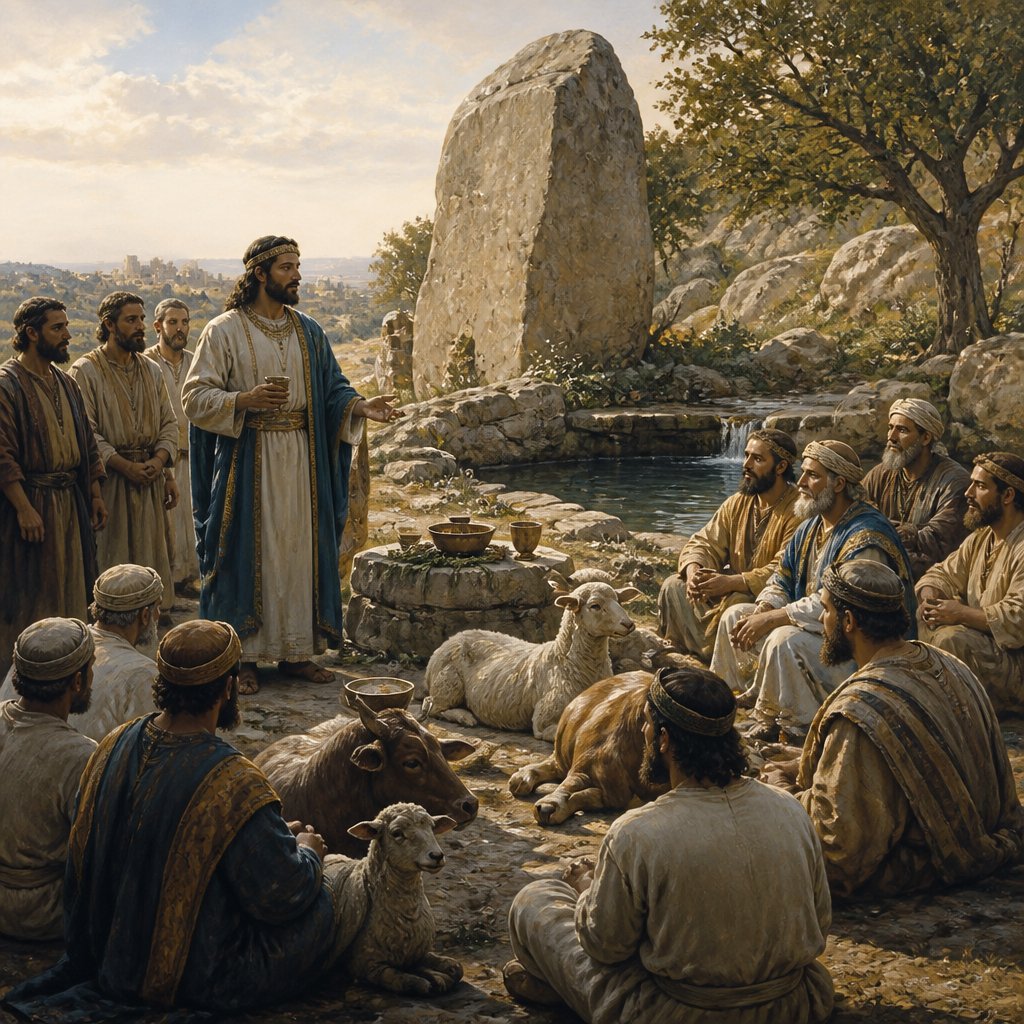
1 Kings 1:9 (KJV) - "And Adonijah slew sheep and oxen and fat cattle by the stone of Zoheleth, which is by Enrogel, and called all his brethren the king's sons, and all the men of Judah the king's servants:"
The book of 1 Kings in the Bible is a rich source of historical and spiritual insight. The verse 1 Kings 1:9 provides a glimpse into the political and social dynamics of the time. At the heart of this verse is the character of Adonijah, who was one of the sons of King David and sought to establish himself as the rightful heir to the throne.
The verse opens with a scene of Adonijah preparing to declare himself king. He organizes a grand feast, slaughtering sheep, oxen, and fat cattle by the stone of Zoheleth, an act of opulence and grandeur intended to garner support and loyalty. By doing so, Adonijah is making a bold and provocative move, essentially usurping the throne from his aging father, King David.
The geographical details provided in the verse enhance the vividness of the scene. The stone of Zoheleth, located by Enrogel, is a specific and tangible location, which lends a sense of authenticity to the narrative. This attention to detail is characteristic of historical texts in the Bible, reinforcing the credibility and reliability of the account.
Furthermore, the act of Adonijah calling all his brethren, the king's sons, and all the men of Judah the king's servants to join him at the feast is an overt display of his desire for power and authority. This gathering is not just a mere social event; it is a deliberate and calculated political maneuver to assert his claim to the throne.
The themes and symbolism embedded in this verse are multifaceted. One of the prominent themes is the struggle for power and succession. This theme pervades the narrative of the Israelite monarchy, as seen in the power struggles between various kings and their heirs throughout the Old Testament. Adonijah's actions reflect the timeless human desire for power and control, often leading to conflict and division.
Another theme that emerges from this verse is the concept of loyalty and allegiance. Adonijah's gathering of the king's sons and the king's servants implies an attempt to gain their support and loyalty. This highlights the complex dynamics of loyalty and betrayal within the royal court, where individuals are often torn between their allegiance to the current king and their aspirations for a new leader.
The symbolism of the sacrificial animals also holds significant meaning. The act of slaughtering sheep, oxen, and fat cattle was a customary practice in ancient Israelite culture, often associated with offerings to God or communal feasting. In this context, however, Adonijah's extravagant display of wealth and abundance serves as a symbol of his attempt to consolidate power and influence through material opulence.
The broader context of this verse within the book of 1 Kings is essential for a comprehensive understanding. The subsequent chapters detail the political intrigue and power struggles within the royal court, culminating in the installation of Solomon as the rightful heir to the throne. This verse, therefore, serves as a pivotal moment in the narrative, foreshadowing the conflict and resolution that will unfold in the subsequent chapters.
In conclusion, 1 Kings 1:9 provides a snapshot of the political and social dynamics within the Israelite monarchy, encapsulating themes of power, loyalty, and symbolism. The verse offers a window into the complex and nuanced world of ancient kingship, shedding light on the universal human desires for authority and legitimacy. Through careful analysis and contextual understanding, this verse yields timeless insights that continue to resonate with readers today.
Get our apps


Artwork for 1 Kings 1:9

1 Kings 1:9 - "And Adonijah slew sheep and oxen and fat cattle by the stone of Zoheleth, which is by En-rogel, and called all his brethren the king's sons, and all the men of Judah the king's servants:"
"And Adonijah slew sheep and oxen and fat cattle by the stone of Zoheleth, which is by En-rogel, and called all his brethren the king's sons, and all the men of Judah the king's servants:" - 1 Kings 1:9

1 Kings 3:9

1 Kings 9:18 - "And Baalath, and Tadmor in the wilderness, in the land,"

1 Kings 9:14 - "And Hiram sent to the king sixscore talents of gold."

1 Kings 9:17 - "And Solomon built Gezer, and Beth-horon the nether,"

1 Kings 15:9 - "¶ And in the twentieth year of Jeroboam king of Israel reigned Asa over Judah."

1 Kings 9:1 - "And it came to pass, when Solomon had finished the building of the house of the LORD, and the king's house, and all Solomon's desire which he was pleased to do,"

1 Kings 22:9 - "Then the king of Israel called an officer, and said, Hasten hither Micaiah the son of Imlah."

1 Kings 4:9 - "The son of Dekar, in Makaz, and in Shaalbim, and Beth-shemesh, and Elon-beth-hanan:"

1 Kings 6:9 - "So he built the house, and finished it; and covered the house with beams and boards of cedar."
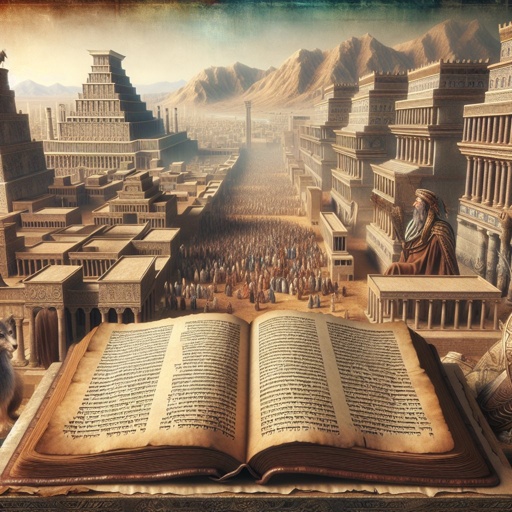
1 Chronicles 9:1 - "So all Israel were reckoned by genealogies; and, behold, they were written in the book of the kings of Israel and Judah, who were carried away to Babylon for their transgression."

"And Baalath, and Tadmor in the wilderness, in the land," - 1 Kings 9:18

1 Kings 9:2 - "That the LORD appeared to Solomon the second time, as he had appeared unto him at Gibeon."

1 Kings 21:9 - "And she wrote in the letters, saying, Proclaim a fast, and set Naboth on high among the people:"

1 Kings 9:27 - "And Hiram sent in the navy his servants, shipmen that had knowledge of the sea, with the servants of Solomon."

1 Kings 9:28 - "And they came to Ophir, and fetched from thence gold, four hundred and twenty talents, and brought it to king Solomon."

1 Kings 9:20 - "And all the people that were left of the Amorites, Hittites, Perizzites, Hivites, and Jebusites, which were not of the children of Israel,"

1 Kings 9:10 - "¶ And it came to pass at the end of twenty years, when Solomon had built the two houses, the house of the LORD, and the king's house,"

"And Hiram sent to the king sixscore talents of gold." - 1 Kings 9:14

1 Kings 9:26 - "¶ And king Solomon made a navy of ships in Ezion-geber, which is beside Eloth, on the shore of the Red sea, in the land of Edom."
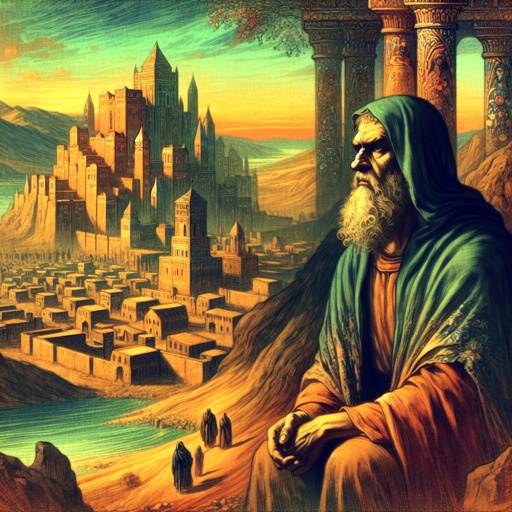
1 Kings 9:12 - "And Hiram came out from Tyre to see the cities which Solomon had given him; and they pleased him not."

"And Solomon built Gezer, and Beth-horon the nether," - 1 Kings 9:17

1 Kings 18:9 - "And he said, What have I sinned, that thou wouldest deliver thy servant into the hand of Ahab, to slay me?"

1 Kings 17:9 - "Arise, get thee to Zarephath, which belongeth to Zidon, and dwell there: behold, I have commanded a widow woman there to sustain thee."

1 Chronicles 19:9 - "And the children of Ammon came out, and put the battle in array before the gate of the city: and the kings that were come were by themselves in the field."

1 Kings 9:15 - "¶ And this is the reason of the levy which king Solomon raised; for to build the house of the LORD, and his own house, and Millo, and the wall of Jerusalem, and Hazor, and Megiddo, and Gezer."

1 Kings 11:9 - "¶ And the LORD was angry with Solomon, because his heart was turned from the LORD God of Israel, which had appeared unto him twice,"

1 Kings 9:23 - "These were the chief of the officers that were over Solomon's work, five hundred and fifty, which bare rule over the people that wrought in the work."

1 Kings 9:13 - "And he said, What cities are these which thou hast given me, my brother? And he called them the land of Cabul unto this day."