What does 1 Kings 21:20 mean?
“And Ahab said to Elijah, Hast thou found me, O mine enemy? And he answered, I have found thee: because thou hast sold thyself to work evil in the sight of the LORD.” — 1 Kings 21:20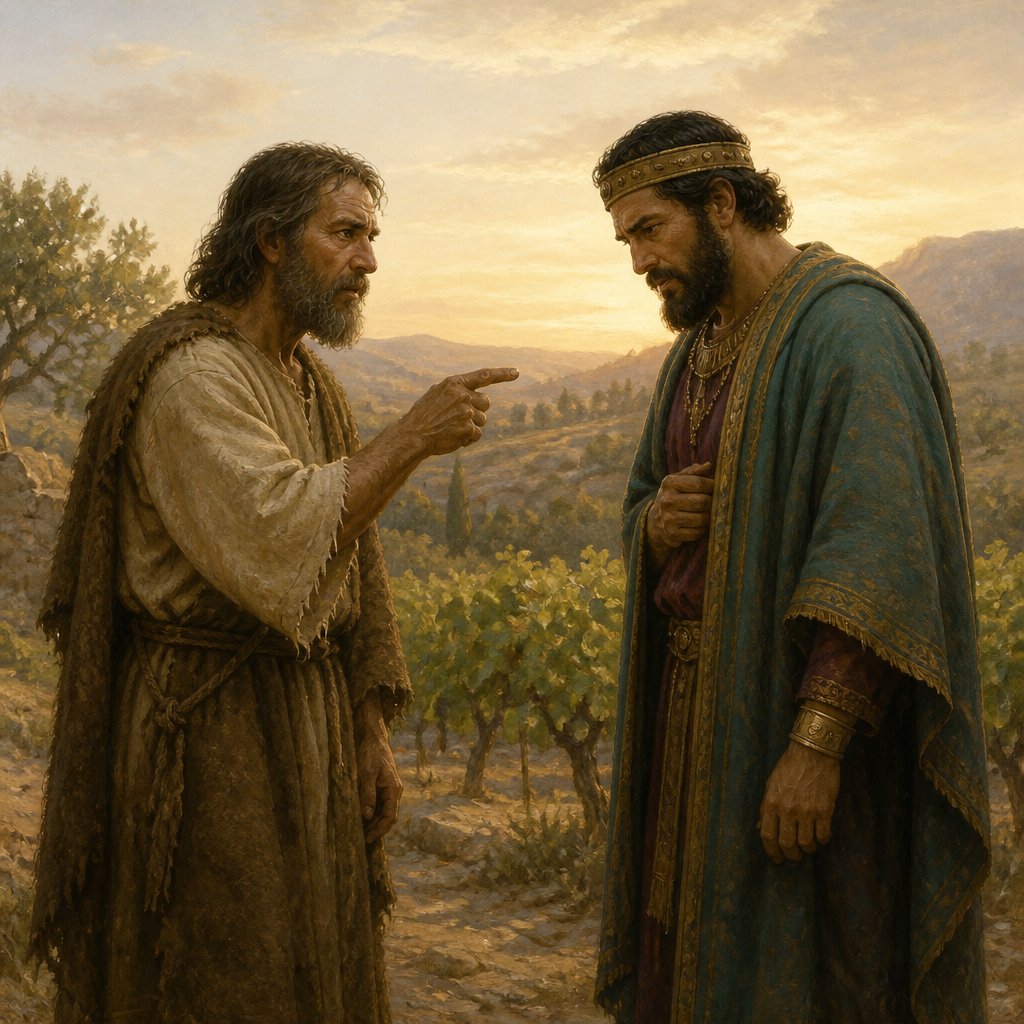
This verse is found in the Old Testament book of 1 Kings, in the midst of a story of great moral and ethical significance. The verse comes in the context of the story of Naboth's Vineyard, a narrative that showcases the abuse of power and authority, the consequences of greed and injustice, and the importance of upholding righteous principles.
The story begins with King Ahab of Samaria who desired the vineyard of Naboth, which was located near his palace. Ahab offered to buy the vineyard from Naboth or exchange it for a better vineyard, but Naboth refused, stating that it was an inheritance from his ancestors and not for sale. Ahab was deeply disappointed and sullen because of this, and his wife Jezebel, who was known for her ruthless and cunning nature, conspired to obtain the vineyard for Ahab. She forged letters in Ahab's name and had Naboth falsely accused of cursing both God and the king, leading to his execution. After Naboth's death, Ahab took possession of the vineyard.
This verse from 1 Kings 21:20 is part of the Lord's response to Ahab's egregious actions. It reads, "And Ahab said to Elijah, Hast thou found me, O mine enemy? And he answered, I have found thee: because thou hast sold thyself to work evil in the sight of the Lord." In this verse, the prophet Elijah confronts Ahab for his sinful and wicked behavior and declares that the king has sold himself to work evil in the sight of the Lord.
The verse is significant for several reasons. Firstly, it serves as a powerful reminder of the consequences of immorality and injustice. Ahab's actions led to the loss of innocent life and the usurpation of Naboth's rightful inheritance, and ultimately led to his own downfall. This verse underscores the biblical principle of reaping what one sows, and the idea that God is a just and righteous judge who holds individuals accountable for their actions.
Secondly, the verse highlights the ultimate consequence of giving in to sin and evil. Ahab's willingness to indulge in wickedness and his lack of remorse or repentance demonstrate the gravity of his moral bankruptcy. His actions were not only an affront to Naboth's rights and the rule of law, but they also constituted a betrayal of his responsibilities as a king and a failure to uphold the values of righteousness and justice.
Moreover, this verse also speaks to the nature of spiritual bondage and the perils of yielding to temptation. Ahab's willingness to do whatever it takes to satisfy his desires and fulfill his ambitions reflect his enslavement to sin and the corrupting influence of power and wealth. The verse underscores the idea that by engaging in evil deeds and indulging in unrighteous behavior, an individual becomes a slave to sin and distance themselves from God's will.
From a larger thematic perspective, this verse ties into the broader narrative of 1 Kings which is centered around the reigns of various kings of Israel and their faithfulness to God. The story of Ahab and Naboth's Vineyard serves as a cautionary tale about the dangers of moral compromise and underscores the importance of integrity, justice, and the fear of God.
In addition, the verse serves as a call to accountability for those in positions of authority. Ahab's abuse of power and his disregard for the rights and well-being of his subjects set a dangerous precedent that ultimately led to his own demise and the downfall of his dynasty. This serves as a warning to leaders and individuals in positions of influence to govern with righteousness, humility, and a respect for the principles of justice and fairness.
In terms of symbolism, the verse can be seen as a metaphor for the soul's enslavement to sin. Ahab's metaphorical "sale" of himself to work evil in the sight of the Lord reflects the idea of being bound by one's own sinful nature and the consequences of yielding to temptation. The verse serves as a reminder of the importance of striving for righteousness and resisting the pull of sinful desires.
In conclusion, 1 Kings 21:20 offers a stark and powerful commentary on the dangers of moral compromise, the consequences of sin, and the imperative of upholding righteousness and justice. It serves as both a warning and a call to accountability for individuals, particularly those in positions of power and influence, urging them to govern with integrity and to heed the consequences of their actions. The verse also highlights the enduring relevance of biblical principles and the significance of resisting the allure of sin and striving for righteousness.
Get our apps


Artwork for 1 Kings 21:20

1 Kings 21:20 - "And Ahab said to Elijah, Hast thou found me, O mine enemy? And he answered, I have found thee: because thou hast sold thyself to work evil in the sight of the LORD."

1 Kings 21:20 (KJVA) 20 And Ahab said to Elijah, Hast thou found me, O mine enemy? And he answered, I have found thee: because thou hast sold thyself to work evil in the sight of the LORD.
"And Ahab said to Elijah, Hast thou found me, O mine enemy? And he answered, I have found thee: because thou hast sold thyself to work evil in the sight of the LORD." - 1 Kings 21:20

1 Kings 20:21 - "And the king of Israel went out, and smote the horses and chariots, and slew the Syrians with a great slaughter."

"And the king of Israel went out, and smote the horses and chariots, and slew the Syrians with a great slaughter." - 1 Kings 20:21

2 Kings 20:21 - "And Hezekiah slept with his fathers: and Manasseh his son reigned in his stead."

2 Kings 21:20 - "And he did that which was evil in the sight of the LORD, as his father Manasseh did."

1 Kings 14:1-20

1 Kings 8:21

1 Kings 8:21

1 Kings 8:21

1 Kings 8:21

1 Peter 2:20-21

1 Kings 20:16 - "And they went out at noon. But Ben-hadad was drinking himself drunk in the pavilions, he and the kings, the thirty and two kings that helped him."

1 Kings 21:14 - "Then they sent to Jezebel, saying, Naboth is stoned, and is dead."

1 Kings 20:24 - "And do this thing, Take the kings away, every man out of his place, and put captains in their rooms:"

1 Kings 16:20 - "Now the rest of the acts of Zimri, and his treason that he wrought, are they not written in the book of the chronicles of the kings of Israel?"

1 Kings 21:28 - "And the word of the LORD came to Elijah the Tishbite, saying,"

1 Kings 21:17 - "¶ And the word of the LORD came to Elijah the Tishbite, saying,"

1 Kings 20:20 - "And they slew every one his man: and the Syrians fled; and Israel pursued them: and Ben-hadad the king of Syria escaped on an horse with the horsemen."

1 Kings 20:1 - "And Ben-hadad the king of Syria gathered all his host together: and there were thirty and two kings with him, and horses, and chariots: and he went up and besieged Samaria, and warred against it."

1 Kings 21:12 - "They proclaimed a fast, and set Naboth on high among the people."

1 Kings 20:43 - "And the king of Israel went to his house heavy and displeased, and came to Samaria."

1 Kings 21:1 - "And it came to pass after these things, that Naboth the Jezreelite had a vineyard, which was in Jezreel, hard by the palace of Ahab king of Samaria."

1 Kings 22:21 - "And there came forth a spirit, and stood before the LORD, and said, I will persuade him."

"And he did that which was evil in the sight of the LORD, as his father Manasseh did." - 2 Kings 21:20

"And Hezekiah slept with his fathers: and Manasseh his son reigned in his stead." - 2 Kings 20:21

1 Kings 2:21 - "And she said, Let Abishag the Shunammite be given to Adonijah thy brother to wife."

1 Kings 20:38 - "So the prophet departed, and waited for the king by the way, and disguised himself with ashes upon his face."

1 Chronicles 16:21 - "He suffered no man to do them wrong: yea, he reproved kings for their sakes,"