What does 1 Kings 22:10 mean?
“And the king of Israel and Jehoshaphat the king of Judah sat each on his throne, having put on their robes, in a void place in the entrance of the gate of Samaria; and all the prophets prophesied before them.” — 1 Kings 22:10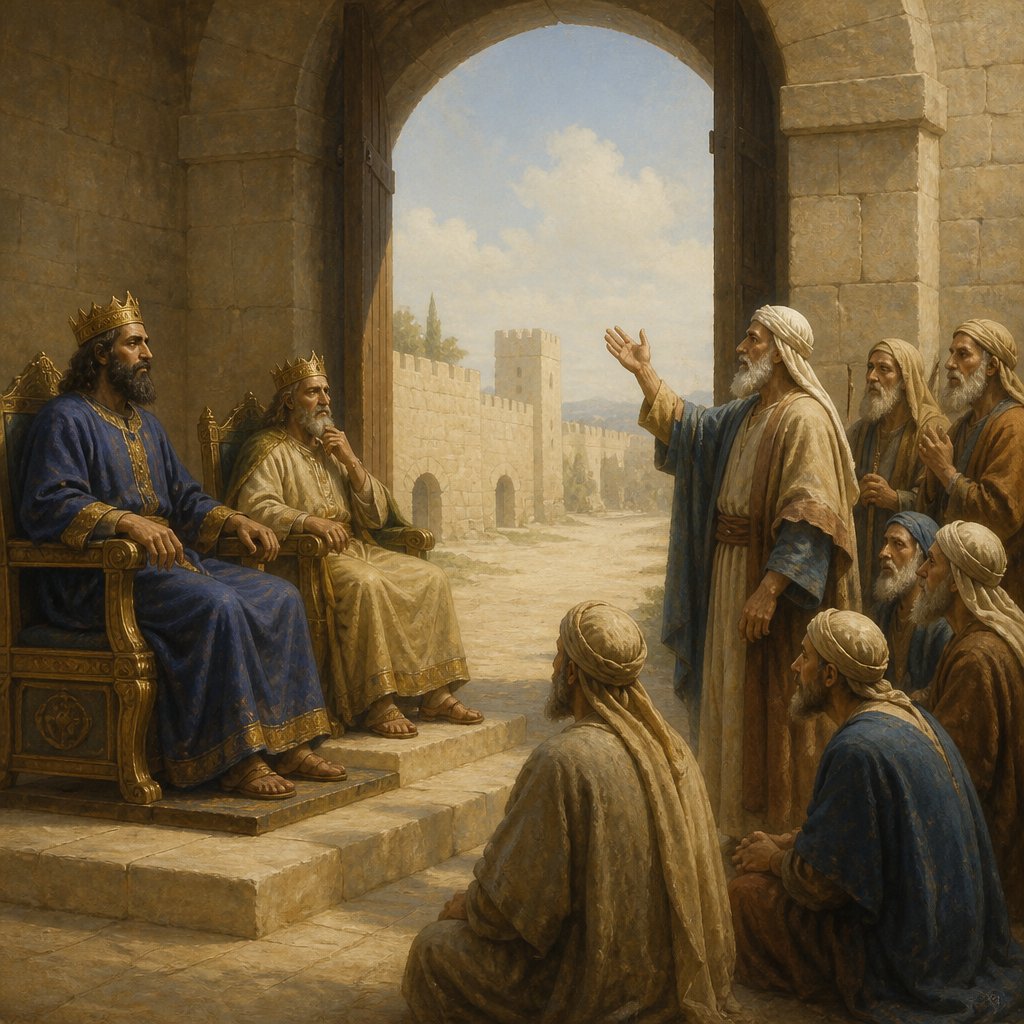
1 Kings 22:10 (KJV): "And the king of Israel and Jehoshaphat the king of Judah sat each on his throne, having put on their robes, in a void place in the entrance of the gate of Samaria; and all the prophets prophesied before them."
The verse from 1 Kings 22:10 takes place in the context of a pivotal moment in the history of the ancient Kingdom of Israel. This chapter recounts the events leading up to the fateful battle of Ramoth-gilead. Ahab, the king of Israel, seeks to retake the city of Ramoth-gilead from the Arameans and enlists the help of Jehoshaphat, the king of Judah. Before going to war, Ahab consults his prophets, who unanimously assure him that he will be victorious in battle. However, Jehoshaphat, feeling uneasy about the prophecy, requests that Ahab inquire of a prophet of the Lord.
With this background in mind, 1 Kings 22:10 describes the setting of the scene. Ahab and Jehoshaphat are seated on their thrones, wearing their royal robes, and surrounded by the prophets who are delivering their prophecies. The gate of Samaria, the capital city of the northern kingdom of Israel, is specifically mentioned as the location of this gathering.
This verse reveals several important themes and symbols that are significant in the broader context of the biblical narrative. One of the central themes is the contrast between false prophecy and the true word of God. The prophets who are speaking before Ahab and Jehoshaphat are ultimately proven to be false, as they are merely telling the kings what they want to hear rather than relaying a genuine message from the Lord. This serves as a cautionary tale about the dangers of heeding the wrong sources of guidance and wisdom.
Additionally, the mention of Ahab and Jehoshaphat sitting on their thrones and wearing their royal robes carries symbolic significance. It reinforces the idea of the authority and power vested in these monarchs, as well as the gravity of the decisions they are about to make. The setting at the gate of Samaria, the seat of political and judicial power, further emphasizes the weightiness of the upcoming battle and its implications for the kingdom.
Furthermore, the choice of location is not coincidental. The gate of a city in ancient times served as a place of gathering, decision-making, and public pronouncements. It was a symbol of authority and governance. By staging the gathering at the gate of Samaria, the author underscores the importance of the events unfolding. Additionally, the reference to the "void place" in the entrance may suggest a sense of desolation and emptiness, hinting at the spiritual vacancy and moral decline within the leadership of Israel.
In a broader theological sense, this verse reflects the ongoing struggle between the forces of good and evil, truth and deception. The confrontation between the true prophet of the Lord, Micaiah, and the false prophets highlights the perennial conflict between authentic faith and superficial religiosity. It also underscores the responsibility of leaders to seek and heed divine counsel, rather than succumbing to the allure of flattery and self-interest.
In conclusion, 1 Kings 22:10 offers a rich tapestry of themes and symbols that resonate throughout the biblical narrative. It serves as a potent reminder of the consequences of heeding false prophets, the weight of leadership and decision-making, and the perennial struggle between truth and deception. Ultimately, this verse points to the necessity of seeking the genuine word of the Lord and remaining steadfast in faith, even in the face of overwhelming opposition.
Get our apps


Artwork for 1 Kings 22:10

1 Kings 22:10 - "And the king of Israel and Jehoshaphat the king of Judah sat each on his throne, having put on their robes, in a void place in the entrance of the gate of Samaria; and all the prophets prophesied before them."
"And the king of Israel and Jehoshaphat the king of Judah sat each on his throne, having put on their robes, in a void place in the entrance of the gate of Samaria; and all the prophets prophesied before them." - 1 Kings 22:10

1 Kings 10:22 - "For the king had at sea a navy of Tharshish with the navy of Hiram: once in three years came the navy of Tharshish, bringing gold, and silver, ivory, and apes, and peacocks."

1 kings 22:19

1 Kings 8:22

1 Kings 22:47 - "There was then no king in Edom: a deputy was king."

1 Kings 10:1

1 Kings 10:1

1 Kings 22:44 - "And Jehoshaphat made peace with the king of Israel."

1 kings 10:1

Genesis 22:10

2 Kings 22:10 - "And Shaphan the scribe shewed the king, saying, Hilkiah the priest hath delivered me a book. And Shaphan read it before the king."

Joshua 10:22 - "Then said Joshua, Open the mouth of the cave, and bring out those five kings unto me out of the cave."

1 Kings 22:1 - "And they continued three years without war between Syria and Israel."

1 Kings 1:22 - "¶ And, lo, while she yet talked with the king, Nathan the prophet also came in."

1 Kings 10:23 - "So king Solomon exceeded all the kings of the earth for riches and for wisdom."

Exodus 25:10-22

1 Kings 22:37 - "¶ So the king died, and was brought to Samaria; and they buried the king in Samaria."

1 Kings 8:10

1 Kings 12:10

1 Kings 12:10

1 Kings 8:10

1 Kings 8:10

1 Kings 8:10

1 Kings 8:10

1 Kings 12:10

1 Kings 12:10

1 Kings 8:10

1 Kings 8:10

2 Kings 10:22 - "And he said unto him that was over the vestry, Bring forth vestments for all the worshippers of Baal. And he brought them forth vestments."