What does 1 Kings 22:18 mean?
“And the king of Israel said unto Jehoshaphat, Did I not tell thee that he would prophesy no good concerning me, but evil?” — 1 Kings 22:18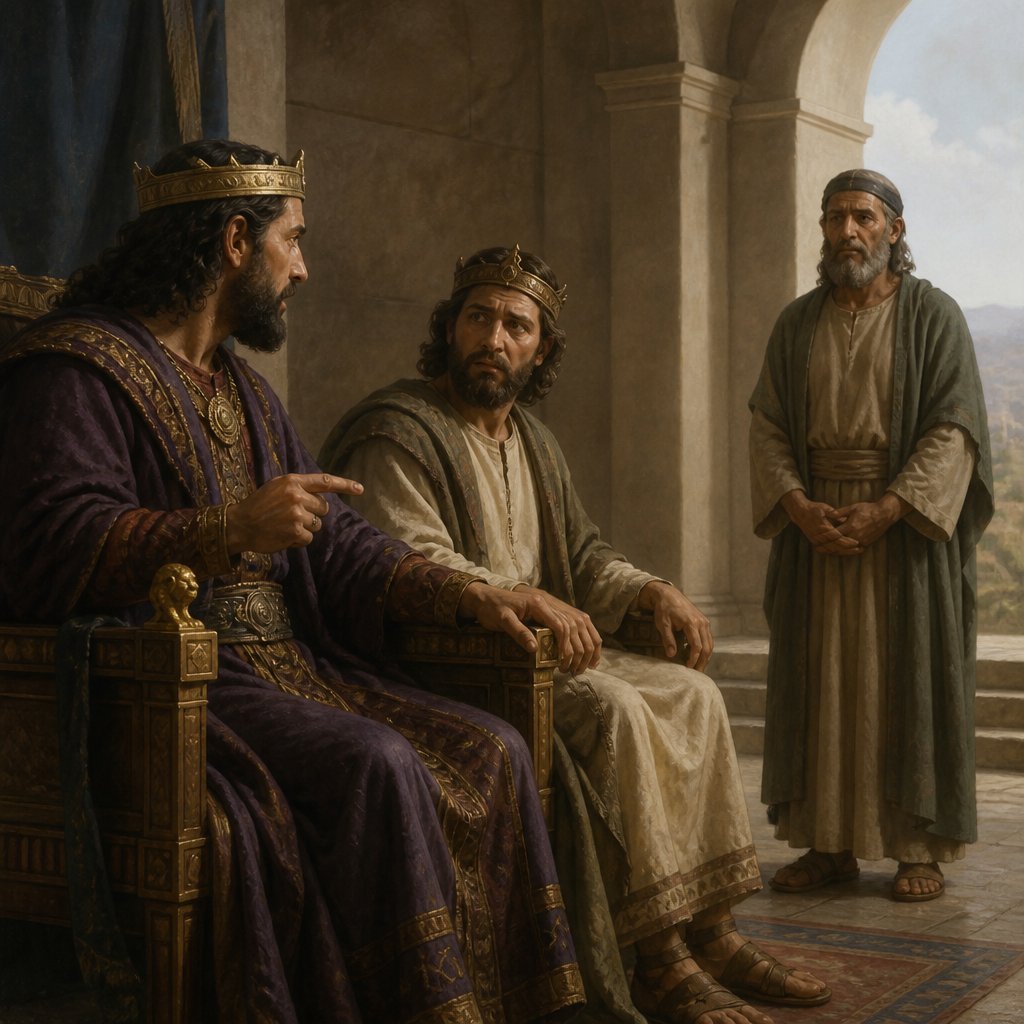
The Bible verse 1 Kings 22:18 in the King James Version (KJV) states, "And the king of Israel said unto Jehoshaphat, Did I not tell thee that he would prophesy no good concerning me, but evil?"
This verse is part of a larger narrative found in the book of 1 Kings, which describes the reign of King Ahab of Israel and his interactions with the prophet Micaiah. In order to fully understand the meaning and significance of 1 Kings 22:18, it is important to examine the broader context in which it is situated.
The verse is situated in the middle of a story that details the events leading up to the battle of Ramoth-gilead, where Ahab sought to reclaim the city from the Syrians. Prior to going into battle, Ahab consulted with his prophets to receive guidance and assurance of victory. All of Ahab's prophets prophesied in favor of the king, assuring him that he would be successful in battle. However, Jehoshaphat, the king of Judah and an ally of Ahab, expressed skepticism and desired to hear from a prophet of the Lord.
At this point, Micaiah was summoned to deliver a prophetic message to the kings. Upon Ahab's request, Micaiah's initial prophecy mirrored that of the other prophets, assuring victory in battle. However, when pressed to speak the truth, Micaiah revealed a troubling vision in which he saw the Lord's heavenly council planning to entice Ahab to his downfall. The verse 1 Kings 22:18 is Ahab's response to Micaiah's prophecy, where he accuses the prophet of consistently delivering negative messages.
At its core, 1 Kings 22:18 serves as a reflection of Ahab's contempt for Micaiah's prophetic proclamation. Ahab's response indicates his lack of willingness to accept the truth and his preference for hearing messages that align with his desires. It also reveals Ahab's inclination to reject any criticism or warnings against his actions.
This verse carries several important themes and messages that are relevant for contemporary readers. One of the key themes that emerges from this passage is the concept of truth and discernment. Ahab's dismissive attitude toward Micaiah's prophecy serves as a cautionary tale about the dangers of rejecting truth in favor of self-serving narratives. It reminds readers of the importance of seeking and accepting the truth, even when it is uncomfortable or challenging.
Additionally, the verse also underscores the theme of false prophecy and discerning the authenticity of spiritual messages. Ahab's reliance on his false prophets and his rejection of Micaiah's true prophecy highlights the deception that can occur when individuals place their trust in misleading or self-serving messages. This theme raises important questions about the source of spiritual guidance and the importance of discernment in evaluating the authenticity of prophetic messages.
Symbolically, this verse illustrates the contrast between true and false prophecy, as well as the consequences of rejecting the truth. Ahab's refusal to heed Micaiah's warning ultimately leads to his downfall, as he meets his demise in the battle of Ramoth-gilead. This serves as a stark reminder of the consequences of ignoring the voice of God and refusing to heed his warnings.
In conclusion, 1 Kings 22:18 from the King James Version of the Bible carries significant thematic, contextual, and symbolic meaning. It serves as a poignant reminder of the importance of truth and discernment, and the consequences of rejecting genuine prophetic messages. This verse challenges readers to consider the source of their spiritual guidance and to approach prophecy with discernment and humility. Overall, this verse offers timeless lessons and insights that remain relevant for believers today.
Get our apps


Artwork for 1 Kings 22:18

1 Kings 22:18 - "And the king of Israel said unto Jehoshaphat, Did I not tell thee that he would prophesy no good concerning me, but evil?"
"And the king of Israel said unto Jehoshaphat, Did I not tell thee that he would prophesy no good concerning me, but evil?" - 1 Kings 22:18

1 Kings 18:22 - "Then said Elijah unto the people, I, even I only, remain a prophet of the LORD; but Baal's prophets are four hundred and fifty men."

1 kings 22:19

1 Kings 8:22

1 Kings 19:1-18

1 Kings 22:47 - "There was then no king in Edom: a deputy was king."

1 Kings 22:44 - "And Jehoshaphat made peace with the king of Israel."

1 Kings 22:1 - "And they continued three years without war between Syria and Israel."

1 Kings 1:22 - "¶ And, lo, while she yet talked with the king, Nathan the prophet also came in."

1 Kings 4:18 - "Shimei the son of Elah, in Benjamin:"

1 Kings 9:18 - "And Baalath, and Tadmor in the wilderness, in the land,"

2 Kings 1:18 - "Now the rest of the acts of Ahaziah which he did, are they not written in the book of the chronicles of the kings of Israel?"

1 Kings 1:18 - "And now, behold, Adonijah reigneth; and now, my lord the king, thou knowest it not:"

1 Kings 22:37 - "¶ So the king died, and was brought to Samaria; and they buried the king in Samaria."

1 Kings 22:29 - "So the king of Israel and Jehoshaphat the king of Judah went up to Ramoth-gilead."

1 Kings 22:45 - "Now the rest of the acts of Jehoshaphat, and his might that he shewed, and how he warred, are they not written in the book of the chronicles of the kings of Judah?"

1 Kings 12:22 - "But the word of God came unto Shemaiah the man of God, saying,"

"There was then no king in Edom: a deputy was king." - 1 Kings 22:47

1 Kings 22:9 - "Then the king of Israel called an officer, and said, Hasten hither Micaiah the son of Imlah."

1 Kings 10:18 - "¶ Moreover the king made a great throne of ivory, and overlaid it with the best gold."

1 Kings 22:2 - "And it came to pass in the third year, that Jehoshaphat the king of Judah came down to the king of Israel."

1 Kings 2:18 - "And Bath-sheba said, Well; I will speak for thee unto the king."

2 Kings 22:18 - "But to the king of Judah which sent you to enquire of the LORD, thus shall ye say to him, Thus saith the LORD God of Israel, As touching the words which thou hast heard;"

1 Kings 7:22 - "And upon the top of the pillars was lily work: so was the work of the pillars finished."
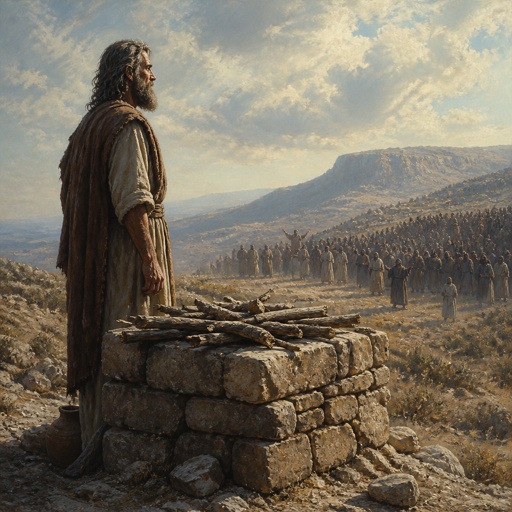
"Then said Elijah unto the people, I, even I only, remain a prophet of the LORD; but Baal's prophets are four hundred and fifty men." - 1 Kings 18:22

1 Kings 22:39 - "Now the rest of the acts of Ahab, and all that he did, and the ivory house which he made, and all the cities that he built, are they not written in the book of the chronicles of the kings of Israel?"

1 Kings 22:21 - "And there came forth a spirit, and stood before the LORD, and said, I will persuade him."

1 Kings 22:7 - "And Jehoshaphat said, Is there not here a prophet of the LORD besides, that we might enquire of him?"

1 Kings 18:2 - "And Elijah went to shew himself unto Ahab. And there was a sore famine in Samaria."