What does 1 Kings 22:28 mean?
“And Micaiah said, If thou return at all in peace, the LORD hath not spoken by me. And he said, Hearken, O people, every one of you.” — 1 Kings 22:28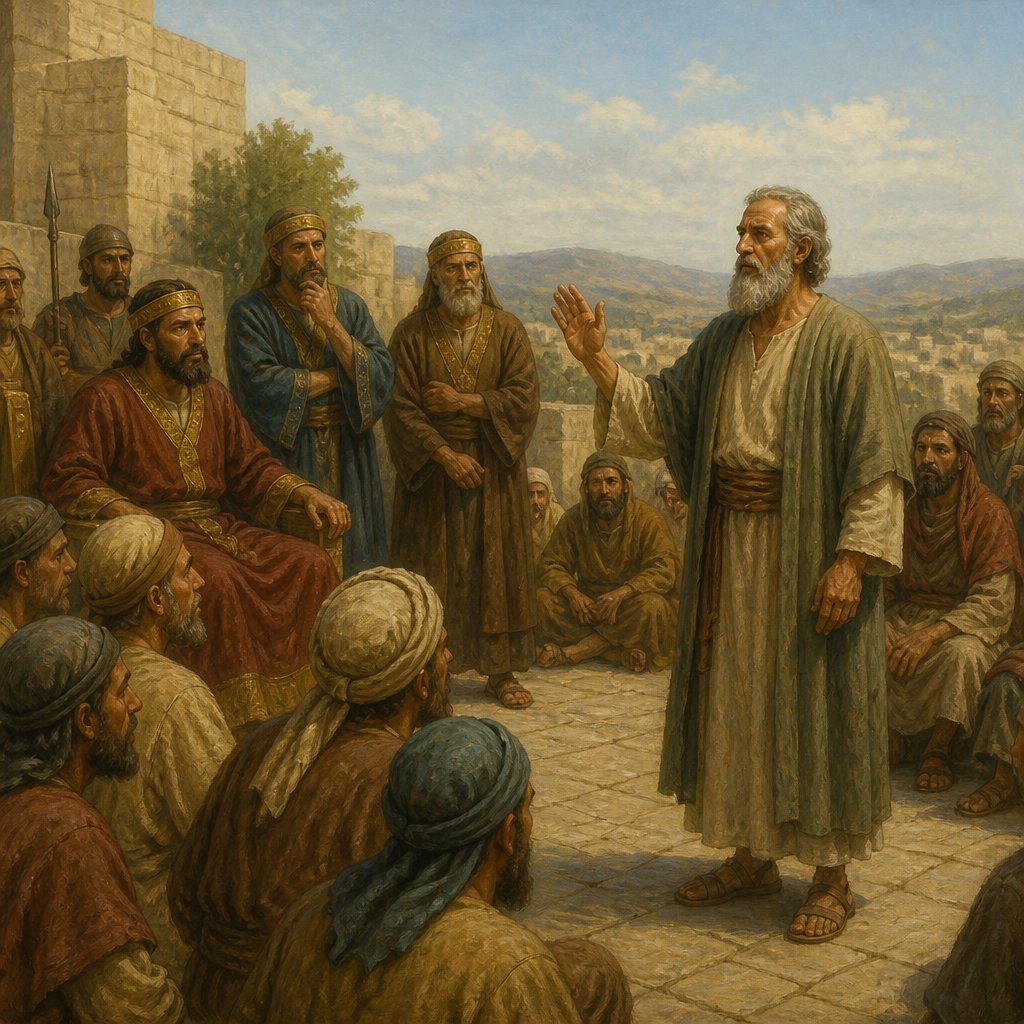
The verse 1 Kings 22:28 in the King James Version states: "And Micaiah said, If thou return at all in peace, the Lord hath not spoken by me. And he said, Hearken, O people, every one of you."
This verse comes from the Old Testament and is part of the narrative of the reign of Ahab, the king of Israel. In this particular chapter, Ahab is seeking advice from his prophets on whether he should go to war with the king of Syria. Ahab's prophets all encourage him to go to battle, assuring him that he will be successful. However, at the urging of Jehoshaphat, the king of Judah, Ahab sends for Micaiah, a prophet of the Lord, to give his opinion on the matter.
When Micaiah is brought before Ahab, he initially speaks sarcastically, reflecting the fact that Ahab had always sought the flattering words of his prophets rather than the truth. However, when pressed by Ahab to speak the truth, Micaiah delivers the message directly from the Lord, stating that if Ahab returns at all from the battle, then the Lord has not spoken through him.
This verse holds several significant themes that can be explored in its context. One prominent theme is the conflict between truth and falsehood. Ahab's court is filled with false prophets who tell him what he wants to hear, rather than the truth from the Lord. Micaiah, on the other hand, stands as a solitary voice of truth in a sea of deception. This illustrates the importance of seeking and heeding the true word of the Lord, even when it may not be what we want to hear.
Another theme is the sovereignty of God. The message delivered by Micaiah emphasizes that the ultimate authority lies with the Lord. Despite the assurances of Ahab's prophets, the final outcome of the battle rests in God's hands. This serves as a reminder that human plans and intentions are subject to the will of God, and it is He who ultimately determines the course of events.
Symbolism is also present in this verse, particularly in Micaiah's words. His declaration that if Ahab returns in peace, the Lord has not spoken through him, serves as a symbolic warning of the impending doom. This statement carries weight not only in the immediate context of the battle but also in the broader narrative of Ahab's reign and the consequences of his disobedience to the Lord.
In a broader theological context, this verse can be seen as a reflection of the relationship between God and humanity. The interaction between Ahab and Micaiah serves as a microcosm of the larger dynamic between God and His people. Just as Ahab sought the counsel of false prophets who told him what he wanted to hear, humanity often seeks guidance that aligns with their desires rather than the truth of God's word. The message of Micaiah reminds us of the importance of seeking and heeding the true word of the Lord, even when it may be difficult or uncomfortable.
In conclusion, 1 Kings 22:28 from the King James Version holds significant meaning within its context and broader theological themes. It serves as a powerful reminder of the importance of seeking and heeding the true word of the Lord, the sovereignty of God, and the consequences of disobedience. The verse also offers a cautionary symbol of impending doom in the face of deception and dishonesty. Overall, this verse invites readers to consider the ways in which they seek truth and to reflect on their own relationship with the Lord.
Get our apps


Artwork for 1 Kings 22:28

1 Kings 22:28 - "And Micaiah said, If thou return at all in peace, the LORD hath not spoken by me. And he said, Hearken, O people, every one of you."
"And Micaiah said, If thou return at all in peace, the LORD hath not spoken by me. And he said, Hearken, O people, every one of you." - 1 Kings 22:28

Exodus 22:28

Exodus 22:28

Exodus 22:28

Exodus 22:28

Exodus 22:28

Exodus 22:28

Exodus 22:28

Exodus 22:28

Exodus 22:28

Exodus 22:28

Exodus 22:28

1 Kings 6:28 - "And he overlaid the cherubims with gold."

1 kings 22:19

1 Kings 8:22

1 Kings 22:47 - "There was then no king in Edom: a deputy was king."

1 Kings 21:28 - "And the word of the LORD came to Elijah the Tishbite, saying,"

1 Kings 1:28 - "¶ Then king David answered and said, Call me Bath-sheba. And she came into the king's presence, and stood before the king."

1 Kings 22:44 - "And Jehoshaphat made peace with the king of Israel."

1 Kings 22:1 - "And they continued three years without war between Syria and Israel."

1 Kings 1:22 - "¶ And, lo, while she yet talked with the king, Nathan the prophet also came in."

1 Kings 7:28 - "And the work of the bases was on this manner: they had borders, and the borders were between the ledges:"

1 Kings 22:37 - "¶ So the king died, and was brought to Samaria; and they buried the king in Samaria."

"And he overlaid the cherubims with gold." - 1 Kings 6:28

1 Kings 15:28 - "Even in the third year of Asa king of Judah did Baasha slay him, and reigned in his stead."

1 Kings 9:28 - "And they came to Ophir, and fetched from thence gold, four hundred and twenty talents, and brought it to king Solomon."

1 Kings 22:29 - "So the king of Israel and Jehoshaphat the king of Judah went up to Ramoth-gilead."

1 Kings 22:45 - "Now the rest of the acts of Jehoshaphat, and his might that he shewed, and how he warred, are they not written in the book of the chronicles of the kings of Judah?"

1 Kings 12:22 - "But the word of God came unto Shemaiah the man of God, saying,"