What does 1 Kings 3:16 mean?
“Then came there two women, that were harlots, unto the king, and stood before him.” — 1 Kings 3:16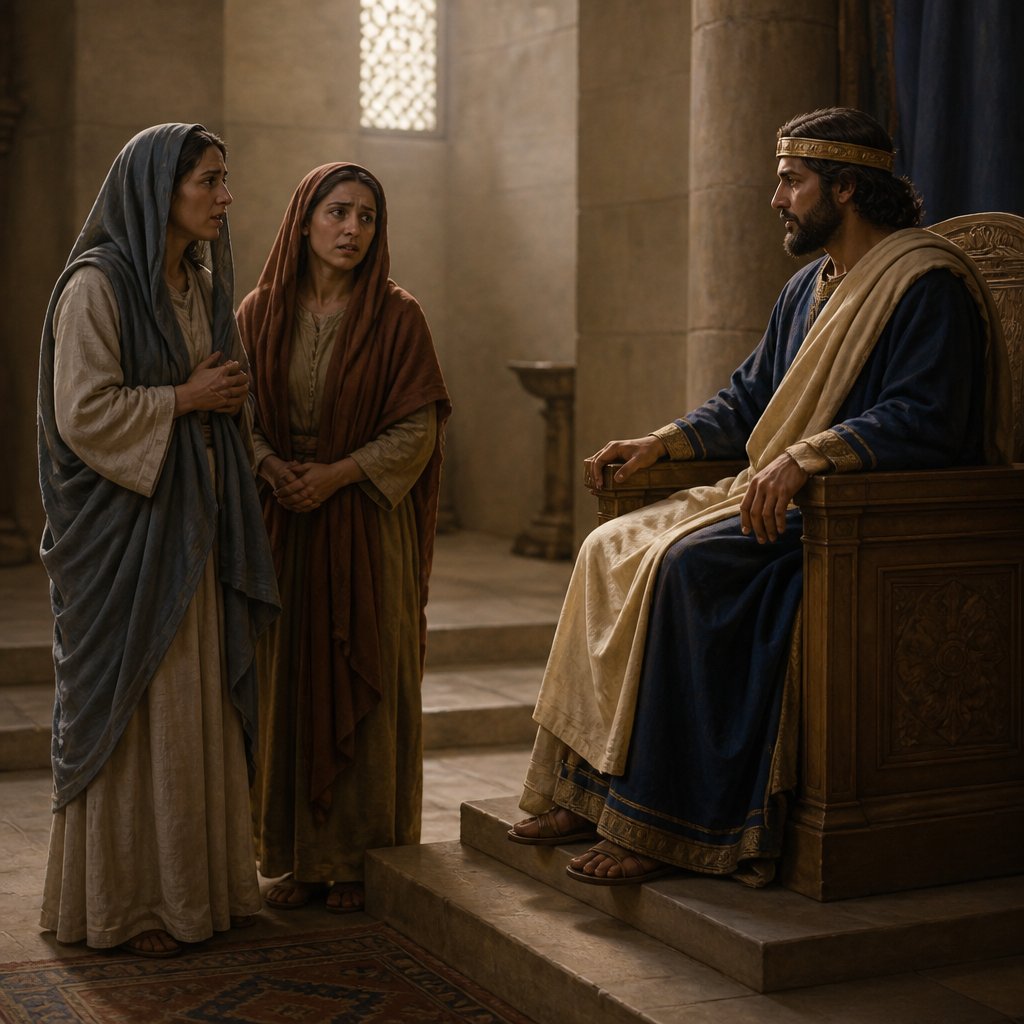
1 Kings 3:16 from the King James Version (KJV) reads, "Then came there two women, that were harlots, unto the king, and stood before him."
This verse comes from the Old Testament book of 1 Kings, which chronicles the reign of King Solomon, the son of King David. In this particular verse, we see an intriguing and thought-provoking situation being brought before King Solomon. As we delve into the context, themes, and symbolism of this verse, we gain a deeper understanding of the wisdom of King Solomon and the timeless truths found in this passage.
The context of 1 Kings 3:16 is set during the early days of King Solomon's reign. We are told that Solomon loved the Lord, walking in the statutes of David his father, and offering sacrifices and burnt offerings on the altar at Gibeon (1 Kings 3:3). During this time, Solomon had an encounter with the Lord at Gibeon, where he was given the opportunity to ask for anything he desired. Solomon famously asked for wisdom to govern God's people with justice and discernment (1 Kings 3:9). God granted Solomon's request, giving him not only wisdom but also riches and honor (1 Kings 3:12-13).
The verse 1 Kings 3:16 introduces us to a scenario where two women, who are described as harlots, come before King Solomon. They are in the midst of a dispute over a newborn baby. One of the women claims that the other woman had rolled onto her own baby and smothered it during the night. She then swapped her dead baby for the living baby of the other woman. The other woman vehemently denies these claims, creating a tense and emotionally charged atmosphere in the court of King Solomon. This situation sets the stage for the renowned display of Solomon's wisdom and discernment that follows in the subsequent verses.
One of the prominent themes in this verse is the theme of justice and wisdom. King Solomon was known for his wisdom, and the way he handled this complex and morally challenging situation showcases his God-given discernment. The presence of the two women, described as harlots, suggests that they were from the lower strata of society. Yet, King Solomon did not discriminate against them based on their social status but chose to hear them out and seek justice for them. This reflects the biblical principle of impartiality and fair judgment, which is central to the concept of justice in the Bible.
Another theme that can be observed in this verse is the theme of motherhood. The bond between a mother and her child is one of the most powerful and profound relationships, and this bond is at the heart of the dispute brought before King Solomon. The emotional intensity of the situation highlights the depths of maternal love and the lengths to which a mother would go to protect her child. This theme serves to emphasize the human element in the story and elicits empathy and compassion from the readers.
Beyond the themes, 1 Kings 3:16 also holds symbolism that is significant in understanding the broader message of the passage. The presence of the two women, who are described as harlots, can be seen as symbolic of the moral and social complexities present in the kingdom during Solomon's reign. The fact that King Solomon is approached by these marginalized women reflects his accessibility and concern for all his subjects, regardless of their status. This symbolic representation speaks to the larger theme of the inclusivity of God's justice and the value of every individual in His eyes, regardless of their background or circumstances.
In conclusion, 1 Kings 3:16 offers a compelling and profound narrative that delves into themes of justice, wisdom, and the complexities of human relationships. The verse serves as a captivating introduction to the account of King Solomon's display of wisdom in the subsequent verses and provides valuable insights into the principles of justice and compassion found in the Bible. The context, themes, and symbolism present in this verse contribute to its enduring relevance and provide readers with a deeper understanding of the timeless truths encapsulated in this passage.
Get our apps


Artwork for 1 Kings 3:16

1 Kings 3:16 - "¶ Then came there two women, that were harlots, unto the king, and stood before him."

"¶ Then came there two women, that were harlots, unto the king, and stood before him." - 1 Kings 3:16

Kings 3:16

Kings 3:16

Kings 3:16

2 Kings 3:16-19

Soothing the Soul: The Gospel of Gentle Care 1 Kings 19:3-8; 1 Samuel 16:14-23

Soothing the Soul: The Gospel of Gentle Care 1 Kings 19:3-8; 1 Samuel 16:14-23

1 Kings 16:3 - "Behold, I will take away the posterity of Baasha, and the posterity of his house; and will make thy house like the house of Jeroboam the son of Nebat."

2 Kings 3:16 - "And he said, Thus saith the LORD, Make this valley full of ditches."

1 kings 3:15

1 kings 3:12

1 Kings 3:9

1 kings 3:15

1 corinthians 3:16-17

1 corinthians 3:16-17

1 Kings 20:16 - "And they went out at noon. But Ben-hadad was drinking himself drunk in the pavilions, he and the kings, the thirty and two kings that helped him."

"And he said, Thus saith the LORD, Make this valley full of ditches." - 2 Kings 3:16

1 corinthians 3:16-17

1 Kings 16:14 - "Now the rest of the acts of Elah, and all that he did, are they not written in the book of the chronicles of the kings of Israel?"

1 Kings 1:16 - "And Bath-sheba bowed, and did obeisance unto the king. And the king said, What wouldest thou?"

Joshua 3:16

Genesis 3:16

John 3:16

1 Kings 4:16 - "Baanah the son of Hushai was in Asher and in Aloth:"

1 Kings 16:1 - "Then the word of the LORD came to Jehu the son of Hanani against Baasha, saying,"

John 3:16

1 Kings 16:20 - "Now the rest of the acts of Zimri, and his treason that he wrought, are they not written in the book of the chronicles of the kings of Israel?"

1 Kings 16:5 - "Now the rest of the acts of Baasha, and what he did, and his might, are they not written in the book of the chronicles of the kings of Israel?"

1 Timothy 6:15-16 – "God, the blessed and only Ruler, the King of kings and Lord of lords."