What does 1 Kings 6:17 mean?
“And the house, that is, the temple before it, was forty cubits long.” — 1 Kings 6:17
The Bible verse 1 Kings 6:17 from the King James Version reads, "And the house, that is, the temple before it, was forty cubits long." This passage is part of a description of the construction of the Temple of the Lord in Jerusalem, which was built by King Solomon.
To understand the meaning and significance of this verse, it is important to consider the context in which it appears. King Solomon, the son of King David, was chosen by God to build the temple as a place of worship and to house the Ark of the Covenant. The construction of the temple was a monumental undertaking, and it was meant to be a symbol of the presence of God among His people.
The number forty is significant in the Bible, as it often represents a period of testing, preparation, or transition. In the case of the temple, its length of forty cubits may symbolize the idea of completeness or fullness. The temple was a place where God's presence was supposed to be fully manifest, and its dimensions reflect the importance and grandeur of this holy space.
The temple itself is a symbol of God's dwelling place among His people. In the Old Testament, God's presence was believed to reside in the innermost part of the temple, known as the Holy of Holies. The construction of the temple was a physical manifestation of the Israelites' desire for God to dwell among them, and it symbolized their commitment to worship and obey Him.
Additionally, the temple was a place of sacrifice and atonement for sin. The book of Leviticus outlines the various regulations for the offering of sacrifices in the temple, which were meant to cleanse the people from their sins and restore their relationship with God. The temple's dimensions and design reflect its role as a place of worship, sacrifice, and communion with God.
The construction of the temple also symbolized the fulfillment of God's promises to King David. In 2 Samuel 7, God makes a covenant with David, promising that his descendants will reign over Israel forever. The building of the temple by Solomon, David's son, demonstrates that God is faithful to His promises and is actively working to establish His kingdom among His people.
On a deeper level, the temple can be seen as a foreshadowing of the ultimate fulfillment of God's plan for salvation. In the New Testament, Jesus refers to his body as the temple, and his death and resurrection are understood as the ultimate sacrifice that atones for the sins of humanity. The temple in Jerusalem was a temporary dwelling place for God, but through Jesus, God's presence is made fully manifest in the world.
In conclusion, 1 Kings 6:17 from the King James Version of the Bible is a verse that describes the dimensions of the temple built by King Solomon. The temple is a symbol of God's presence among His people, a place of worship and sacrifice, and a fulfillment of God's promises. Its construction and design reflect the Israelites' desire for communion with God and their hope for the establishment of His kingdom. Ultimately, the temple points to the ultimate fulfillment of God's plan for salvation through Jesus Christ.
Get our apps


Artwork for 1 Kings 6:17

1 Kings 6:17 - "And the house, that is, the temple before it, was forty cubits long."

"And the house, that is, the temple before it, was forty cubits long." - 1 Kings 6:17

1 Kings 17:6 - "And the ravens brought him bread and flesh in the morning, and bread and flesh in the evening; and he drank of the brook."

2 Kings 6:17 – "And Elisha prayed, 'Open his eyes, Lord, so that he may see.' Then the Lord opened the servant’s eyes."

1 Kings 6:11-13

1 Kings 6:11-13

1 Kings 6:11-13

1 Kings 6:11-13

1 Kings 6:11-13
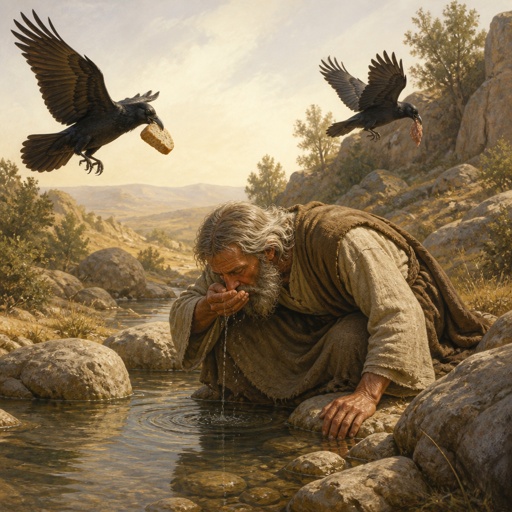
"And the ravens brought him bread and flesh in the morning, and bread and flesh in the evening; and he drank of the brook." - 1 Kings 17:6

1 Kings 4:17 - "Jehoshaphat the son of Paruah, in Issachar:"

Genesis 17:6 - "And I will make thee exceeding fruitful, and I will make nations of thee, and kings shall come out of thee."

"And Elisha prayed, and said, LORD, I pray thee, open his eyes, that he may see. And the LORD opened the eyes of the young man; and he saw: and, behold, the mountain was full of horses and chariots of fire round about Elisha." - 2 Kings 6:17

1 Kings 21:17 - "¶ And the word of the LORD came to Elijah the Tishbite, saying,"

1 Kings 17:8 - "¶ And the word of the LORD came unto him, saying,"

1 Kings 17:2 - "And the word of the LORD came unto him, saying,"

1 Kings 9:17 - "And Solomon built Gezer, and Beth-horon the nether,"

1 Kings 6:28 - "And he overlaid the cherubims with gold."

2 Kings 17:6 - "¶ In the ninth year of Hoshea the king of Assyria took Samaria, and carried Israel away into Assyria, and placed them in Halah and in Habor by the river of Gozan, and in the cities of the Medes."

1 Kings 8:6-8

1 Chronicles 6:17 - "And these be the names of the sons of Gershom; Libni, and Shimei."

1 Kings 17:17 - "¶ And it came to pass after these things, that the son of the woman, the mistress of the house, fell sick; and his sickness was so sore, that there was no breath left in him."

1 Kings 6:11 - "¶ And the word of the LORD came to Solomon, saying,"

1 Kings 6:14 - "So Solomon built the house, and finished it."

1 Corinthians 6:17 - "But he that is joined unto the Lord is one spirit."

1 Kings 16:17 - "And Omri went up from Gibbethon, and all Israel with him, and they besieged Tirzah."

1 Kings 12:17 - "But as for the children of Israel which dwelt in the cities of Judah, Rehoboam reigned over them."

1 Timothy 6:15-16 – "God, the blessed and only Ruler, the King of kings and Lord of lords."

1 Timothy 6:15-16 – "God, the blessed and only Ruler, the King of kings and Lord of lords."
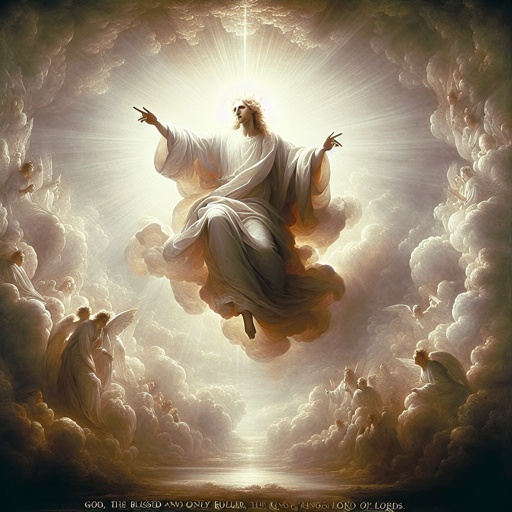
1 Timothy 6:15-16 – "God, the blessed and only Ruler, the King of kings and Lord of lords."