What does 1 Kings 9:12 mean?
“And Hiram came out from Tyre to see the cities which Solomon had given him; and they pleased him not.” — 1 Kings 9:12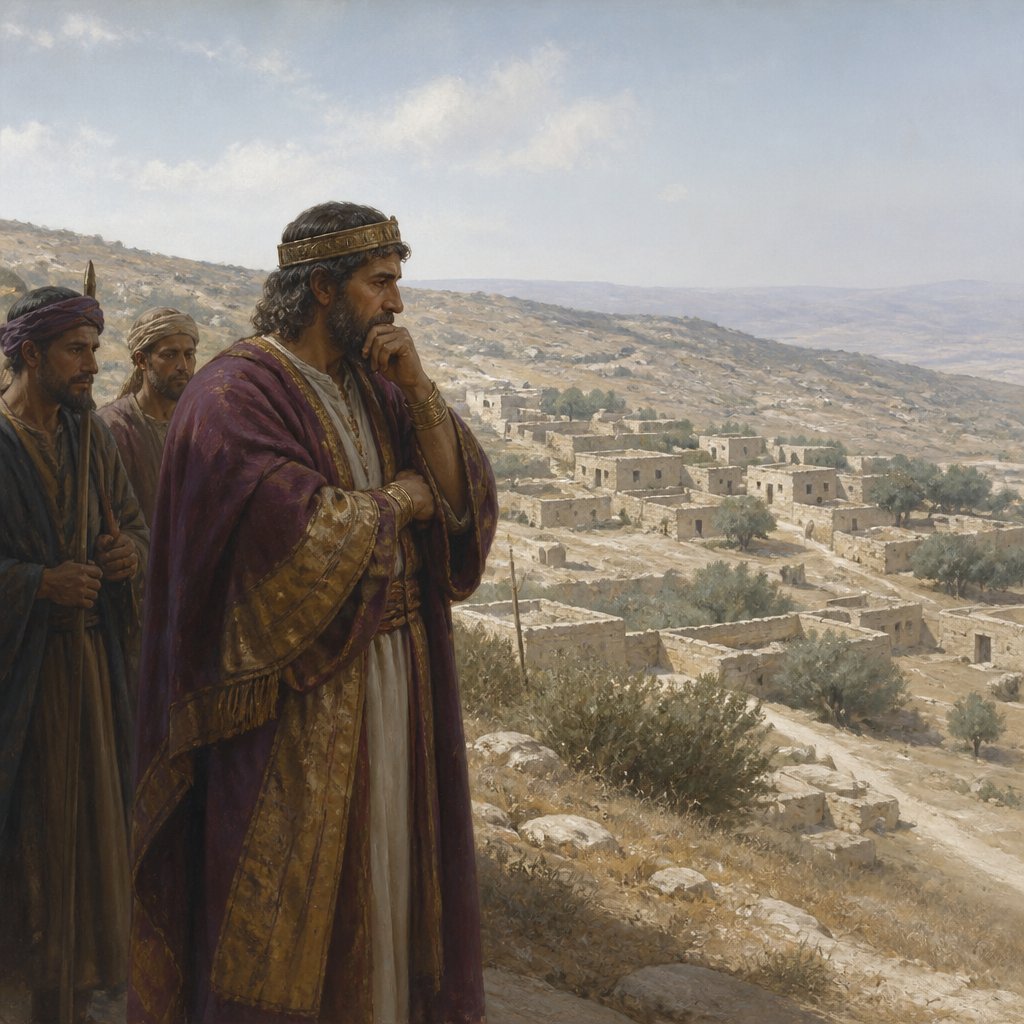
"Then said the Lord to Solomon, Forasmuch as this is done of thee, and thou hast not kept my covenant and my statutes, which I have commanded thee, I will surely rend the kingdom from thee, and will give it to thy servant."
In 1 Kings 9:12, we witness a pivotal moment in the reign of King Solomon, the son of King David. This verse serves as a solemn warning and a severe consequence for Solomon's disobedience to God's covenant and statutes. To fully understand the weight of this verse, it is important to delve into the themes, context, and symbolism embedded within it.
The overarching theme of this verse revolves around the concept of covenant and obedience. In the Old Testament, God established a covenant with the people of Israel, promising blessings for obedience and curses for disobedience. King Solomon, as the leader of the Israelites, was entrusted with upholding this covenant, leading his people in righteousness and obedience to God's commandments. However, as this verse indicates, Solomon had failed in this regard. By indulging in idolatry and marrying foreign women who led him astray, Solomon had strayed from God's covenant and commands. As a result, the Lord declares that He will "rend the kingdom" from Solomon and give it to his servant, effectively breaking the covenant with Solomon.
The context of this verse is crucial in understanding its significance. In the preceding chapters of 1 Kings, we witness the construction of the grand Temple in Jerusalem, a monumental achievement in Solomon's reign. The completion of the Temple signified God's presence among His people and the fulfillment of His promises to King David. However, despite this great accomplishment, Solomon's subsequent actions of turning away from God's laws and engaging in idolatry prove to be his downfall.
The symbolism in this verse is profound, as it represents the consequences of disobeying God's commands. The tearing or rending of the kingdom parallels the tearing of a cloth, signifying a permanent and irreversible separation. This act symbolizes the rupturing of the relationship between Solomon and God, as well as the division of the kingdom.
Furthermore, the succession of the kingdom to a "servant" implies a transfer of authority to someone who is faithful and obedient to God, contrasting with Solomon's disobedience. This servant is later revealed to be Jeroboam, who becomes the king of the northern tribes of Israel after Solomon's death. This symbolic transfer of power reflects God's sovereignty and His ability to raise up and depose rulers according to His will.
In conclusion, 1 Kings 9:12 serves as a stark reminder of the consequences of forsaking God's covenant and statutes. It underscores the importance of obedience and faithfulness in upholding the covenant and receiving God's blessings. The verse also highlights the sovereignty of God in His dealings with the kings and kingdoms of the earth. As believers, we are called to heed the warning in this verse and remain steadfast in our obedience to God's commands, knowing that He is faithful to fulfill His promises to those who walk in His ways.
Get our apps


Artwork for 1 Kings 9:12
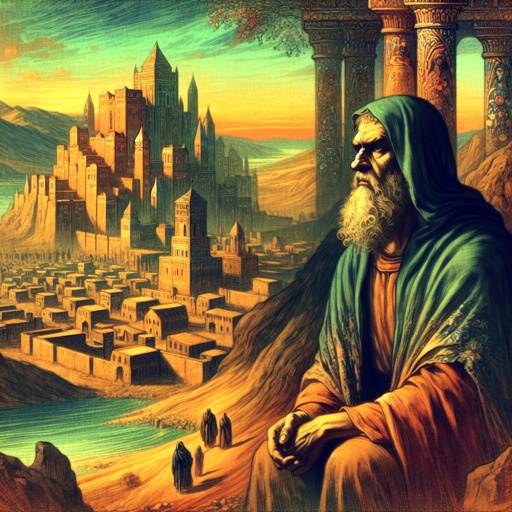
1 Kings 9:12 - "And Hiram came out from Tyre to see the cities which Solomon had given him; and they pleased him not."
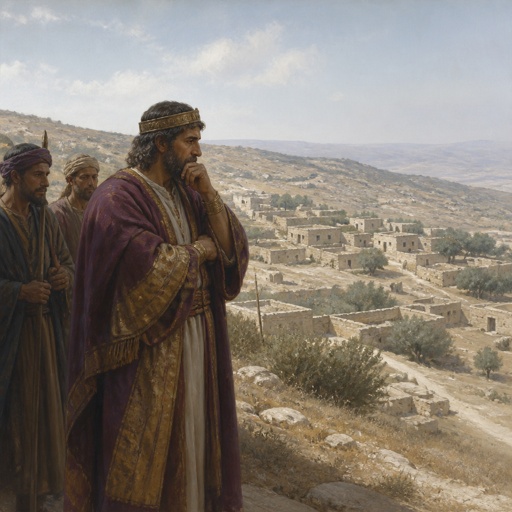
"And Hiram came out from Tyre to see the cities which Solomon had given him; and they pleased him not." - 1 Kings 9:12

1 Kings 12:9 - "And he said unto them, What counsel give ye that we may answer this people, who have spoken to me, saying, Make the yoke which thy father did put upon us lighter?"
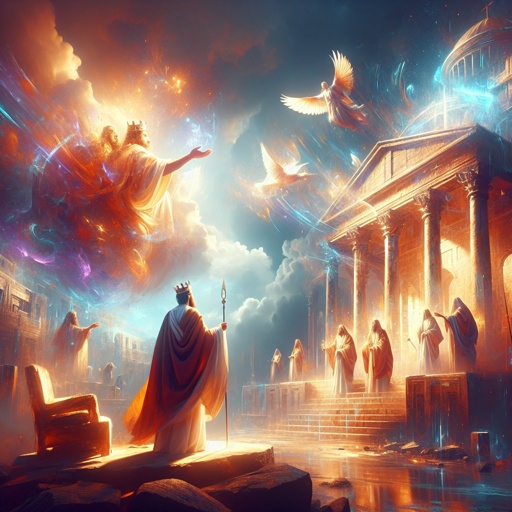
2 Kings 9:12 - "And they said, It is false; tell us now. And he said, Thus and thus spake he to me, saying, Thus saith the LORD, I have anointed thee king over Israel."

1 Kings 12:11

1 Kings 12:11

1 Kings 12:10

1 Kings 12:10

1 Kings 12:10

1 kings 3:12

1 Kings 12:11

1 Kings 12:10
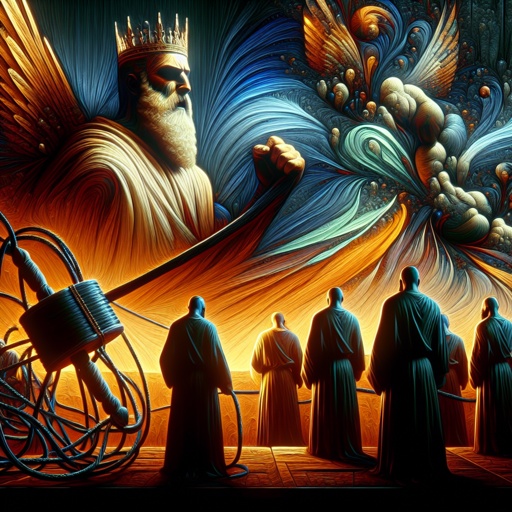
1 Kings 12:11

1 Kings 12:14

1 Kings 12:14

1 Kings 12:11

1 Kings 3:9

1 Kings 9:18 - "And Baalath, and Tadmor in the wilderness, in the land,"

1 Kings 9:14 - "And Hiram sent to the king sixscore talents of gold."

Revelation 12:3-9

1 Kings 12:1 - "And Rehoboam went to Shechem: for all Israel were come to Shechem to make him king."

1 Kings 9:17 - "And Solomon built Gezer, and Beth-horon the nether,"

Ezequiel 47, 1-9. 12

1 Kings 21:12 - "They proclaimed a fast, and set Naboth on high among the people."

1 Kings 12:12 - "¶ So Jeroboam and all the people came to Rehoboam the third day, as the king had appointed, saying, Come to me again the third day."

Ezekiel 47:1-9, 12

1 Kings 15:9 - "¶ And in the twentieth year of Jeroboam king of Israel reigned Asa over Judah."

1 Kings 12:19 - "So Israel rebelled against the house of David unto this day."

1 Kings 12:22 - "But the word of God came unto Shemaiah the man of God, saying,"

1 Kings 12:13 - "And the king answered the people roughly, and forsook the old men's counsel that they gave him;"