What does 1 Kings 9:19 mean?
“And all the cities of store that Solomon had, and cities for his chariots, and cities for his horsemen, and that which Solomon desired to build in Jerusalem, and in Lebanon, and in all the land of his dominion.” — 1 Kings 9:19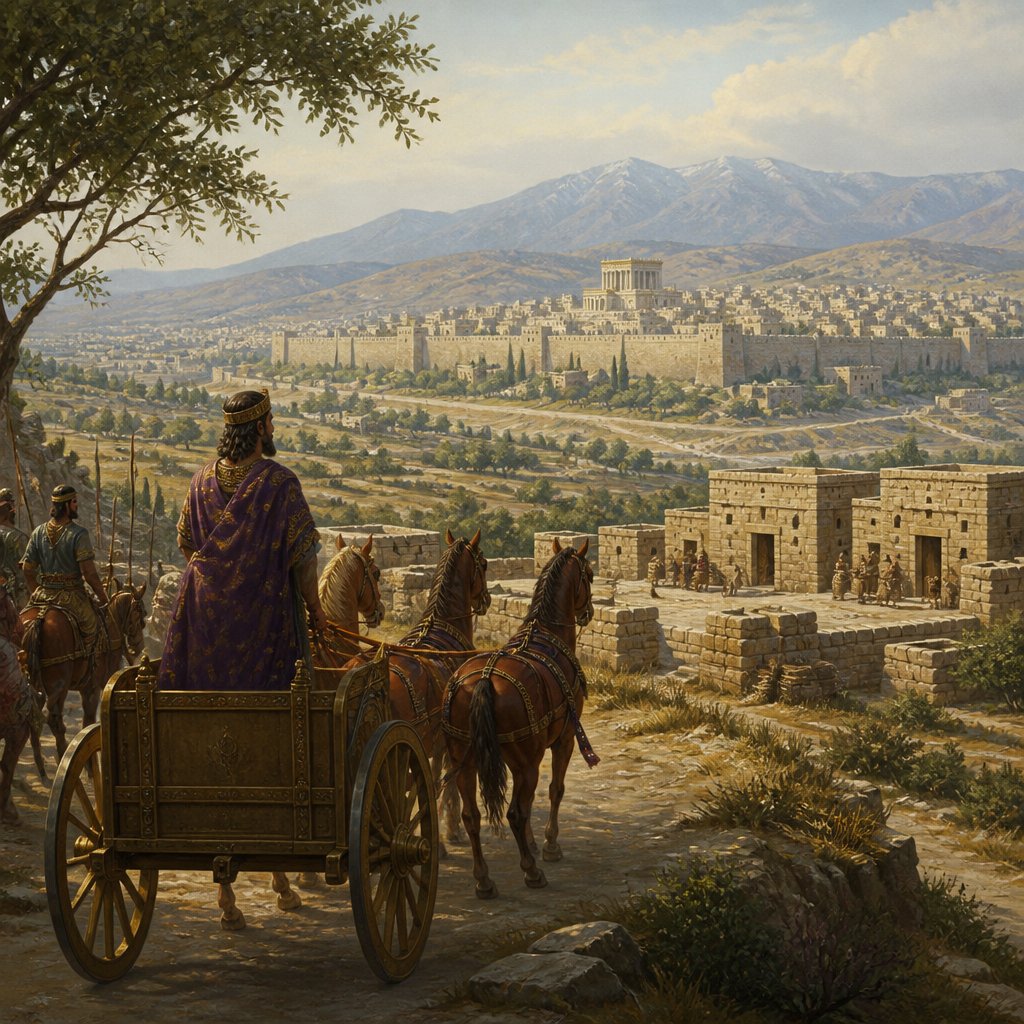
1 Kings 9:19 (KJV): "And all the cities of store that Solomon had, and cities for his chariots, and cities for his horsemen, and that which Solomon desired to build in Jerusalem, and in Lebanon, and in all the land of his dominion."
This verse is part of a larger passage in 1 Kings that describes the construction and expansion of Solomon's kingdom. After Solomon had finished building the temple and his own palace, he turned his attention to building cities for various purposes, including storing goods, housing chariots and horsemen, and fulfilling his personal desires for construction projects.
One of the major themes of this verse is the theme of wealth and power. Solomon, as one of the wealthiest and most powerful kings in the Israelite history, had the resources and the authority to build and expand his kingdom as he saw fit. The mention of the "cities of store" and the cities for chariots and horsemen is a reflection of Solomon's ability to amass and organize resources for his military and administrative needs. Additionally, the inclusion of "that which Solomon desired to build" emphasizes his personal agency and vision in shaping the physical landscape of his kingdom.
Another significant theme in this verse is the idea of stewardship. Solomon's building projects were not just a display of his wealth and power, but also a reflection of his responsibility as a king to provide for and protect his people. The construction of cities for chariots and horsemen, for example, would have been essential for maintaining a strong defense and ensuring the safety of the kingdom. By taking on these building projects, Solomon was demonstrating his commitment to fulfilling his duties as a ruler.
The context of this verse is important for understanding its significance within the larger narrative of Solomon's reign. In the preceding chapters of 1 Kings, Solomon's wisdom and wealth were already established, particularly through his construction of the temple and his palace. The mention of his desire to build in Jerusalem and Lebanon, as well as "in all the land of his dominion," underscores the extent of his influence and the scope of his building projects. This verse serves as a continuation of the theme of Solomon's grandeur and the expansion of his kingdom.
Symbolically, this verse can be seen as a representation of the material and military strength of Solomon's reign. The cities of store and the cities for chariots and horsemen are tangible symbols of his wealth and power, while his desires for construction projects reflect his influence and authority. At the same time, the verse also carries a message about the responsibilities and obligations of leadership. Solomon's building projects were not simply for his own glorification, but for the betterment and protection of his kingdom.
In conclusion, 1 Kings 9:19 is a verse that captures the splendor and the responsibilities of Solomon's reign. It serves as a testament to his wealth and power, as well as his commitment to stewardship and leadership. By examining this verse within its broader context and considering its themes and symbolism, we can gain a deeper understanding of the significance of Solomon's building projects and the legacy of his rule.
Get our apps


Artwork for 1 Kings 9:19

1 Kings 9:19 - "And all the cities of store that Solomon had, and cities for his chariots, and cities for his horsemen, and that which Solomon desired to build in Jerusalem, and in Lebanon, and in all the land of his dominion."
"And all the cities of store that Solomon had, and cities for his chariots, and cities for his horsemen, and that which Solomon desired to build in Jerusalem, and in Lebanon, and in all the land of his dominion." - 1 Kings 9:19

1 Chronicles 19:9 - "And the children of Ammon came out, and put the battle in array before the gate of the city: and the kings that were come were by themselves in the field."

1 Kings 19:9 - "¶ And he came thither unto a cave, and lodged there; and, behold, the word of the LORD came to him, and he said unto him, What doest thou here, Elijah?"

1 Kings 19:1-18

2 Kings 19:2

2 Kings 19:2

1 kings 22:19

2 Kings 19:2

1 Kings 3:9
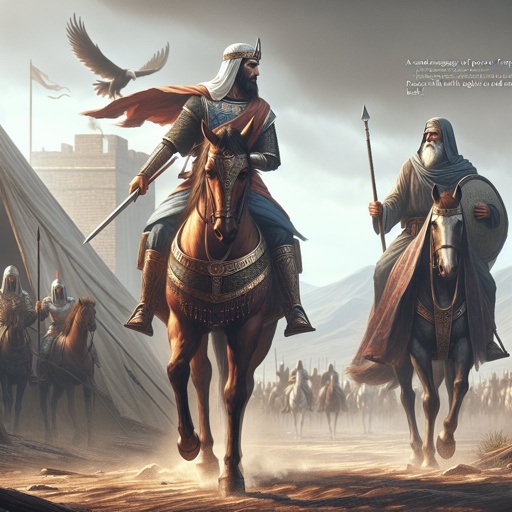
2 Kings 9:19 - "Then he sent out a second on horseback, which came to them, and said, Thus saith the king, Is it peace? And Jehu answered, What hast thou to do with peace? turn thee behind me."

1 Kings 3:19 - "And this woman's child died in the night; because she overlaid it."

1 Kings 14:19 - "And the rest of the acts of Jeroboam, how he warred, and how he reigned, behold, they are written in the book of the chronicles of the kings of Israel."

1 Kings 9:18 - "And Baalath, and Tadmor in the wilderness, in the land,"

1 Kings 9:14 - "And Hiram sent to the king sixscore talents of gold."

1 Kings 12:19 - "So Israel rebelled against the house of David unto this day."

1 Kings 9:17 - "And Solomon built Gezer, and Beth-horon the nether,"

2 Kings 19:9 - "And when he heard say of Tirhakah king of Ethiopia, Behold, he is come out to fight against thee: he sent messengers again unto Hezekiah, saying,"

1 Kings 6:19 - "And the oracle he prepared in the house within, to set there the ark of the covenant of the LORD."
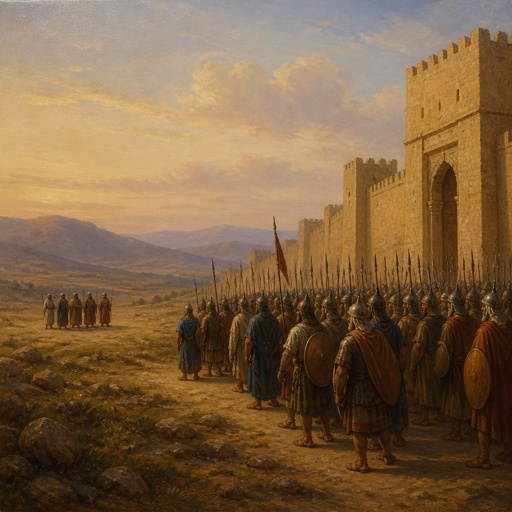
"And the children of Ammon came out, and put the battle in array before the gate of the city: and the kings that were come were by themselves in the field." - 1 Chronicles 19:9

1 Kings 19:12 - "And after the earthquake a fire; but the LORD was not in the fire: and after the fire a still small voice."

1 Kings 19:1 - "And Ahab told Jezebel all that Elijah had done, and withal how he had slain all the prophets with the sword."

1 Kings 15:9 - "¶ And in the twentieth year of Jeroboam king of Israel reigned Asa over Judah."

1 Kings 7:19 - "And the chapiters that were upon the top of the pillars were of lily work in the porch, four cubits."

1 Kings 22:9 - "Then the king of Israel called an officer, and said, Hasten hither Micaiah the son of Imlah."

1 Kings 13:19 - "So he went back with him, and did eat bread in his house, and drank water."

1 Kings 20:19 - "So these young men of the princes of the provinces came out of the city, and the army which followed them."

1 Kings 4:9 - "The son of Dekar, in Makaz, and in Shaalbim, and Beth-shemesh, and Elon-beth-hanan:"

"And Hiram sent to the king sixscore talents of gold." - 1 Kings 9:14
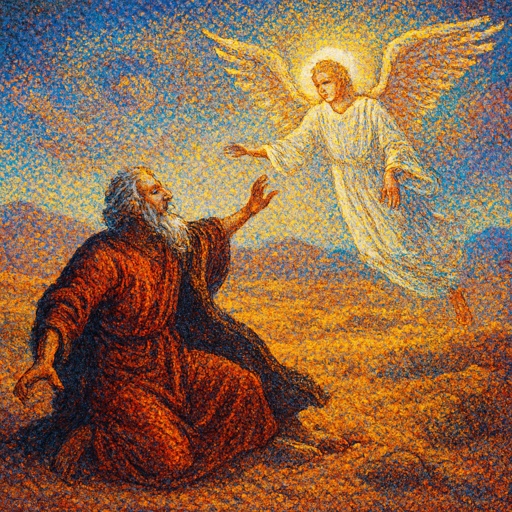
1 Kings 19: Elijah flew desperately in the dessert. THere, he has a vision of the angels of GOD.