What does 1 Samuel 13:2 mean?
“Saul chose him three thousand men of Israel; whereof two thousand were with Saul in Michmash and in mount Beth-el, and a thousand were with Jonathan in Gibeah of Benjamin: and the rest of the people he sent every man to his tent.” — 1 Samuel 13:2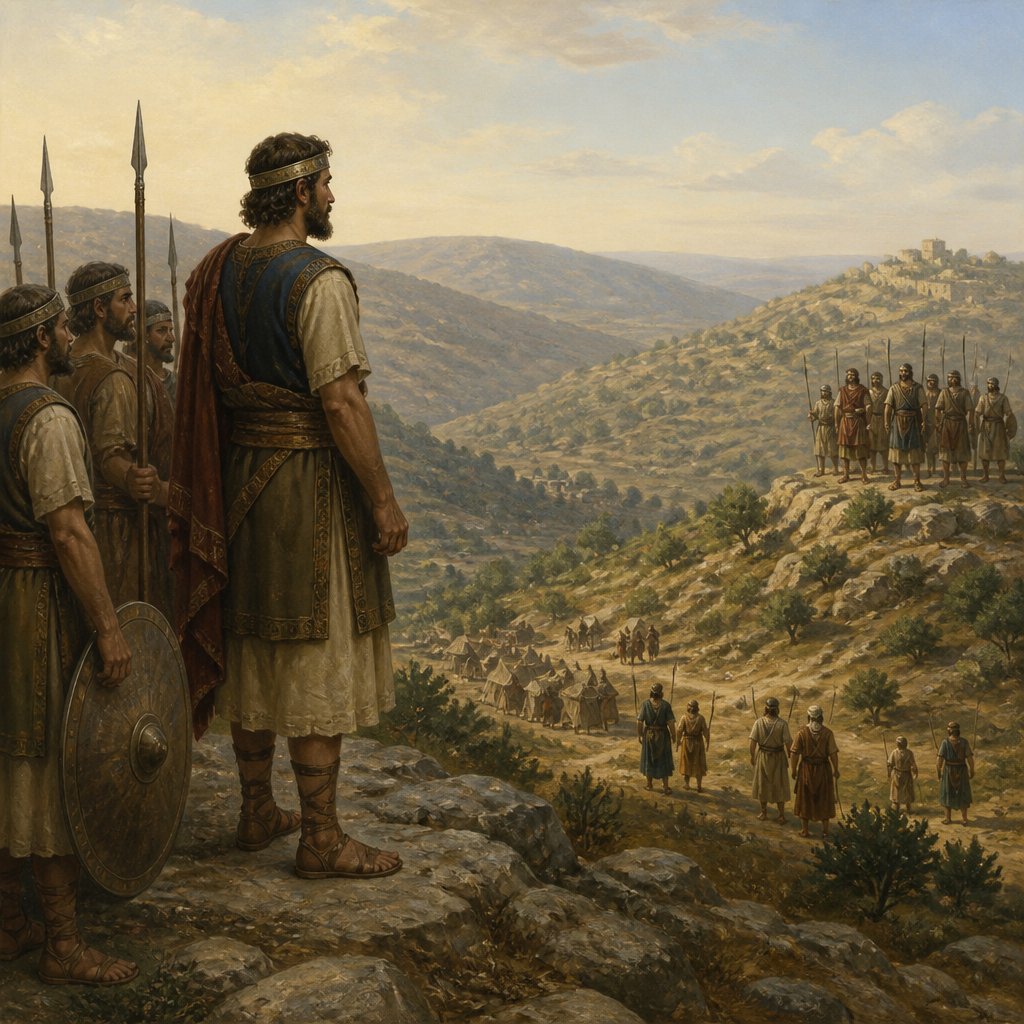
Sure, here is a detailed and in-depth meaning and commentary on 1 Samuel 13:2 from the King James Version (KJV):
1 Samuel 13:2 (KJV) says, "Saul chose him three thousand men of Israel; whereof two thousand were with Saul in Michmash and in mount Bethel, and a thousand were with Jonathan in Gibeah of Benjamin: and the rest of the people he sent every man to his tent."
Context:
The book of 1 Samuel is set in ancient Israel and tells the story of the transition from the times of the judges to the monarchy. The verse in question comes at a pivotal moment in the story, as Saul has been anointed as the first king of Israel and is beginning to establish his rule. The verse provides a glimpse into Saul's early leadership and military decisions as he seeks to defend Israel from its enemies.
Meaning:
In this verse, Saul is mustering his forces in preparation for a military campaign against the Philistines. He chooses three thousand men from Israel, dividing them into two groups. Two thousand men are stationed with Saul in Michmash and Mount Bethel, while a thousand men are assigned to Jonathan in Gibeah of Benjamin. The remaining people are sent back home to tend to their own affairs.
Saul's decision to gather and organize his army is a demonstration of his leadership and authority as the newly appointed king of Israel. He takes on the responsibility of protecting the nation and is proactive in preparing for potential threats from the Philistines.
The division of the army into two groups, with one led by Saul and the other by his son Jonathan, reflects the strategic planning and coordination of military forces. It also highlights the trust and respect that Saul has for his son's abilities as a warrior and leader.
Themes:
One of the key themes in this verse is the theme of leadership and responsibility. Saul, as the king of Israel, assumes the role of a military leader and takes charge of organizing the defense of the nation. His actions demonstrate the weight of leadership and the demands of leading a nation, particularly in times of conflict and war.
Another theme is the theme of preparation and planning. Saul's decision to gather and organize his army reveals the importance of being prepared for potential threats and challenges. It underscores the value of strategic thinking and proactive measures in safeguarding the well-being of the community.
Symbolism:
The number three thousand is often regarded as a symbol of strength and completeness in the Bible. In this context, it represents the sizable force that Saul assembles to protect Israel. It also symbolizes the unity and solidarity of the people under Saul's leadership, as they stand together in defense of their nation.
The division of the army into two groups symbolizes the need for effective organization and teamwork in achieving a common goal. It also symbolizes the distribution of responsibility and authority among leaders, as each group is led by either Saul or Jonathan, highlighting the importance of delegation and collaboration.
Overall, 1 Samuel 13:2 (KJV) offers insights into themes of leadership, preparation, and unity. It provides a glimpse into the early days of Saul's reign as king of Israel and sets the stage for the military conflicts and challenges that lie ahead in the biblical narrative.
Get our apps


Artwork for 1 Samuel 13:2

1 Samuel 13:2 - "Saul chose him three thousand men of Israel; whereof two thousand were with Saul in Michmash and in mount Beth-el, and a thousand were with Jonathan in Gibeah of Benjamin: and the rest of the people he sent every man to his tent."
"Saul chose him three thousand men of Israel; whereof two thousand were with Saul in Michmash and in mount Beth-el, and a thousand were with Jonathan in Gibeah of Benjamin: and the rest of the people he sent every man to his tent." - 1 Samuel 13:2
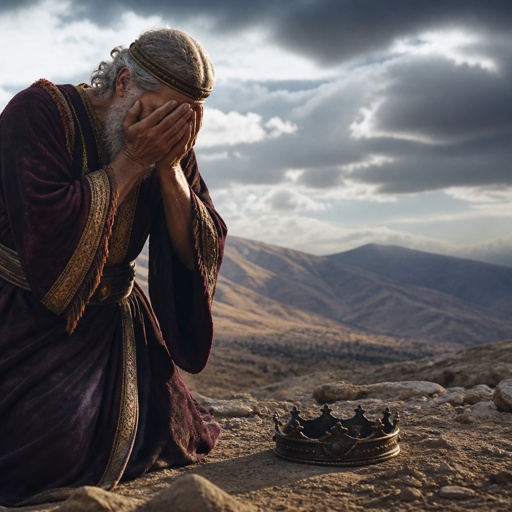
1 Samuel 13:13-14
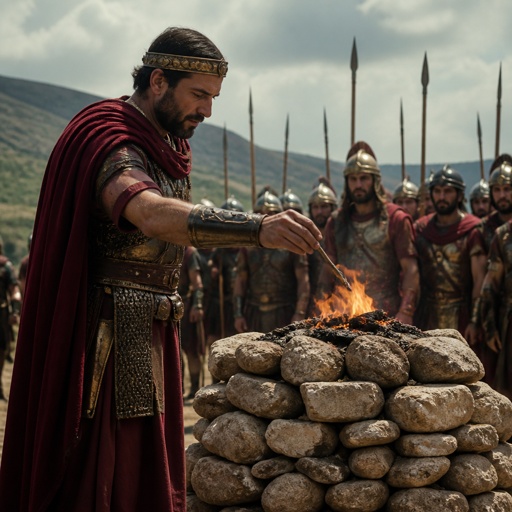
1 Samuel 13:3
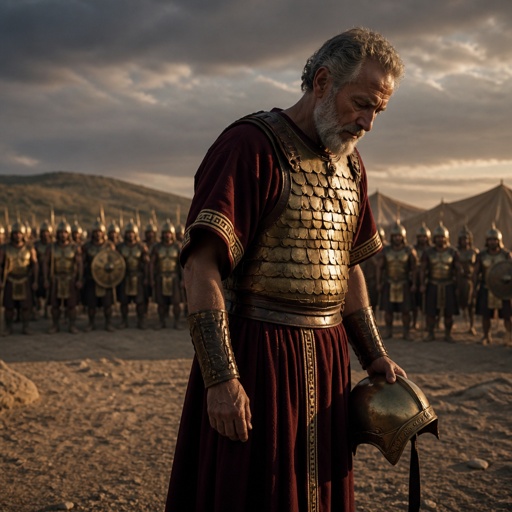
1 Samuel 13:14
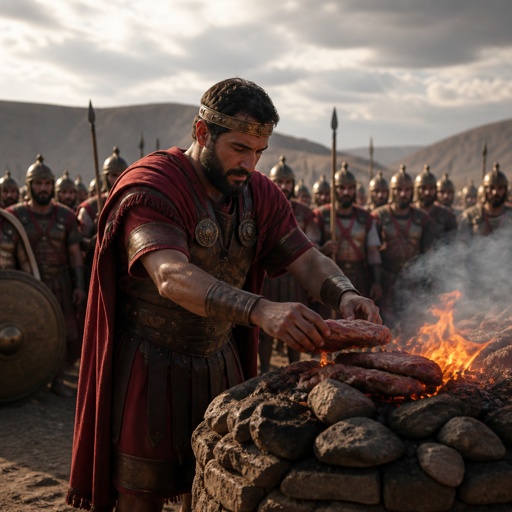
1 Samuel 13:11

2 Samuel 13:1 - "And it came to pass after this, that Absalom the son of David had a fair sister, whose name was Tamar; and Amnon the son of David loved her."

2 Samuel 1:13 - "¶ And David said unto the young man that told him, Whence art thou? And he answered, I am the son of a stranger, an Amalekite."

1 Samuel 16:1–13

1 Samuel 13:12 Saul's disobedience

1 Samuel 2:13 - "And the priests' custom with the people was, that, when any man offered sacrifice, the priest's servant came, while the flesh was in seething, with a fleshhook of three teeth in his hand;"

1 Samuel 12:13

1 Samuel 12:13

1 Samuel 22:11-13

1 Samuel 15:13 - "And Samuel came to Saul: and Saul said unto him, Blessed be thou of the LORD: I have performed the commandment of the LORD."

1 Samuel 13:8 - "¶ And he tarried seven days, according to the set time that Samuel had appointed: but Samuel came not to Gilgal; and the people were scattered from him."

2 Samuel 13:38 - "So Absalom fled, and went to Geshur, and was there three years."

1 Samuel 13:12 No face of persons

1 Samuel 13:23 - "And the garrison of the Philistines went out to the passage of Michmash."

2 Samuel 22:13 - "Through the brightness before him were coals of fire kindled."

1 Samuel 13:1 - "Saul reigned one year; and when he had reigned two years over Israel,"

1 Samuel 13:13 - "And Samuel said to Saul, Thou hast done foolishly: thou hast not kept the commandment of the LORD thy God, which he commanded thee: for now would the LORD have established thy kingdom upon Israel for ever."

1 Samuel 7:13 - "¶ So the Philistines were subdued, and they came no more into the coast of Israel: and the hand of the LORD was against the Philistines all the days of Samuel."

1 Samuel 8:13 - "And he will take your daughters to be confectionaries, and to be cooks, and to be bakers."

2 Samuel 15:13 - "¶ And there came a messenger to David, saying, The hearts of the men of Israel are after Absalom."

2 Samuel 13:21 - "¶ But when king David heard of all these things, he was very wroth."

1 Samuel 16:13 - "Then Samuel took the horn of oil, and anointed him in the midst of his brethren: and the Spirit of the LORD came upon David from that day forward. So Samuel rose up, and went to Ramah."

1 Samuel 13:15 - "And Samuel arose, and gat him up from Gilgal unto Gibeah of Benjamin. And Saul numbered the people that were present with him, about six hundred men."

1 Samuel 13:21 - "Yet they had a file for the mattocks, and for the coulters, and for the forks, and for the axes, and to sharpen the goads."

2 Samuel 13:27 - "But Absalom pressed him, that he let Amnon and all the king's sons go with him."