What does 1 Samuel 14:28 mean?
“Then answered one of the people, and said, Thy father straitly charged the people with an oath, saying, Cursed be the man that eateth any food this day. And the people were faint.” — 1 Samuel 14:28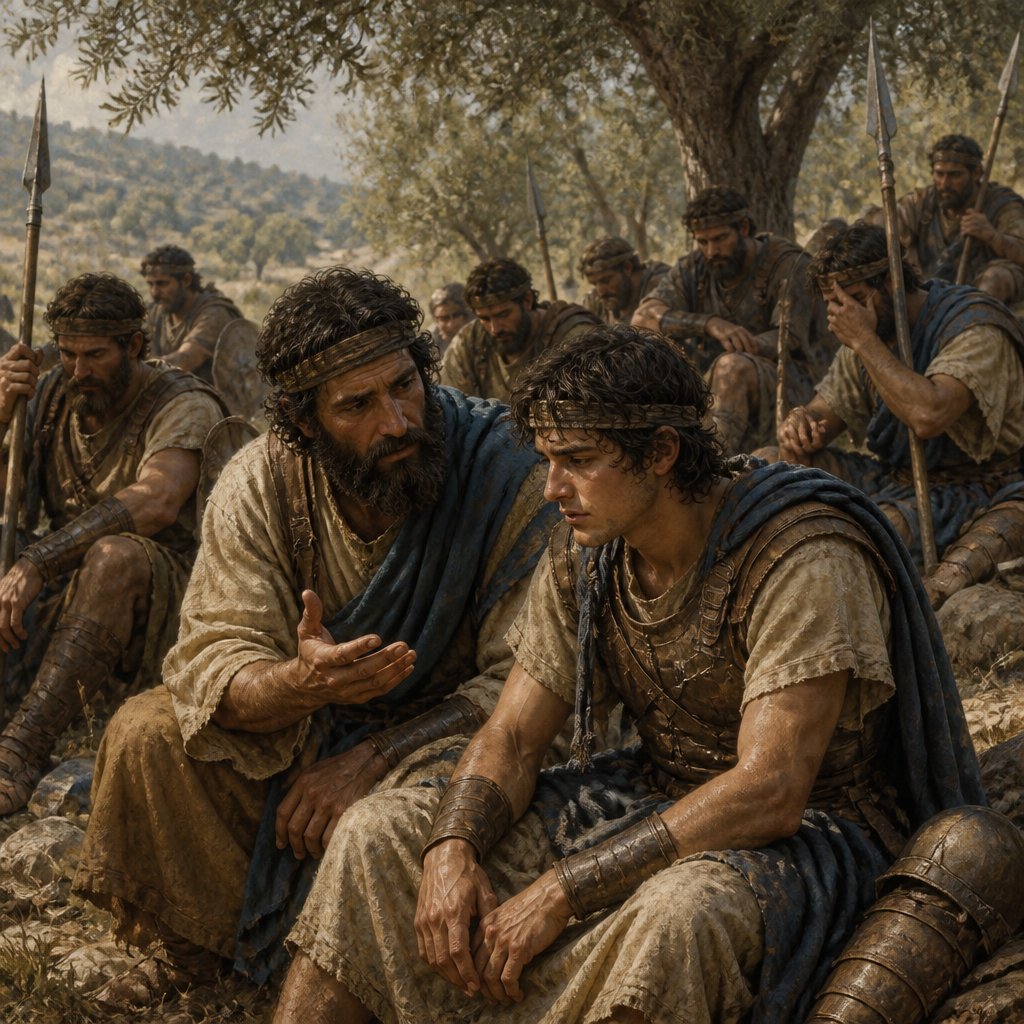
In 1 Samuel 14:28, the King James Version translates the verse as follows: "Then answered one of the people, and said, Thy father straitly charged the people with an oath, saying, Cursed be the man that eateth any food this day. And the people were faint."
This verse comes from the Old Testament, specifically from the book of 1 Samuel, a historical account of the transition from the time of the judges to the time of the monarchy in ancient Israel. The verse is situated within a larger narrative that tells the story of Saul, the first king of Israel, and his son Jonathan's victory over the Philistines.
In this particular verse, we see the people of Israel facing the aftermath of a battle against the Philistines. Earlier in the chapter, Saul had declared a fast for the people, prohibiting them from eating until evening as a way to bring a curse upon anyone who broke the fast. The verse reveals that one of the people spoke up and reminded others of Saul's strict command, emphasizing the severity of the oath and the consequences of breaking it. The people's condition is described as "faint," indicating their exhaustion and hunger after the battle.
One of the central themes in this verse is the tension between obedience to human authority and the basic human need for sustenance. Saul's command placed a heavy burden on the people, making them vulnerable to physical weakness and exhaustion. The verse brings attention to the ethical and practical implications of such a command, raising questions about the responsibilities of leaders and the well-being of their followers.
Another key theme is the concept of oaths and curses. In ancient Israelite society, oaths carried significant weight and breaking them often resulted in severe consequences. The people's fear of breaking Saul's oath reflects the cultural and religious significance of such commitments at that time.
Additionally, the verse underscores the physical toll of warfare. The people's fatigue and hunger serve as a reminder of the harsh realities of battle and the physical hardships endured by soldiers and civilians alike. This aspect of the verse highlights the human cost of conflict and the impact it has on individuals and communities.
Symbolically, the verse can be seen as a representation of the conflict between human law and divine law. While Saul's command was intended to demonstrate the people's devotion and obedience to God, it also put them in a difficult position, forcing them to choose between following the king's edict and tending to their own basic needs. This dichotomy reflects the broader tension between human authority and divine will, a recurring theme in the Bible.
Overall, 1 Samuel 14:28 offers a nuanced portrayal of the complexities of human leadership, the ethical dilemmas it entails, and the impact of warfare on individuals. It prompts readers to reflect on the intersection of power, obedience, and compassion, and raises important questions about the role of authority and the responsibilities of those in positions of leadership.
Get our apps


Artwork for 1 Samuel 14:28

1 Samuel 14:28 - "Then answered one of the people, and said, Thy father straitly charged the people with an oath, saying, Cursed be the man that eateth any food this day. And the people were faint."
"Then answered one of the people, and said, Thy father straitly charged the people with an oath, saying, Cursed be the man that eateth any food this day. And the people were faint." - 1 Samuel 14:28

1 Samuel 28:14 - "And he said unto her, What form is he of? And she said, An old man cometh up; and he is covered with a mantle. And Saul perceived that it was Samuel, and he stooped with his face to the ground, and bowed himself."

2 Samuel 14:28 - "¶ So Absalom dwelt two full years in Jerusalem, and saw not the king's face."

1 Samuel 28:15

1 Samuel 28:7

1 Samuel 28:15-20

1 Samuel 28:15-19

1 Chronicles 6:28 - "And the sons of Samuel; the firstborn Vashni, and Abiah."

1 Samuel 28:15 Saul is desperate

1 Samuel 14:6

1 Samuel 28:11 - "Then said the woman, Whom shall I bring up unto thee? And he said, Bring me up Samuel."

1 Samuel 28:16 - "Then said Samuel, Wherefore then dost thou ask of me, seeing the LORD is departed from thee, and is become thine enemy?"

1 Samuel 14:7

1 Samuel 18:28 - "¶ And Saul saw and knew that the LORD was with David, and that Michal Saul's daughter loved him."

1 Samuel 14:27
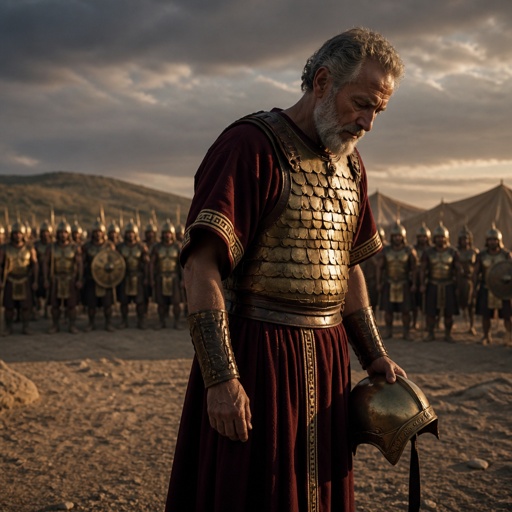
1 Samuel 13:14

2 Samuel 6:14

1 Samuel 11:14 - "Then said Samuel to the people, Come, and let us go to Gilgal, and renew the kingdom there."

1 Samuel 28:12 - "And when the woman saw Samuel, she cried with a loud voice: and the woman spake to Saul, saying, Why hast thou deceived me? for thou art Saul."

1 Samuel 20:28 - "And Jonathan answered Saul, David earnestly asked leave of me to go to Beth-lehem:"

1 Samuel 28:5 - "And when Saul saw the host of the Philistines, he was afraid, and his heart greatly trembled."
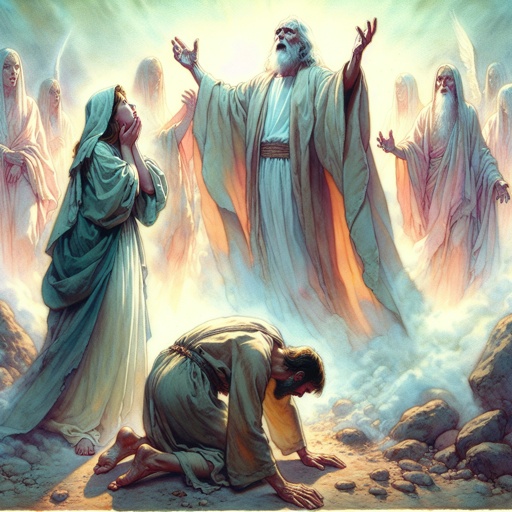
1 Samuel 28:12-14 (KJVA) 12 And when the woman saw Samuel, she cried with a loud voice: and the woman spake to Saul, saying, Why hast thou deceived me? for thou art Saul. 13 And the king said unto her, Be not afraid: for what sawest thou? And the woman said unto Saul, I saw gods ascending out of the earth. 14 And he said unto her, What form is he of? And she said, An old man cometh up; and he is covered with a mantle. And Saul perceived that it was Samuel, and he stooped with his face to the ground, and bowed himself.
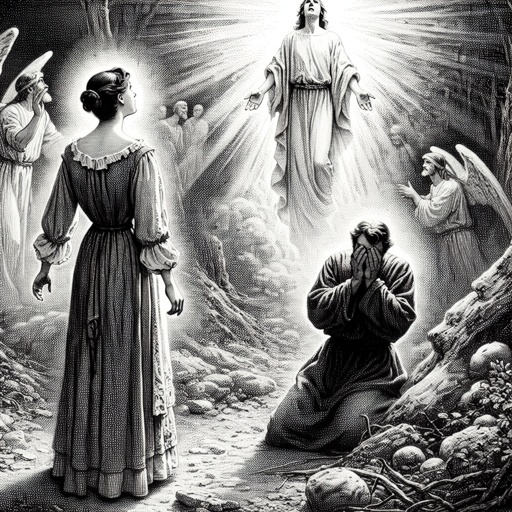
1 Samuel 28:12-14 (KJVA) 12 And when the woman saw Samuel, she cried with a loud voice: and the woman spake to Saul, saying, Why hast thou deceived me? for thou art Saul. 13 And the king said unto her, Be not afraid: for what sawest thou? And the woman said unto Saul, I saw gods ascending out of the earth. 14 And he said unto her, What form is he of? And she said, An old man cometh up; and he is covered with a mantle. And Saul perceived that it was Samuel, and he stooped with his face to the ground, and bowed himself.

1 Samuel 15:28 - "And Samuel said unto him, The LORD hath rent the kingdom of Israel from thee this day, and hath given it to a neighbour of thine, that is better than thou."

1 Samuel 28:10 - "And Saul sware to her by the LORD, saying, As the LORD liveth, there shall no punishment happen to thee for this thing."
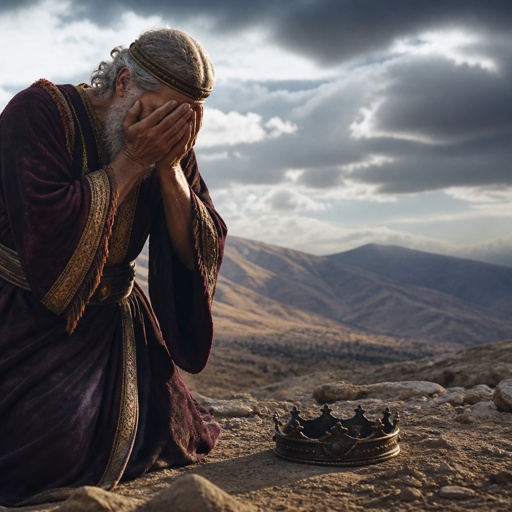
1 Samuel 13:13-14

1 Samuel 28:20 - "Then Saul fell straightway all along on the earth, and was sore afraid, because of the words of Samuel: and there was no strength in him; for he had eaten no bread all the day, nor all the night."

1 Samuel 17:14 - "And David was the youngest: and the three eldest followed Saul."
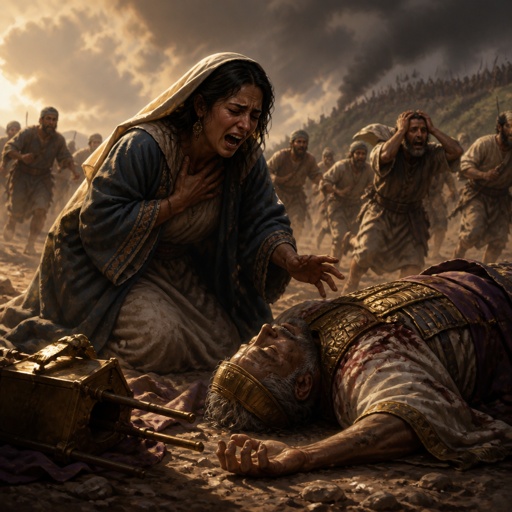
1 Samuel 4:14-16