What does 1 Samuel 14:29 mean?
“Then said Jonathan, My father hath troubled the land: see, I pray you, how mine eyes have been enlightened, because I tasted a little of this honey.” — 1 Samuel 14:29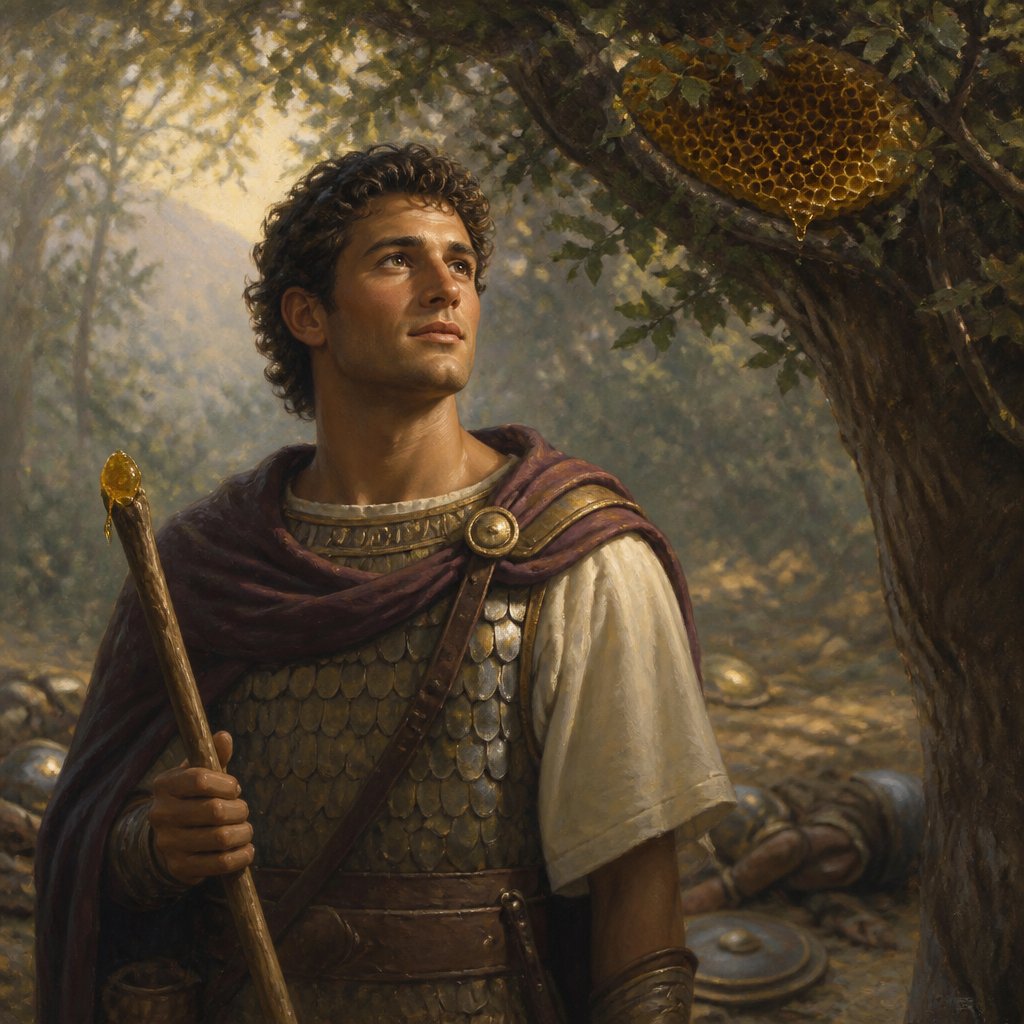
The passage 1 Samuel 14:29 from the King James Version (KJV) of the Bible reads:
"Then said Jonathan, My father hath troubled the land: see, I pray you, how mine eyes have been enlightened, because I tasted a little of this honey."
This passage comes from the Old Testament book of 1 Samuel, which details the transition from the period of the judges to the establishment of the monarchy in Israel. The passage occurs in the context of a story involving Jonathan, the son of King Saul, and his close companion, his armor-bearer, who embarked on a daring mission against the Philistines. The passage immediately preceding this one describes Jonathan finding honey in the forest and tasting it, despite his father's command that none of the Israelites should eat anything until evening due to a fast he had declared.
The verse 1 Samuel 14:29 is significant in several aspects, including its broader themes of loyalty, disobedience, and God's providence. Through an in-depth analysis of this verse, we can gain a deeper understanding of its context and the underlying messages it conveys.
One of the key themes in this passage is the conflict between personal loyalty and obedience to authority. Jonathan's act of eating the honey, which directly contradicted his father's orders, symbolizes his willingness to prioritize his own instinct and judgment over the commands of his father, the king. This can be interpreted as a demonstration of Jonathan's loyalty to God and his people, as he chose to act in a way that he believed would honor and benefit Israel, rather than blindly complying with his father's instructions. This theme raises thought-provoking questions about the nature of obedience and the balance between loyalty to authority and moral responsibility.
Furthermore, the passage also touches upon the theme of divine providence and spiritual enlightenment. Jonathan's declaration, "My father hath troubled the land," implies that King Saul's actions have brought unrest or difficulty upon the people. Jonathan's experience of having his eyes "enlightened" after tasting the honey can be seen as a metaphor for gaining insight or understanding. This moment of physical and spiritual nourishment, in defiance of his father's decree, may symbolize Jonathan's renewed clarity and discernment, suggesting that his act of disobedience has not only provided physical sustenance but also spiritual enlightenment.
The passage also serves as a reminder of the consequences of human actions and the importance of seeking God's guidance. Jonathan's decision to taste the honey in direct opposition to his father's orders carries both immediate and potential repercussions. This emphasizes the significance of seeking discernment and wisdom from God before making decisions, as well as the need to consider the broader impact of one's actions on others.
Symbolically, the honey in this passage can be interpreted as representing both physical and spiritual nourishment. The sweetness and sustenance of honey can be seen as a metaphor for the goodness and blessings that come from God. Jonathan's decision to partake of the honey, despite the risks and consequences, may symbolize his willingness to seek and embrace the blessings that God provides, even in defiance of human authority.
In conclusion, 1 Samuel 14:29 offers profound insights into themes of loyalty, disobedience, divine providence, and spiritual enlightenment. Through Jonathan's act of tasting the honey, the passage prompts us to reflect on the complexities of human decision-making, the balance between obedience and moral responsibility, and the importance of seeking God's guidance in all aspects of our lives. The passage serves as a timeless reminder of the enduring relevance of these themes and their significance in our relationship with God and others.
Get our apps


Artwork for 1 Samuel 14:29

1 Samuel 14:29 - "Then said Jonathan, My father hath troubled the land: see, I pray you, how mine eyes have been enlightened, because I tasted a little of this honey."
"Then said Jonathan, My father hath troubled the land: see, I pray you, how mine eyes have been enlightened, because I tasted a little of this honey." - 1 Samuel 14:29

2 Samuel 7:1–29

1 Samuel 20:27-29

Jeremiah 29: 4-14

Jeremiah 29: 4-14

Jeremiah 29: 4-14

Jeremiah 29: 4-14

Jeremiah 29: 4-14

1 Chronicles 29:29 - "Now the acts of David the king, first and last, behold, they are written in the book of Samuel the seer, and in the book of Nathan the prophet, and in the book of Gad the seer,"

1 Samuel 14:6

1 Samuel 17:29 - "And David said, What have I now done? Is there not a cause?"

1 Samuel 29:1 - "Now the Philistines gathered together all their armies to Aphek: and the Israelites pitched by a fountain which is in Jezreel."

1 Samuel 18:29 - "And Saul was yet the more afraid of David; and Saul became David's enemy continually."

1 Samuel 29:7 - "Wherefore now return, and go in peace, that thou displease not the lords of the Philistines."

1 Samuel 14:7

1 Samuel 23:29 - "And David went up from thence, and dwelt in strong holds at En-gedi."

1 Samuel 14:27
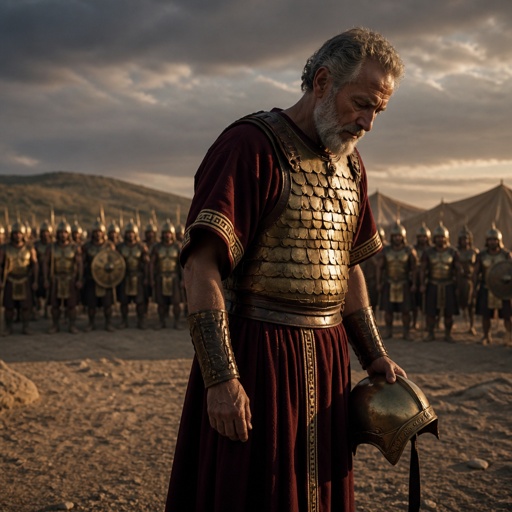
1 Samuel 13:14

2 Samuel 6:14

1 Samuel 11:14 - "Then said Samuel to the people, Come, and let us go to Gilgal, and renew the kingdom there."

2 Samuel 14:29 - "Therefore Absalom sent for Joab, to have sent him to the king; but he would not come to him: and when he sent again the second time, he would not come."

1 Samuel 29:2 - "And the lords of the Philistines passed on by hundreds, and by thousands: but David and his men passed on in the rereward with Achish."

1 Samuel 15:29 - "And also the Strength of Israel will not lie nor repent: for he is not a man, that he should repent."

1 Corinthians 14:29 - "Let the prophets speak two or three, and let the other judge."
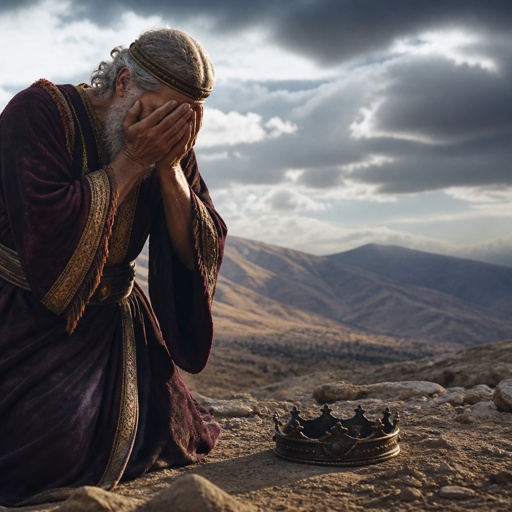
1 Samuel 13:13-14

1 Samuel 17:14 - "And David was the youngest: and the three eldest followed Saul."
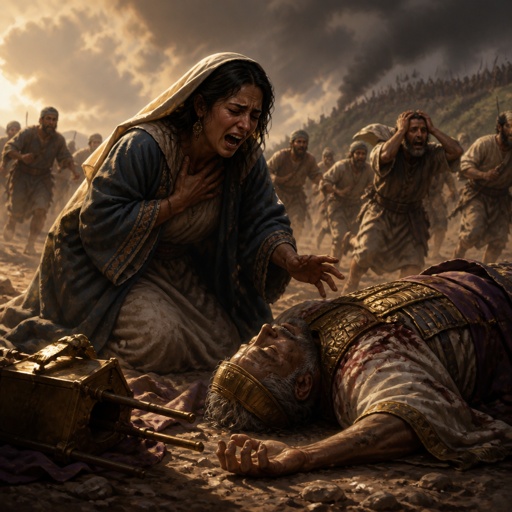
1 Samuel 4:14-16

1 Samuel 15:14 - "And Samuel said, What meaneth then this bleating of the sheep in mine ears, and the lowing of the oxen which I hear?"

1 Samuel 29:5 - "Is not this David, of whom they sang one to another in dances, saying, Saul slew his thousands, and David his ten thousands?"