What does 1 Samuel 14:30 mean?
“How much more, if haply the people had eaten freely to day of the spoil of their enemies which they found? for had there not been now a much greater slaughter among the Philistines?” — 1 Samuel 14:30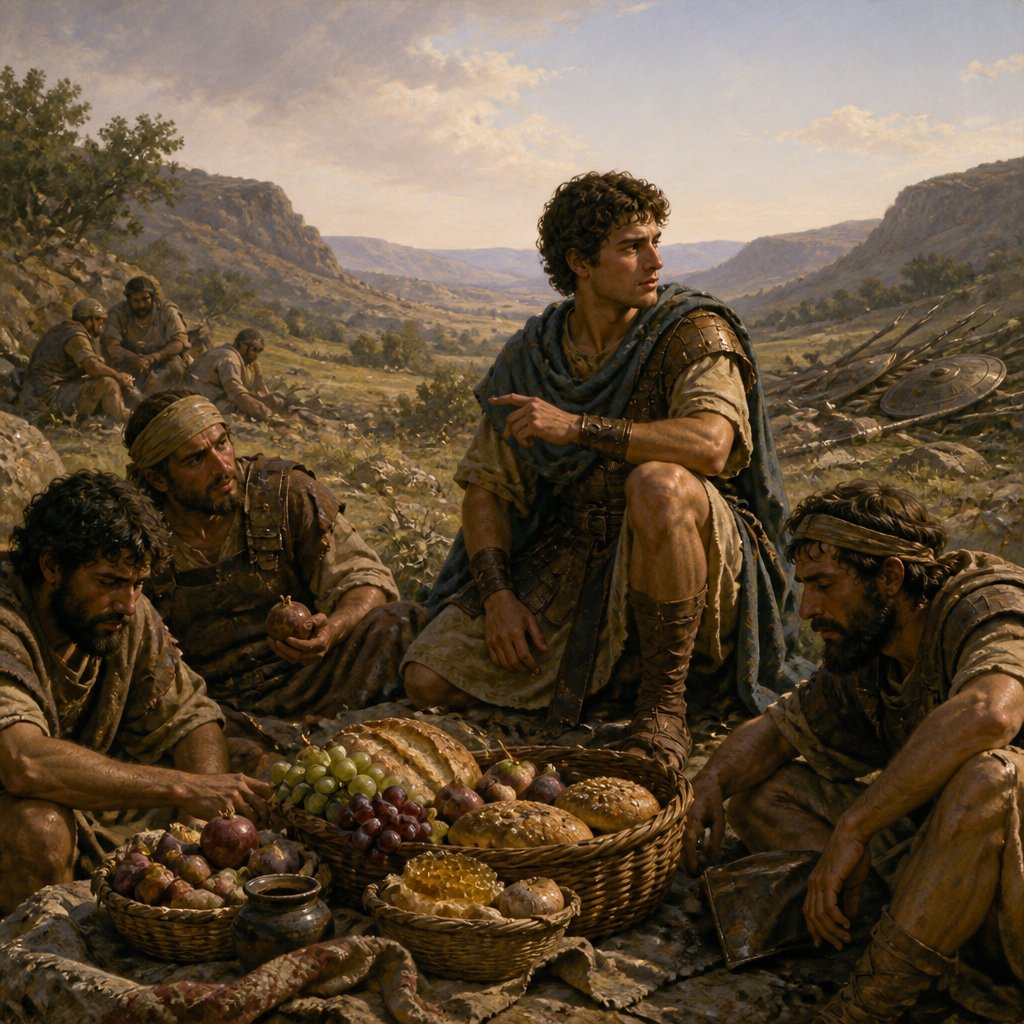
The verse 1 Samuel 14:30 from the King James Version (KJV) of the Bible reads, "How much more, if haply the people had eaten freely to day of the spoil of their enemies which they found? for had there not been now a much greater slaughter among the Philistines?" This verse is part of the larger story of Jonathan, the son of King Saul, and his armor-bearer embarking on a daring mission to attack the Philistine army and secure a victory for the Israelites.
In this verse, King Saul is expressing frustration and disappointment at the actions of his army. The background to this verse is that Jonathan and his armor-bearer had taken matters into their own hands and attacked a Philistine outpost, resulting in panic and confusion among the Philistine army. This led to a rout of the Philistine forces, and a great victory for the Israelites. However, Saul had given a command for the people not to eat anything until evening, and when he learned that they had eaten honey from the spoils of the Philistines, he was upset.
The verse reflects King Saul's concern about the discipline and obedience of his people. He questions what might have happened if the people had freely eaten the spoil of their enemies that day, implying that even greater success could have been achieved. However, he also acknowledges that there had already been a great slaughter among the Philistines, indicating a measure of satisfaction with the current outcome despite his concerns about the potential for even greater success.
One theme that emerges from this verse is the tension between obedience and initiative. King Saul's frustration with his army's actions exposes the delicate balance between following orders and taking strategic risks in the pursuit of victory. Jonathan's boldness in attacking the Philistines on his own initiative illustrates the potential for individual courage to produce significant results, even in the face of official commands.
Another theme in this verse is the moral and ethical implications of warfare. The question of whether it was right for the people to eat of the spoils of their enemies highlights the complicated moral terrain of conflict and conquest. This theme raises questions about the nature of justice, the treatment of conquered peoples, and the responsibilities of the victors in war.
The context of this verse is also important for understanding its significance. 1 Samuel portrays a pivotal moment in the history of Israel, as the people transition from a loose confederation of tribes to a unified monarchy under King Saul. The military victories and defeats described in this passage are crucial for the formation of the nation and the establishment of its identity as a chosen people in a land promised to them by God.
Symbolically, the spoils of war represent the tangible rewards of triumph and the tangible evidence of God's favor. The act of consuming these spoils can be understood as a metaphor for internalizing the benefits of victory and the blessings of God. Thus, when Saul berates his people for eating the spoils prematurely, he is expressing a concern that they are not fully embracing the significance of their triumph and may be compromising their spiritual and moral integrity in the process.
In summary, 1 Samuel 14:30 from the King James Version of the Bible engages with themes of obedience and initiative, the moral and ethical complexities of warfare, and the symbolic significance of victory and spoils. The broader context of the passage adds depth and richness to its meaning, highlighting its relevance to the formation of the Israelite nation and its spiritual identity.
Get our apps


Artwork for 1 Samuel 14:30
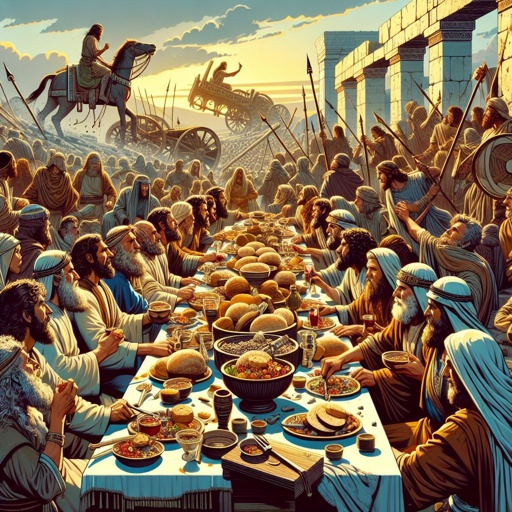
1 Samuel 14:30 - "How much more, if haply the people had eaten freely to day of the spoil of their enemies which they found? for had there not been now a much greater slaughter among the Philistines?"
"How much more, if haply the people had eaten freely to day of the spoil of their enemies which they found? for had there not been now a much greater slaughter among the Philistines?" - 1 Samuel 14:30

1 Samuel 30:14 - "We made an invasion upon the south of the Cherethites, and upon the coast which belongeth to Judah, and upon the south of Caleb; and we burned Ziklag with fire."

1.samuel 15:30

1 Samuel 30:18

1.samuel 15:30

1 Samuel 30:30 - "And to them which were in Hormah, and to them which were in Chorashan, and to them which were in Athach,"
1 Samuel 20:27-30

1 Samuel 14:6

1 Kings 14:30 - "And there was war between Rehoboam and Jeroboam all their days."

1 Samuel 14:7

1 Samuel 14:27
1 Samuel 13:14

2 Samuel 6:14

1 Samuel 11:14 - "Then said Samuel to the people, Come, and let us go to Gilgal, and renew the kingdom there."

1 Samuel 30:25 - "And it was so from that day forward, that he made it a statute and an ordinance for Israel unto this day."

2 Samuel 14:30 - "Therefore he said unto his servants, See, Joab's field is near mine, and he hath barley there; go and set it on fire. And Absalom's servants set the field on fire."

1 Samuel 30:28 - "And to them which were in Aroer, and to them which were in Siphmoth, and to them which were in Eshtemoa,"

1 Samuel 30:18 - "And David recovered all that the Amalekites had carried away: and David rescued his two wives."

1 Samuel 30:5 - "And David's two wives were taken captives, Ahinoam the Jezreelitess, and Abigail the wife of Nabal the Carmelite."
1 Samuel 13:13-14

1 Samuel 17:14 - "And David was the youngest: and the three eldest followed Saul."
1 Samuel 4:14-16

1 Samuel 30:4 - "Then David and the people that were with him lifted up their voice and wept, until they had no more power to weep."

1 Corinthians 14:30 - "If any thing be revealed to another that sitteth by, let the first hold his peace."

1 Samuel 15:14 - "And Samuel said, What meaneth then this bleating of the sheep in mine ears, and the lowing of the oxen which I hear?"

1 Samuel 30:29 - "And to them which were in Rachal, and to them which were in the cities of the Jerahmeelites, and to them which were in the cities of the Kenites,"

1 Samuel 30:31 - "And to them which were in Hebron, and to all the places where David himself and his men were wont to haunt."

1 Samuel 30:27 - "To them which were in Beth-el, and to them which were in south Ramoth, and to them which were in Jattir,"

1 Samuel 30:20 - "And David took all the flocks and the herds, which they drave before those other cattle, and said, This is David's spoil."