What does 1 Samuel 29:10 mean?
“Wherefore now rise up early in the morning with thy master’s servants that are come with thee: and as soon as ye be up early in the morning, and have light, depart.” — 1 Samuel 29:10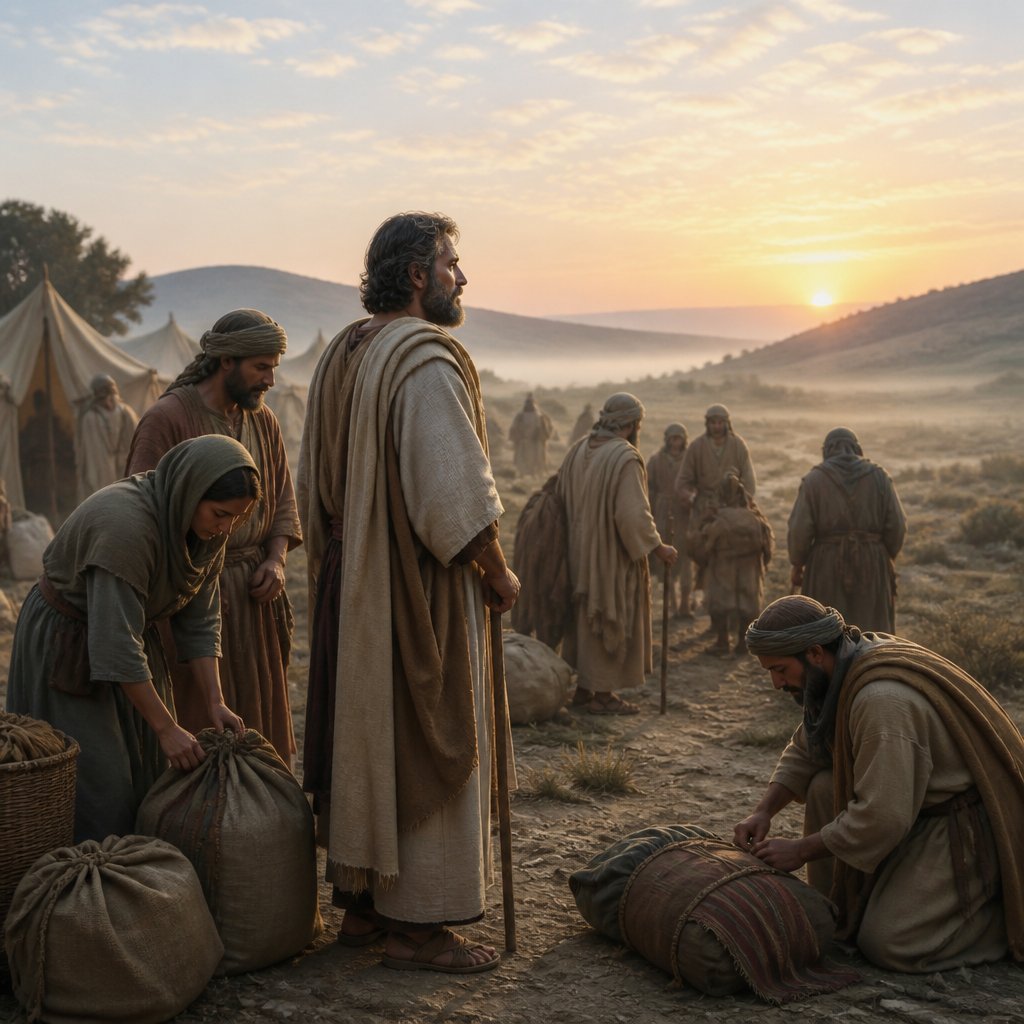
The verse 1 Samuel 29:10 from the King James Version of the Bible reads: "Wherefore now rise up early in the morning with thy master's servants that are come with thee: and as soon as ye be up early in the morning, and have light, depart." This verse is part of the larger narrative of the Old Testament book of 1 Samuel, which tells the story of the prophet Samuel, the rise of King Saul, and the eventual anointing of David as the future king of Israel.
In this particular verse, we find the Philistine rulers debating whether or not David and his men should join them in battle against the Israelites. The Philistine rulers express their lack of trust in David, fearing that he may turn against them in battle and betray them in favor of his own people. Therefore, in this verse, they command David to leave early in the morning, along with his men, before the battle ensues.
The themes and context of this verse are deeply rooted in the political and military tensions of the time. The Philistines, enemies of the Israelites, were engaged in ongoing conflicts with the Israelites, and David had fled to the land of the Philistines to escape from the wrath of King Saul. This created a complex and precarious situation for David, torn between his loyalty to the Philistines who offered him refuge and his ultimate destiny as the future king of Israel.
Symbolism in this verse can be found in the metaphor of the early morning light, which represents both the physical and metaphorical dawning of a new day. In this context, it signifies the transition and the imminent change that is about to take place in David's life and his allegiance. The Philistine rulers' command for David to depart at first light also foreshadows the eventual unraveling of David's precarious position and the eventual fulfillment of his destiny as the anointed king of Israel.
The verse also speaks to the universal theme of trust and betrayal. The Philistines' lack of trust in David reflects the fragile nature of alliances and the inherent distrust among enemies turned temporary allies. This theme of trust and betrayal would continue to play a significant role in David's life as he navigates the treacherous political landscape of ancient Israel.
Furthermore, this verse also serves as a reminder of the divine providence and sovereignty of God in the unfolding of history. Despite the intricate political and military maneuvers, it is ultimately God who holds the ultimate authority and control over the affairs of nations and individuals. This is a recurring theme throughout the Bible and serves as a source of comfort and reassurance for believers faced with uncertain and tumultuous circumstances.
In conclusion, 1 Samuel 29:10 is a verse that is deeply embedded in the complexities of political intrigue, trust, and betrayal. It serves as a poignant reminder of the ever-present divine providence and sovereignty of God, guiding the destinies of individuals and nations. It also foreshadows the eventual rise of David as the anointed king of Israel, despite the precarious and uncertain circumstances he finds himself in. This verse offers a glimpse into the larger narrative of the Old Testament and provides valuable insights into the timeless themes of trust, loyalty, and the providence of God.
Get our apps


Artwork for 1 Samuel 29:10

1 Samuel 29:10 - "Wherefore now rise up early in the morning with thy master's servants that are come with thee: and as soon as ye be up early in the morning, and have light, depart."
"Wherefore now rise up early in the morning with thy master's servants that are come with thee: and as soon as ye be up early in the morning, and have light, depart." - 1 Samuel 29:10

2 Samuel 7:1–29

1 Samuel 20:27-29

1 Samuel 10:1 Samuel anoniting Saul

1 Chronicles 29:29 - "Now the acts of David the king, first and last, behold, they are written in the book of Samuel the seer, and in the book of Nathan the prophet, and in the book of Gad the seer,"

1 Samuel 17:29 - "And David said, What have I now done? Is there not a cause?"

1 Samuel 29:1 - "Now the Philistines gathered together all their armies to Aphek: and the Israelites pitched by a fountain which is in Jezreel."

1 Samuel 18:29 - "And Saul was yet the more afraid of David; and Saul became David's enemy continually."

1 Samuel 15:10 - "¶ Then came the word of the LORD unto Samuel, saying,"

1 Samuel 29:7 - "Wherefore now return, and go in peace, that thou displease not the lords of the Philistines."

1 Samuel 29:5 - "Is not this David, of whom they sang one to another in dances, saying, Saul slew his thousands, and David his ten thousands?"

1 Samuel 10:17 - "¶ And Samuel called the people together unto the LORD to Mizpeh;"

1 Samuel 3:10 - "And the LORD came, and stood, and called as at other times, Samuel, Samuel. Then Samuel answered, Speak; for thy servant heareth."

1 Samuel 3:1-10

1 Samuel 23:29 - "And David went up from thence, and dwelt in strong holds at En-gedi."

1 Samuel 29:2 - "And the lords of the Philistines passed on by hundreds, and by thousands: but David and his men passed on in the rereward with Achish."

1 Samuel 15:29 - "And also the Strength of Israel will not lie nor repent: for he is not a man, that he should repent."

1 Samuel 8:10 - "¶ And Samuel told all the words of the LORD unto the people that asked of him a king."

1 Samuel 16:10 - "Again, Jesse made seven of his sons to pass before Samuel. And Samuel said unto Jesse, The LORD hath not chosen these."

1 Samuel 10:20 - "And when Samuel had caused all the tribes of Israel to come near, the tribe of Benjamin was taken."

1 Samuel 1:10 - "And she was in bitterness of soul, and prayed unto the LORD, and wept sore."

1 Samuel 30:29 - "And to them which were in Rachal, and to them which were in the cities of the Jerahmeelites, and to them which were in the cities of the Kenites,"

1 Samuel 21:10-15

1 Samuel 10:15 - "And Saul's uncle said, Tell me, I pray thee, what Samuel said unto you."

1 Samuel 10:1 - "Then Samuel took a vial of oil, and poured it upon his head, and kissed him, and said, Is it not because the LORD hath anointed thee to be captain over his inheritance?"

1 Samuel 10:25 - "Then Samuel told the people the manner of the kingdom, and wrote it in a book, and laid it up before the LORD. And Samuel sent all the people away, every man to his house."

1 Samuel 29:11 - "So David and his men rose up early to depart in the morning, to return into the land of the Philistines. And the Philistines went up to Jezreel."

"¶ Then came the word of the LORD unto Samuel, saying," - 1 Samuel 15:10

1 Corinthians 10:29 - "Conscience, I say, not thine own, but of the other: for why is my liberty judged of another man's conscience?"