What does 1 Timothy 6:16 mean?
“Who only hath immortality, dwelling in the light which no man can approach unto; whom no man hath seen, nor can see: to whom be honour and power everlasting. Amen.” — 1 Timothy 6:16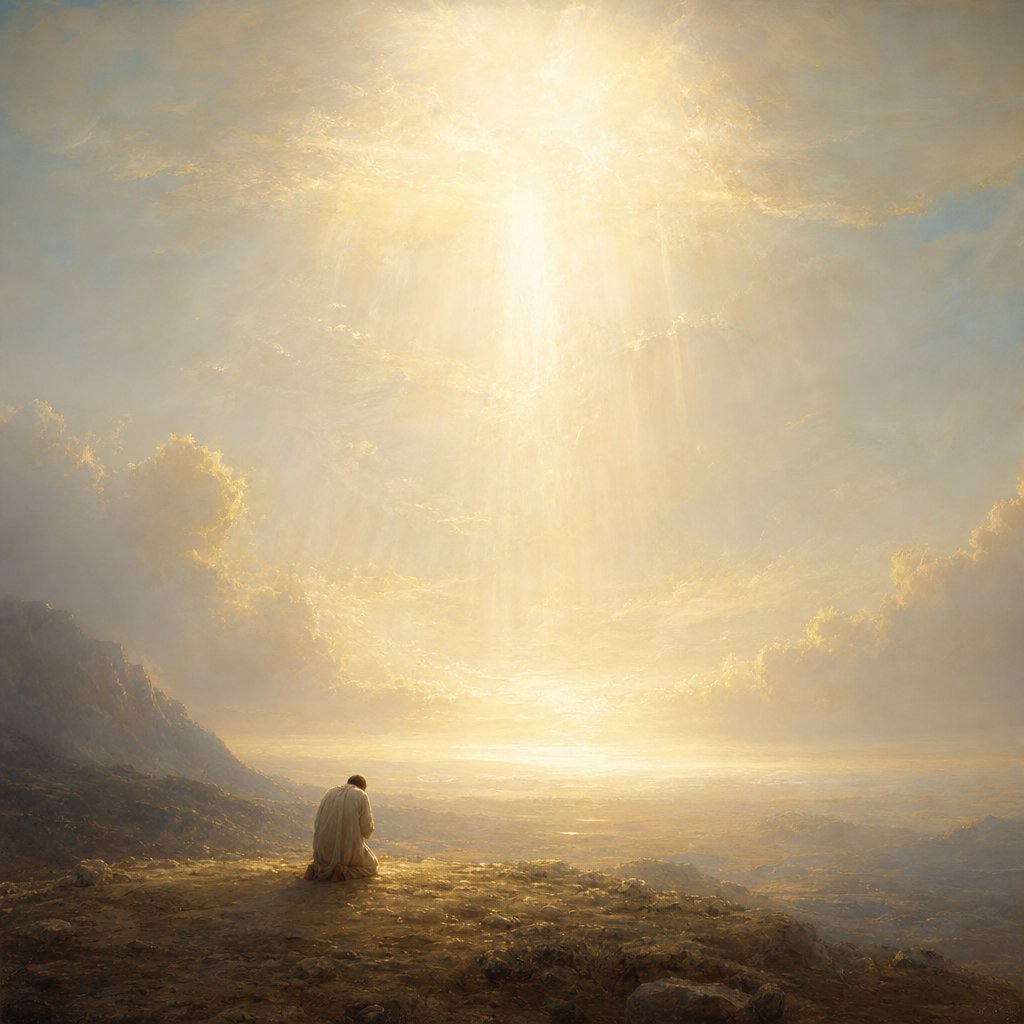
“Who only hath immortality, dwelling in the light which no man can approach unto; whom no man hath seen, nor can see: to whom be honour and power everlasting. Amen.” (1 Timothy 6:16, KJV)
In this sentence Paul closes a soaring doxology in the middle of practical instruction. The immediate context is not abstract philosophy but pastoral urgency: Timothy is being charged to “fight the good fight of faith,” to “lay hold on eternal life,” and to keep the commandment “without spot, unrebukeable, until the appearing of our Lord Jesus Christ” (1 Timothy 6:12–14, KJV). Then Paul turns Timothy’s eyes away from human striving and earthly wealth and fixes them on God’s majesty, as if to say that the strength for faithful obedience comes from remembering who God is. Verse 16 belongs to that climactic vision of God, and it functions as both comfort and correction: comfort, because the God who calls Timothy is infinitely above every threat; correction, because the allure of riches and power shrinks to nothing beside God’s eternal dominion.
When Paul says God “only hath immortality,” he is not denying that saints receive eternal life, for the same chapter speaks of “eternal life” as something Timothy is to lay hold upon (1 Timothy 6:12, KJV). Rather, he is declaring that immortality belongs to God in a unique, underived sense. Human beings are mortal by nature and live at God’s pleasure; even when God grants everlasting life, it is a gift, dependent on him. God’s life is not borrowed, not sustained, not threatened, not waiting to be conferred by another. He simply is. In a letter that has already called God “the King eternal, immortal, invisible” (1 Timothy 1:17, KJV), this phrase deepens the thought: God’s immortality is not merely unending duration, but the absolute independence of his life. He is the living source from whom all other life flows, and therefore he is beyond corruption, decay, and death.
The next words, “dwelling in the light which no man can approach unto,” use vivid symbolism to express God’s holiness and transcendence. Light in Scripture is tied to purity, truth, glory, and revelation, but here the light is not simply enlightening; it is unapproachable. God is not portrayed as hiding in darkness, but as so radiant in majesty that created beings cannot draw near on their own terms. The image reaches back into the Old Testament scenes where God’s presence is marked by overwhelming brilliance and boundary. When God reveals himself, there are limits set around the mountain, veils in the tabernacle, and warnings that sinful man cannot casually enter the holy. Paul’s language gathers that whole pattern into one line: God’s glory is real and near enough to be spoken of, yet so other and so pure that it cannot be invaded by human presumption. The unapproachable light is not a denial of God’s willingness to be known; it is a declaration that God cannot be domesticated. Any true approach to him must be by his own provision and grace, not by human merit or curiosity.
Paul then adds, “whom no man hath seen, nor can see,” underscoring divine invisibility and the limitation of human senses. This does not contradict the biblical testimony that God truly reveals himself, but it distinguishes between seeing God as he is in his essence and seeing God as he makes himself known. Men in Scripture see manifestations, glory, angels, and signs; they hear God’s voice; they behold the works of his hands; but God in his fullness is not an object within the reach of human sight. The point is not to push God into distance, but to magnify him beyond the confines of creaturely perception. In a pastoral setting where false teachers may trade in speculative “knowledge,” and where the rich may be tempted to trust what they can count and control, Paul insists that ultimate reality is not measured by what the eye can master. God’s unseen majesty is more substantial than visible wealth, and his authority is not dependent on public display.
The structure of the verse moves from God’s being to God’s praise: “to whom be honour and power everlasting. Amen.” Having described God as uniquely immortal, gloriously transcendent, and invisible, Paul responds with worship. “Honour” acknowledges God’s worth and dignity; “power” confesses his effective rule and ability to accomplish his will; “everlasting” anchors both honour and power in eternity, implying they do not ebb with seasons or change with regimes. This is especially significant in the surrounding context where Paul has already spoken of earthly rulers and the appearing of Christ “in his times” (1 Timothy 6:15, KJV). Human power is temporary, and human honour is fickle; God’s are everlasting. The “Amen” is not decorative but solemn assent, the sealing of the confession as true and worthy.
Taken together, 1 Timothy 6:16 presents God as the absolute standard by which Timothy must measure everything else: life and death, fear and courage, riches and contentment, human reputation and divine approval. It reminds the believer that the Christian life is lived under the gaze of One who cannot be manipulated and cannot be threatened, and whose glory is not diminished by human ignorance. In the same breath it calls forth reverence and hope. Reverence, because God’s light is unapproachable to pride and sin; hope, because the God who alone has immortality can give eternal life, and the God whom no man can see still commands Timothy to live faithfully until the appearing of Jesus Christ. The verse therefore stands as a theological summit inside a practical letter: it lifts the heart from the pressures of the moment and sets it before the everlasting God, so that obedience is rooted not in anxiety but in worship.
Get our apps


Artwork for 1 Timothy 6:16

inapproachable light 1 Timothy 6:16

"Who only hath immortality, dwelling in the light which no man can approach unto; whom no man hath seen, nor can see: to whom be honour and power everlasting. Amen." - 1 Timothy 6:16

"Who only hath immortality, dwelling in the light which no man can approach unto; whom no man hath seen, nor can see: to whom be honour and power everlasting. Amen." - 1 Timothy 6:16

1 Timothy 6:16 - "Who only hath immortality, dwelling in the light which no man can approach unto; whom no man hath seen, nor can see: to whom be honour and power everlasting. Amen."

"Who only hath immortality, dwelling in the light which no man can approach unto; whom no man hath seen, nor can see: to whom be honour and power everlasting. Amen." - 1 Timothy 6:16
"Who only hath immortality, dwelling in the light which no man can approach unto; whom no man hath seen, nor can see: to whom be honour and power everlasting. Amen." - 1 Timothy 6:16

1 Timothy 6:15-16 – "God, the blessed and only Ruler, the King of kings and Lord of lords."

1 Timothy 6:15-16 – "God, the blessed and only Ruler, the King of kings and Lord of lords."
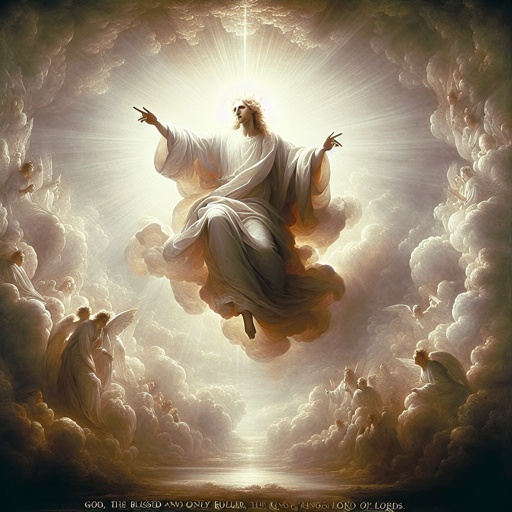
1 Timothy 6:15-16 – "God, the blessed and only Ruler, the King of kings and Lord of lords."

1 Timothy 6:15-16 – "God, the blessed and only Ruler, the King of kings and Lord of lords."

1 Timothy 6:15-16 – "God, the blessed and only Ruler, the King of kings and Lord of lords."

1 Timothy 6:6 - "But godliness with contentment is great gain."

1 Timothy 3:16

1 Timothy 6:8 - "And having food and raiment let us be therewith content."

1 Timothy 6:20 - "O Timothy, keep that which is committed to thy trust, avoiding profane and vain babblings, and oppositions of science falsely so called:"

"But godliness with contentment is great gain." - 1 Timothy 6:6

1 Timothy 6:21 - "Which some professing have erred concerning the faith. Grace be with thee. Amen."

1 Timothy 5:6 - "But she that liveth in pleasure is dead while she liveth."
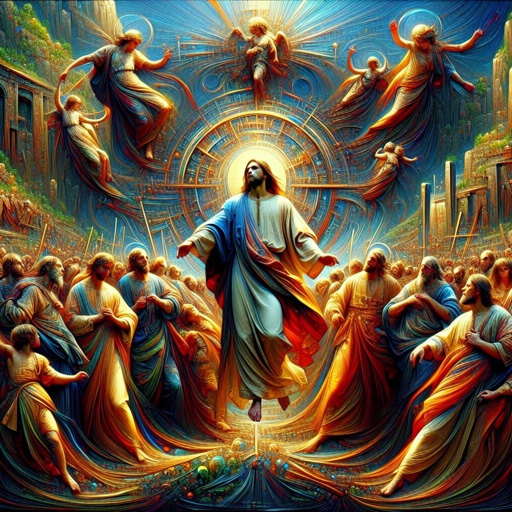
1 Timothy 1:6 - "From which some having swerved have turned aside unto vain jangling;"

1 Timothy 2:6 - "Who gave himself a ransom for all, to be testified in due time."

1 Timothy 6:15-16 - "which God will bring about in his own time—God, the blessed and only Ruler, the King of kings and Lord of lords, who alone is immortal and who lives in unapproachable light, whom no one has seen or can see. To him be honor and might forever. Amen."
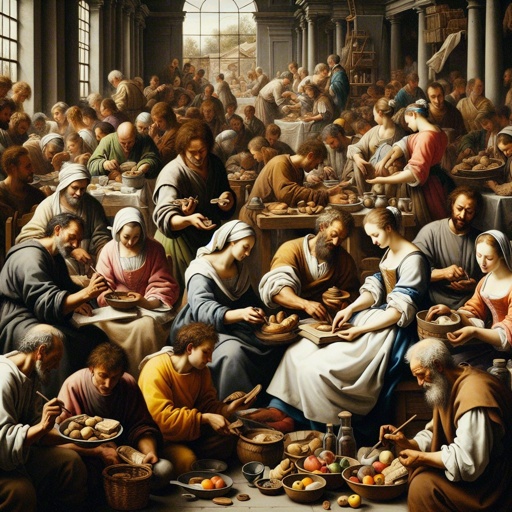
1 Timothy 6:18 - "That they do good, that they be rich in good works, ready to distribute, willing to communicate;"

1 Timothy 6:7 - "For we brought nothing into this world, and it is certain we can carry nothing out."

1 Timothy 3:6 - "Not a novice, lest being lifted up with pride he fall into the condemnation of the devil."

1 Timothy 6:14 - "That thou keep this commandment without spot, unrebukeable, until the appearing of our Lord Jesus Christ:"

2 Timothy 1:16 - "The Lord give mercy unto the house of Onesiphorus; for he oft refreshed me, and was not ashamed of my chain:"

1 Timothy 6:1 - "Let as many servants as are under the yoke count their own masters worthy of all honour, that the name of God and his doctrine be not blasphemed."
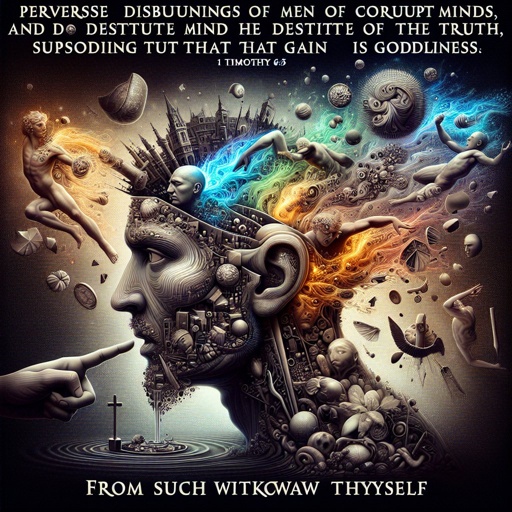
1 Timothy 6:5 - "Perverse disputings of men of corrupt minds, and destitute of the truth, supposing that gain is godliness: from such withdraw thyself."

1 Timothy 6:19 - "Laying up in store for themselves a good foundation against the time to come, that they may lay hold on eternal life."

1 Timothy 6:9 - "But they that will be rich fall into temptation and a snare, and into many foolish and hurtful lusts, which drown men in destruction and perdition."