What does 2 Chronicles 1:14 mean?
“And Solomon gathered chariots and horsemen: and he had a thousand and four hundred chariots, and twelve thousand horsemen, which he placed in the chariot cities, and with the king at Jerusalem.” — 2 Chronicles 1:14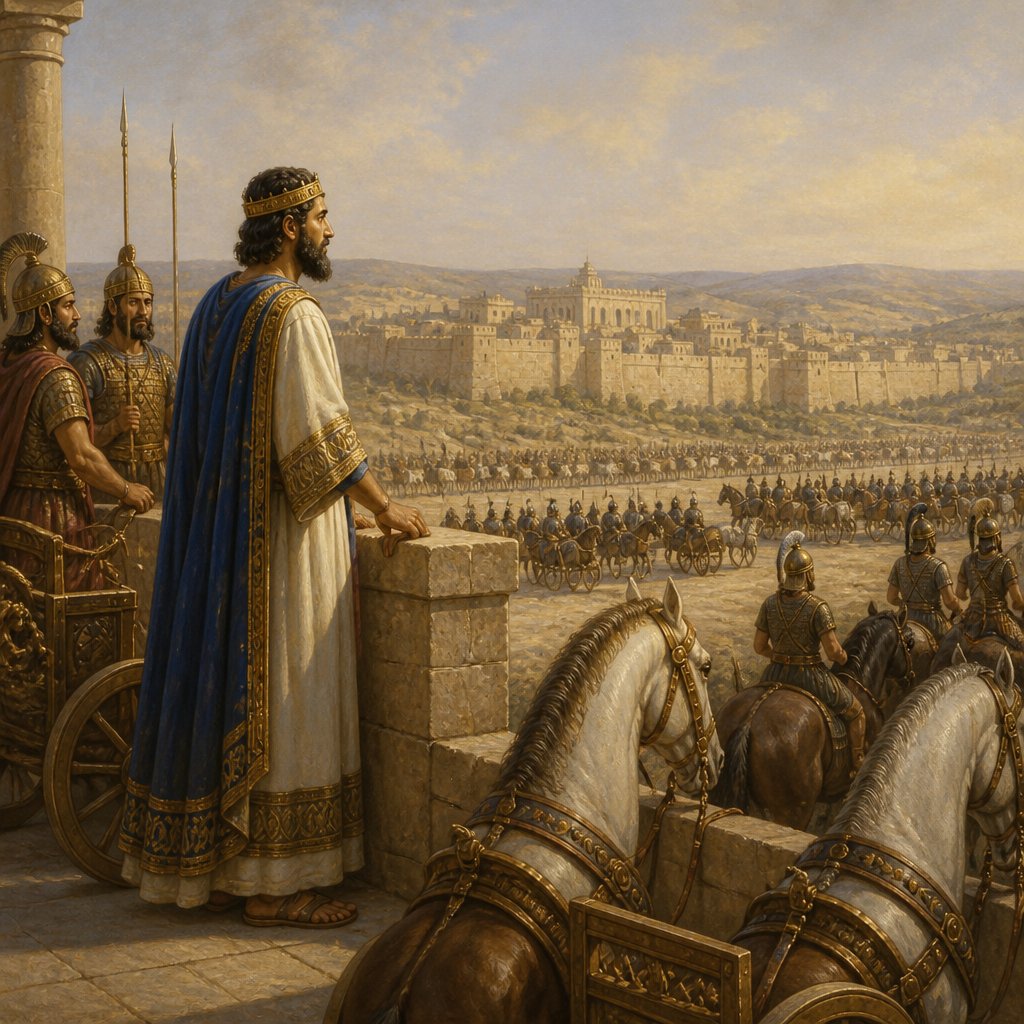
2 Chronicles 1:14 (KJV) reads, "And Solomon gathered chariots and horsemen: and he had a thousand and four hundred chariots, and twelve thousand horsemen, which he placed in the chariot cities, and with the king at Jerusalem."
This verse from the book of 2 Chronicles comes from the Old Testament and is part of the historical narrative of Solomon's reign as king of Israel. In order to fully understand the deeper meaning and significance of this verse, it is important to consider the broader context in which it is situated.
Solomon was the son of King David and Bathsheba, and he succeeded his father as the king of Israel. He is known for his wisdom, wealth, and construction of the magnificent temple in Jerusalem. In this verse, Solomon is depicted as gathering chariots and horsemen, amassing a formidable military force to defend his kingdom and assert his authority. This military buildup is a demonstration of Solomon's power and influence as a king, and it reflects his efforts to maintain stability and security within the realm of Israel.
The use of chariots and horsemen was a common military strategy in the ancient Near East, and the numbers mentioned in the verse - a thousand and four hundred chariots, and twelve thousand horsemen - would have been considered a significant and formidable force during that time. This military strength was meant to protect the kingdom from external threats and to project power and dominance in the region.
The verse also mentions the placement of these chariots and horsemen in the "chariot cities" and with the king at Jerusalem. The chariot cities were likely strategic locations where the military forces were stationed, ready to be deployed for defensive or offensive purposes as needed. By stationing these forces in key locations, Solomon was effectively fortifying his kingdom against potential adversaries.
In a broader theological context, this verse also speaks to the complexities of power and leadership. While the Bible often emphasizes the importance of spiritual strength and reliance on God, it also acknowledges the realities of earthly authority and the need for effective governance. Solomon's actions in gathering a formidable military force can be seen as a pragmatic response to the challenges and threats that a king in ancient Israel would have faced.
From a thematic perspective, this verse highlights the intertwining of political, military, and spiritual dimensions of leadership. Solomon's reign is characterized by a delicate balance between these different aspects of his rule. While he is known for his wisdom and the building of the temple, he also engages in the practical affairs of statecraft, including military preparedness.
In terms of symbolism, the chariots and horsemen can be seen as representations of human effort and strength, contrasted with the divine guidance and protection that is also integral to the biblical narrative. The careful positioning of the military forces in strategic locations reflects the strategic planning and foresight that effective leadership requires.
In conclusion, 2 Chronicles 1:14 offers a window into the complexities of political and military leadership in the ancient world, as well as the broader theological themes of power, wisdom, and reliance on God. The verse serves as a reminder of the multifaceted nature of leadership and the need for both practical acumen and spiritual grounding in the exercise of authority.
Get our apps


Artwork for 2 Chronicles 1:14

2 Chronicles 1:14 - "And Solomon gathered chariots and horsemen: and he had a thousand and four hundred chariots, and twelve thousand horsemen, which he placed in the chariot cities, and with the king at Jerusalem."
"And Solomon gathered chariots and horsemen: and he had a thousand and four hundred chariots, and twelve thousand horsemen, which he placed in the chariot cities, and with the king at Jerusalem." - 2 Chronicles 1:14

1 Chronicles 2:14 - "Nethaneel the fourth, Raddai the fifth,"
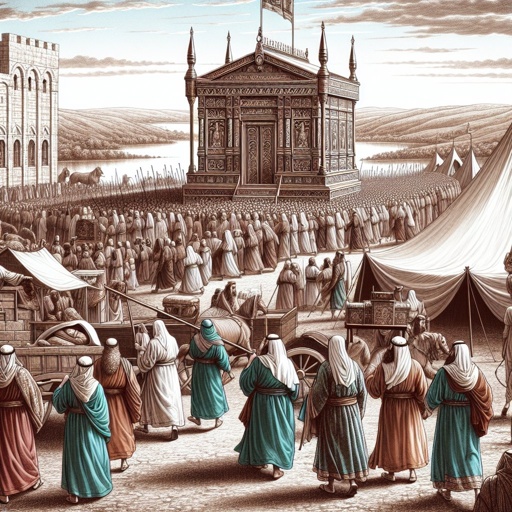
2 Chronicles 1:4 - "But the ark of God had David brought up from Kirjath-jearim to the place which David had prepared for it: for he had pitched a tent for it at Jerusalem."

"Nethaneel the fourth, Raddai the fifth," - 1 Chronicles 2:14

1 Chronicles 1:14 - "The Jebusite also, and the Amorite, and the Girgashite,"

1 Chronicles 1:4 - "Noah, Shem, Ham, and Japheth."

"Noah, Shem, Ham, and Japheth." - 1 Chronicles 1:4

"The Jebusite also, and the Amorite, and the Girgashite," - 1 Chronicles 1:14

1 Chronicles 14:2 - "And David perceived that the LORD had confirmed him king over Israel, for his kingdom was lifted up on high, because of his people Israel."

2 chronicles 7:14

2 chronicles 7:14

1 Chronicles 14:7 - "And Elishama, and Beeliada, and Eliphalet."

1 Chronicles 14:6 - "And Nogah, and Nepheg, and Japhia,"

2 Chronicles 14:2 - "And Asa did that which was good and right in the eyes of the LORD his God:"

1 Chronicles 8:14 - "And Ahio, Shashak, and Jeremoth,"

1 Chronicles 14:5 - "And Ibhar, and Elishua, and Elpalet,"

2 Chronicles 14:1 - "So Abijah slept with his fathers, and they buried him in the city of David: and Asa his son reigned in his stead. In his days the land was quiet ten years."

1 Chronicles 24:14 - "The fifteenth to Bilgah, the sixteenth to Immer,"

1 Chronicles 6:14 - "And Azariah begat Seraiah, and Seraiah begat Jehozadak,"

1 Chronicles 3:14 - "Amon his son, Josiah his son."

1 Chronicles 14:9 - "And the Philistines came and spread themselves in the valley of Rephaim."

2 Kings 14:18 - "And the rest of the acts of Amaziah, are they not written in the book of the chronicles of the kings of Judah?"

2 Chronicles 29:14 - "And of the sons of Heman; Jehiel, and Shimei: and of the sons of Jeduthun; Shemaiah, and Uzziel."

2 Chronicles 15:14 - "And they sware unto the LORD with a loud voice, and with shouting, and with trumpets, and with cornets."

Humble ourselves and pray 2 Chronicles 7:14

1 Chronicles 14:13 - "And the Philistines yet again spread themselves abroad in the valley."

2 Chronicles 4:14 - "He made also bases, and lavers made he upon the bases;"

2 Chronicles 14:4 - "And commanded Judah to seek the LORD God of their fathers, and to do the law and the commandment."

2 Chronicles 14:14 - "And they smote all the cities round about Gerar; for the fear of the LORD came upon them: and they spoiled all the cities; for there was exceeding much spoil in them."