What does 2 Chronicles 1:9 mean?
“Now, O LORD God, let thy promise unto David my father be established: for thou hast made me king over a people like the dust of the earth in multitude.” — 2 Chronicles 1:9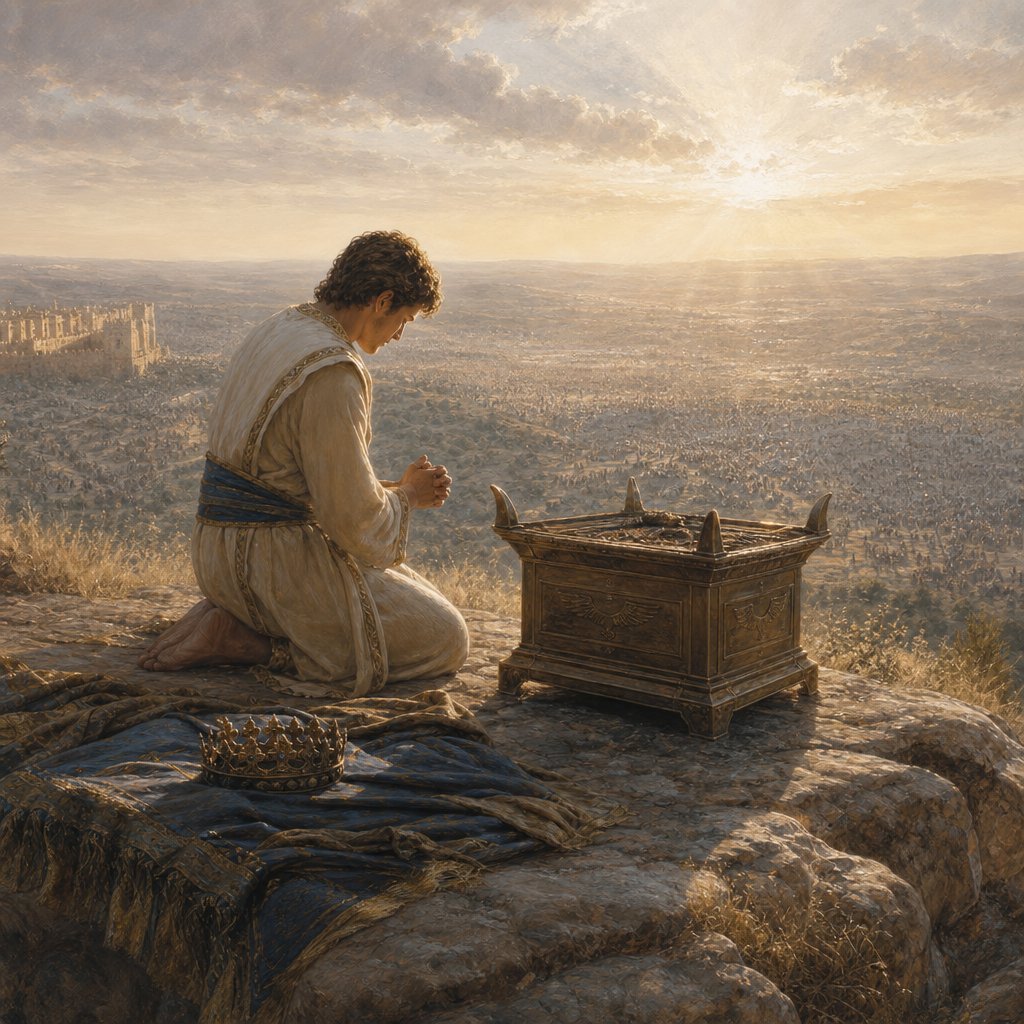
“Now, O LORD God, let thy promise unto David my father be established: for thou hast made me king over a people like the dust of the earth in multitude.” (2 Chronicles 1:9, KJV)
In 2 Chronicles 1, Solomon has newly come to the throne, and he goes with Israel to the high place at Gibeon, where the tabernacle of the congregation was, and he offers a thousand burnt offerings. In that setting of worship and sacrifice, “the LORD appeared to Solomon by night, and said unto him, Ask what I shall give thee” (2 Chronicles 1:7, KJV). Verse 9 stands at the beginning of Solomon’s answer. Before he asks for anything for himself, he turns his attention to God’s word already spoken, and to the weight of the calling already given. The verse is therefore not simply a request; it is a confession of covenant, an appeal to divine faithfulness, and an acknowledgement that kingship over God’s people is a task too great to be carried in mere human strength.
When Solomon says, “let thy promise unto David my father be established,” he is anchoring his reign in what God had pledged to David. Chronicles continually emphasizes the LORD’s covenant with David and the orderly continuation of David’s house, because the stability of the kingdom and the hope of Israel are tied to the LORD’s faithfulness rather than to human politics. Solomon does not treat the throne as his personal achievement; he treats it as a trust that exists because of God’s promise. The word “established” is significant in this context, because it asks that what God has spoken would be made firm in history: not merely remembered, but confirmed, carried forward, and shown to be true in Solomon’s own days. In other words, Solomon prays that his reign would not become a contradiction of the covenant, but a living proof of it.
The second half of the verse deepens Solomon’s posture. “For thou hast made me king” places the initiative entirely with God. Solomon’s authority is described as a divine appointment, not an entitlement. This acknowledgement functions as humility, but it also functions as theology: the LORD is the true King who raises up and sets down rulers, and Israel’s monarchy, in Chronicles, is meant to operate under God’s rule and for God’s purposes, especially in relation to worship and the future building of the temple. Solomon’s prayer, then, is not only personal devotion; it is the proper orientation of a Davidic king, recognizing that his legitimacy and success depend on the LORD.
The phrase “over a people like the dust of the earth in multitude” carries both symbolism and emotion. It evokes the language used of vast, uncountable numbers, and it recalls the LORD’s way of describing a multitude so great it cannot be measured. “Dust of the earth” communicates innumerability and also earthiness: the people are many, spreading across the land, and at the same time they are frail and dependent creatures. For Solomon, this comparison underscores the enormity of his charge. He is not ruling a small household but a nation so numerous that it feels beyond counting, beyond managing, beyond his natural capacity. The image also places Solomon in the stream of God’s long work with his people; Israel’s size is not merely a demographic fact but a sign that God has been acting through generations. The multitude is itself a testimony of divine blessing, which makes Solomon’s responsibility both a privilege and a burden.
Seen in its immediate context, verse 9 sets up what follows: Solomon will ask for “wisdom and knowledge” to go out and come in before this people (2 Chronicles 1:10, KJV). That request makes sense only after verse 9 has established the themes of promise, divine appointment, and overwhelming responsibility. Solomon is not asking for wisdom as an ornament of learning; he is asking for it because the covenant promise is at stake in his reign and because the people are too many for him to shepherd by mere instinct. The verse therefore quietly teaches a pattern of faithful prayer: begin with God’s promise, confess God’s sovereignty, and face the reality of the task with honesty.
In the larger theological frame of Chronicles, 2 Chronicles 1:9 highlights the central concern that the kingdom’s future depends on the LORD’s faithfulness and the king’s reliance upon the LORD. It points to the continuity between David and Solomon, but also to the vulnerability of the human king, who must seek God if he is to rule rightly. The significance of the verse lies in its balance: it honors God’s unbreakable word—“thy promise unto David”—while admitting human limitation before a vast calling—“a people like the dust of the earth in multitude.” It is the sound of a king learning that the throne is not mainly a seat of power, but a place where the promises of God must be trusted and the people of God must be served under the hand of God.
Get our apps


Artwork for 2 Chronicles 1:9
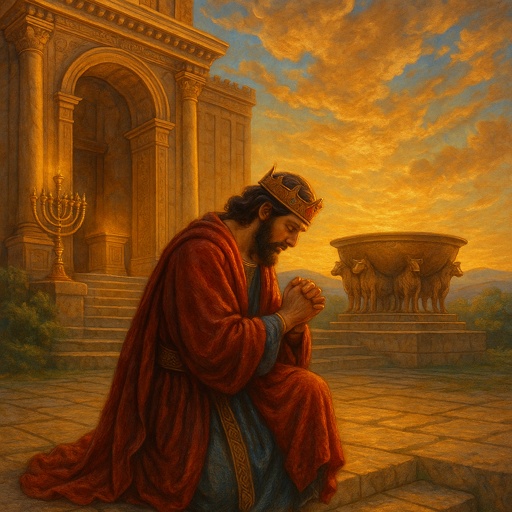
"Now, O LORD God, let thy promise unto David my father be established: for thou hast made me king over a people like the dust of the earth in multitude." - 2 Chronicles 1:9
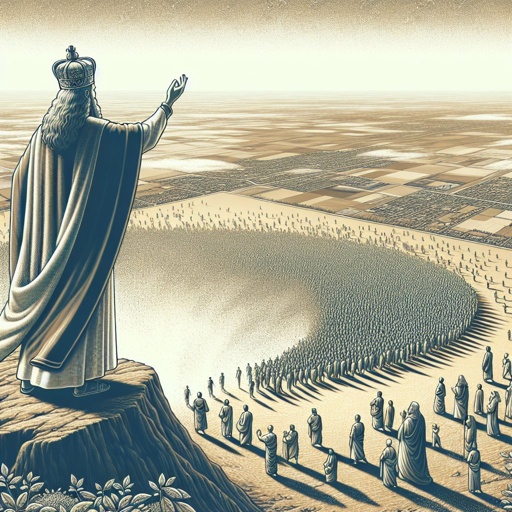
2 Chronicles 1:9 - "Now, O LORD God, let thy promise unto David my father be established: for thou hast made me king over a people like the dust of the earth in multitude."

"Now, O LORD God, let thy promise unto David my father be established: for thou hast made me king over a people like the dust of the earth in multitude." - 2 Chronicles 1:9
"Now, O LORD God, let thy promise unto David my father be established: for thou hast made me king over a people like the dust of the earth in multitude." - 2 Chronicles 1:9

1 Chronicles 2:9 - "The sons also of Hezron, that were born unto him; Jerahmeel, and Ram, and Chelubai."

1 Chronicles 9:2 - "¶ Now the first inhabitants that dwelt in their possessions in their cities were, the Israelites, the priests, Levites, and the Nethinims."

2 Chronicles 18:9

2 Chronicles 18:9

2 Chronicles 21:9

2 Chronicles 11:9 - "And Adoraim, and Lachish, and Azekah,"

1 Chronicles 1:9 - "And the sons of Cush; Seba, and Havilah, and Sabta, and Raamah, and Sabtecha. And the sons of Raamah; Sheba, and Dedan."

1 Chronicles 9:37 - "And Gedor, and Ahio, and Zechariah, and Mikloth."

1 Chronicles 9:10 - "¶ And of the priests; Jedaiah, and Jehoiarib, and Jachin,"

1 Chronicles 24:9 - "The fifth to Malchijah, the sixth to Mijamin,"

2 Chronicles 31:9 - "Then Hezekiah questioned with the priests and the Levites concerning the heaps."

1 Chronicles 9:5 - "And of the Shilonites; Asaiah the firstborn, and his sons."

1 Chronicles 9:30 - "And some of the sons of the priests made the ointment of the spices."

1 Chronicles 6:9 - "And Ahimaaz begat Azariah, and Azariah begat Johanan,"

1 Chronicles 12:9 - "Ezer the first, Obadiah the second, Eliab the third,"

2 Chronicles 9:30 - "And Solomon reigned in Jerusalem over all Israel forty years."
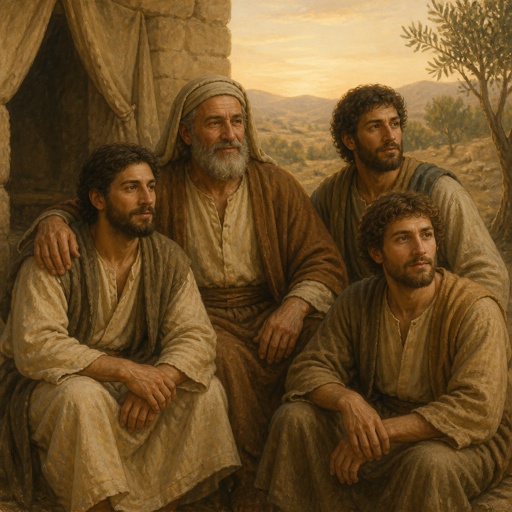
"The sons also of Hezron, that were born unto him; Jerahmeel, and Ram, and Chelubai." - 1 Chronicles 2:9

2 Chronicles 9:22 - "And king Solomon passed all the kings of the earth in riches and wisdom."

1 Chronicles 14:9 - "And the Philistines came and spread themselves in the valley of Rephaim."

2 Chronicles 9:2 - "And Solomon told her all her questions: and there was nothing hid from Solomon which he told her not."

2 Chronicles 9:28 - "And they brought unto Solomon horses out of Egypt, and out of all lands."

1 Chronicles 26:9 - "And Meshelemiah had sons and brethren, strong men, eighteen."

1 Chronicles 9:41 - "And the sons of Micah were, Pithon, and Melech, and Tahrea, and Ahaz."

1 Chronicles 21:9 - "¶ And the LORD spake unto Gad, David's seer, saying,"

1 Chronicles 9:9 - "And their brethren, according to their generations, nine hundred and fifty and six. All these men were chief of the fathers in the house of their fathers."

2 Chronicles 2:9 - "Even to prepare me timber in abundance: for the house which I am about to build shall be wonderful great."