What does 2 Chronicles 18:26 mean?
“And say, Thus saith the king, Put this fellow in the prison, and feed him with bread of affliction and with water of affliction, until I return in peace.” — 2 Chronicles 18:26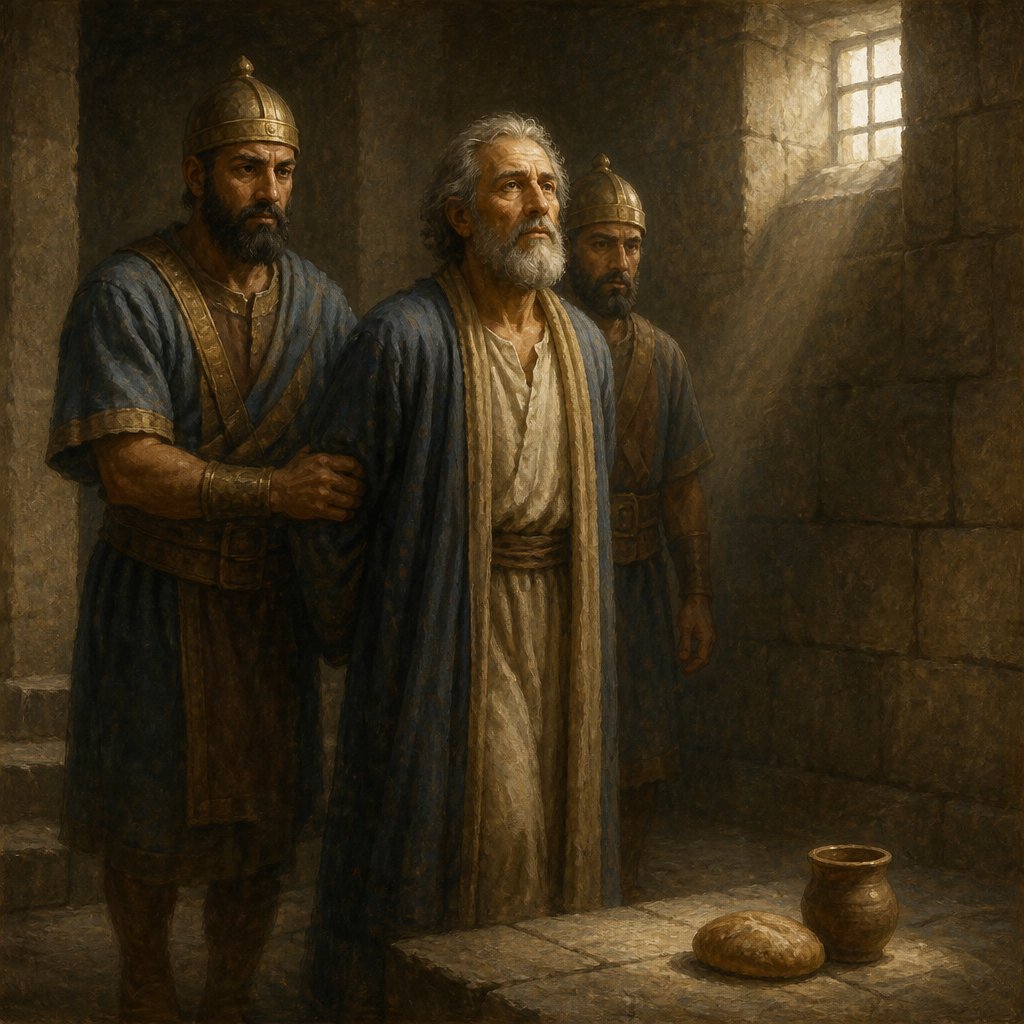
2 Chronicles 18:26 (KJV) reads, "And say, Thus saith the king, Put this fellow in the prison, and feed him with bread of affliction and with water of affliction, until I return in peace."
This verse is part of the narrative in the book of 2 Chronicles, which is a historical account of the reigns of the kings of Judah. In this particular passage, we find King Ahab of Israel and King Jehoshaphat of Judah discussing whether to go to war against Ramoth Gilead. Ahab invites Jehoshaphat to join him in battle, and Jehoshaphat agrees, but he suggests that they inquire of the Lord first. Ahab obliges and summons his prophets, who all prophesy success in the battle. However, Jehoshaphat is skeptical and asks if there is a prophet of the Lord they can inquire of. Ahab reluctantly calls for Micaiah, who prophesies the defeat of Ahab and the scattering of his troops. Ahab, angered by Micaiah's prophecy, orders him to be put in prison and fed with bread and water of affliction until he returns in peace.
The verse has several themes and layers of meaning that are worth exploring. Firstly, the verse reflects the theme of obedience to God's word versus human pride and self-interest. Ahab's prophets told him what he wanted to hear, leading to his eventual downfall, while Micaiah, the true prophet of the Lord, spoke the truth at the risk of his own freedom and well-being. This serves as a cautionary tale against listening to what pleases us rather than seeking and obeying God's truth. It also illustrates the theme of the conflict between the ways of the world and the ways of God, as Ahab's disregard for Micaiah's prophecy represents the world's rejection of God's truth in favor of self-serving agendas.
Another important theme in this verse is the idea of suffering and affliction for the sake of righteousness. Micaiah's punishment of being put in prison and fed with bread and water of affliction serves as a symbol of the suffering that often accompanies faithfulness to God. It is a reminder that standing up for truth and righteousness can entail personal sacrifice and suffering, but ultimately it is a testimony to one's commitment to God and His principles.
The context of this verse is also significant. Ahab's decision to go to war against Ramoth Gilead despite Micaiah's warning, and his subsequent punishment of Micaiah, demonstrates the dangers of relying on human wisdom and power rather than seeking God's guidance and obeying His will. It highlights the consequences of ignoring God's warnings and pursuing our own agendas, as Ahab's disobedience ultimately leads to his demise.
Furthermore, the symbolism in this verse is worth noting. The "bread of affliction and water of affliction" that Micaiah is to be fed with serves as a symbolic representation of the suffering and hardship that often accompany standing for the truth. It echoes the experiences of many biblical figures who faced imprisonment and deprivation for their faith, such as Joseph, Daniel, and Paul. These figures endured suffering for their commitment to God, and their stories serve as examples of faithfulness and perseverance in the face of adversity.
In conclusion, 2 Chronicles 18:26 is a powerful verse that delves into themes of obedience to God's truth, the conflict between the ways of the world and the ways of God, suffering for righteousness, and the consequences of ignoring God's warnings. It serves as a cautionary tale and a source of encouragement for believers to remain steadfast in their faith and to prioritize God's truth over the agendas of the world. It also provides a reminder of the ultimate victory that comes from standing for God's truth, even in the face of suffering and persecution.
Get our apps


Artwork for 2 Chronicles 18:26

2 Chronicles 18:26 - "And say, Thus saith the king, Put this fellow in the prison, and feed him with bread of affliction and with water of affliction, until I return in peace."
"And say, Thus saith the king, Put this fellow in the prison, and feed him with bread of affliction and with water of affliction, until I return in peace." - 2 Chronicles 18:26

1 Chronicles 26:18 - "At Parbar westward, four at the causeway, and two at Parbar."

2 Chronicles 18:9

2 Chronicles 18:9
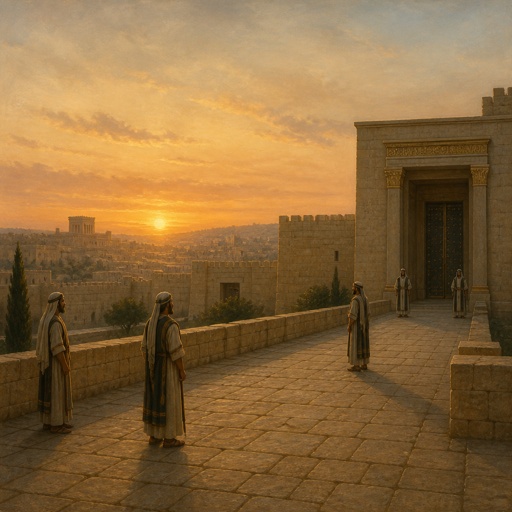
"At Parbar westward, four at the causeway, and two at Parbar." - 1 Chronicles 26:18

2 Chronicles 26:2 - "He built Eloth, and restored it to Judah, after that the king slept with his fathers."

2 Chronicles 20:18

2 Chronicles 29:26 - "And the Levites stood with the instruments of David, and the priests with the trumpets."

2 Chronicles 26:18 - "And they withstood Uzziah the king, and said unto him, It appertaineth not unto thee, Uzziah, to burn incense unto the LORD, but to the priests the sons of Aaron, that are consecrated to burn incense: go out of the sanctuary; for thou hast trespassed; neither shall it be for thine honour from the LORD God."

2 Chronicles 29:26 (KJVA) 26 And the Levites stood with the instruments of David, and the priests with the trumpets.

2 Chronicles 26:7 - "And God helped him against the Philistines, and against the Arabians that dwelt in Gurbaal, and the Mehunims."

2 Chronicles 35:26 - "Now the rest of the acts of Josiah, and his goodness, according to that which was written in the law of the LORD,"

2 Chronicles 24:26 - "And these are they that conspired against him; Zabad the son of Shimeath an Ammonitess, and Jehozabad the son of Shimrith a Moabitess."

1 Chronicles 26:2 - "And the sons of Meshelemiah were, Zechariah the firstborn, Jediael the second, Zebadiah the third, Jathniel the fourth,"

1 Chronicles 2:26 - "Jerahmeel had also another wife, whose name was Atarah; she was the mother of Onam."

2 Chronicles 25:26 - "Now the rest of the acts of Amaziah, first and last, behold, are they not written in the book of the kings of Judah and Israel?"

2 Chronicles 26:4 - "And he did that which was right in the sight of the LORD, according to all that his father Amaziah did."

2 Chronicles 26:17 - "And Azariah the priest went in after him, and with him fourscore priests of the LORD, that were valiant men:"

2 Chronicles 26:12 - "The whole number of the chief of the fathers of the mighty men of valour were two thousand and six hundred."

2 Kings 14:18 - "And the rest of the acts of Amaziah, are they not written in the book of the chronicles of the kings of Judah?"

2 Chronicles 26:22 - "¶ Now the rest of the acts of Uzziah, first and last, did Isaiah the prophet, the son of Amoz, write."

2 Kings 15:26 - "And the rest of the acts of Pekahiah, and all that he did, behold, they are written in the book of the chronicles of the kings of Israel."

2 Chronicles 30:26 - "So there was great joy in Jerusalem: for since the time of Solomon the son of David king of Israel there was not the like in Jerusalem."

2 Chronicles 9:26 - "¶ And he reigned over all the kings from the river even unto the land of the Philistines, and to the border of Egypt."

2 Chronicles 21:18 - "¶ And after all this the LORD smote him in his bowels with an incurable disease."

2 Chronicles 18:1 - "Now Jehoshaphat had riches and honour in abundance, and joined affinity with Ahab."

1 Chronicles 18:2 - "And he smote Moab; and the Moabites became David's servants, and brought gifts."

2 Chronicles 26:9 - "Moreover Uzziah built towers in Jerusalem at the corner gate, and at the valley gate, and at the turning of the wall, and fortified them."

2 Chronicles 26:14 - "And Uzziah prepared for them throughout all the host shields, and spears, and helmets, and habergeons, and bows, and slings to cast stones."