What does 2 Chronicles 20:36 mean?
“And he joined himself with him to make ships to go to Tarshish: and they made the ships in Ezion-geber.” — 2 Chronicles 20:36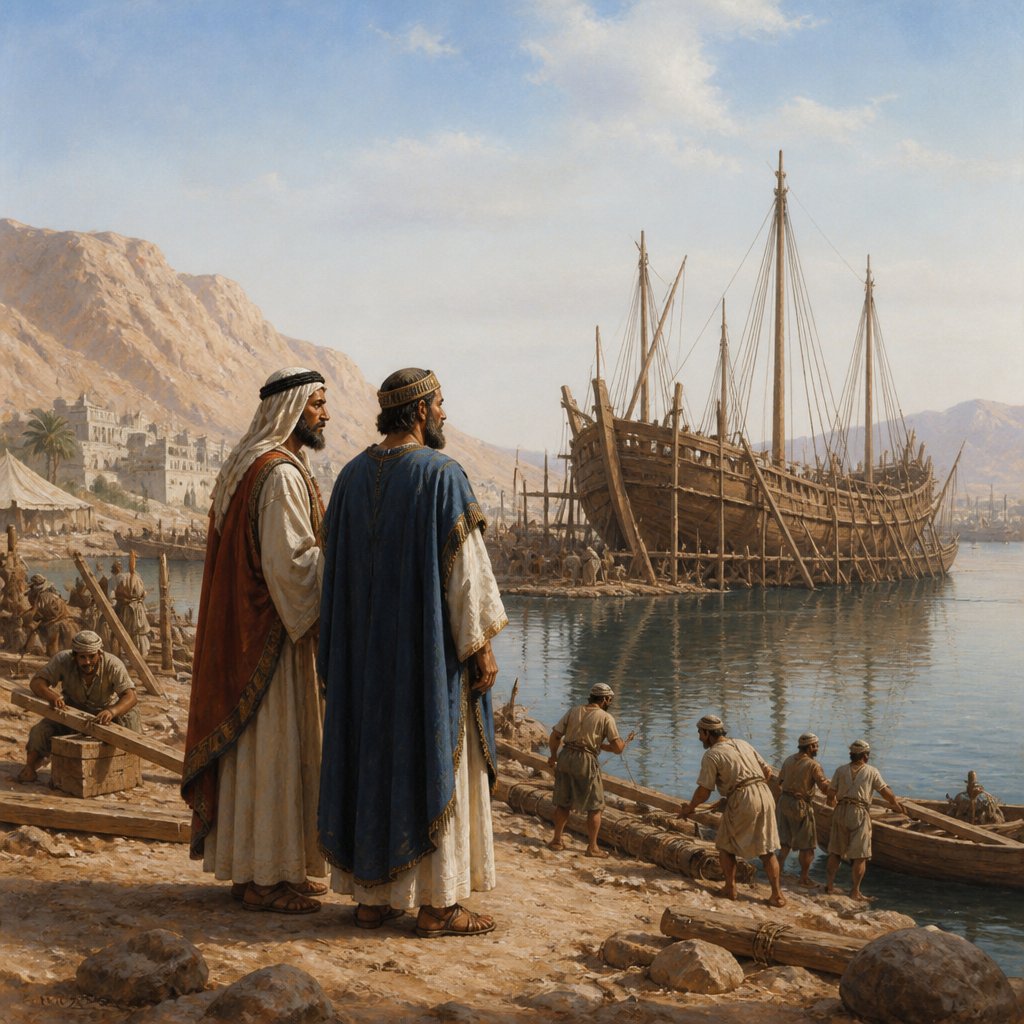
The Bible verse 2 Chronicles 20:36, from the King James Version, states, "And he joined himself with him to make ships to go to Tarshish: and they made the ships in Eziongeber." This verse is part of the narrative of the reign of King Jehoshaphat of Judah, and it describes a partnership between Jehoshaphat and King Ahaziah of Israel to build ships for trade and exploration.
In order to fully grasp the meaning and significance of this verse, it is important to examine the broader context in which it is situated. 2 Chronicles 20 is part of a larger account of the reign of King Jehoshaphat, who was considered a righteous and devout king in the lineage of David. The chapter begins with the account of an impending attack from a coalition of enemy nations against Judah. Jehoshaphat responds by seeking the Lord's guidance and leading the people in prayer and fasting. In response, God delivers them from their enemies, and they are able to witness their enemies destroying each other. This victory demonstrates the power of God and the importance of seeking Him in times of trouble.
Following this miraculous deliverance, King Jehoshaphat returns to Jerusalem and is greeted by the prophet Jehu, who rebukes him for his alliance with King Ahaziah of Israel and for allowing his son to marry into the wicked house of Ahab. It is within this context that the verse 2 Chronicles 20:36 is situated. Despite the rebuke from the prophet, Jehoshaphat chooses to continue his alliance with Ahaziah, and together they embark on the construction of ships to go to Tarshish.
The act of building ships for trade and exploration in itself is not inherently sinful or wrong. In fact, the construction of ships was a common practice during this time, and it was seen as a symbol of wealth, power, and prosperity. However, the problem lies in the partnership between Jehoshaphat, a righteous king, and Ahaziah, a wicked king who had abandoned the ways of the Lord. The alliance and partnership with a wicked ruler compromise the integrity of Jehoshaphat's reign and place him in a position of compromise and potential spiritual danger.
Symbolically, the ships and the partnership with King Ahaziah can be interpreted as a representation of compromise and worldly alliances. Throughout the Bible, ships are often used symbolically to represent commerce, trade, exploration, and even missionary work. However, they can also symbolize worldly pursuits and alliances that lead one away from God. This partnership with a wicked king serves as a cautionary tale about the dangers of compromising one's faith and integrity in pursuit of worldly gain and alliances. It also serves as a reminder of the importance of remaining faithful to God and seeking His guidance in all aspects of life, including partnerships and alliances.
Additionally, this verse also serves as a reminder of the consequences of unholy alliances and compromise. King Jehoshaphat's decision to align himself with King Ahaziah ultimately leads to disaster, as the ships that they had built in Eziongeber were destroyed before they could be launched. This is a poignant reminder that God's blessing and protection are only upon those who remain faithful and obedient to Him. The story of Jehoshaphat's partnership with Ahaziah and the ill-fated ships serves as a cautionary tale about the spiritual and practical consequences of compromise and disobedience.
In conclusion, 2 Chronicles 20:36 from the King James Version of the Bible conveys a message about the dangers of compromise, worldly alliances, and the need for unwavering faith and obedience to God. The verse serves as a cautionary tale about the potential consequences of aligning oneself with wickedness and departing from the ways of the Lord. It reminds readers of the importance of seeking God's guidance and remaining faithful and obedient in all aspects of life. The symbolism of the ships and the partnership with King Ahaziah serves as a powerful illustration of these timeless truths, and it continues to serve as a relevant and meaningful lesson for believers today.
Get our apps


Artwork for 2 Chronicles 20:36

2 Chronicles 20:36 - "And he joined himself with him to make ships to go to Tarshish: and they made the ships in Ezion-geber."
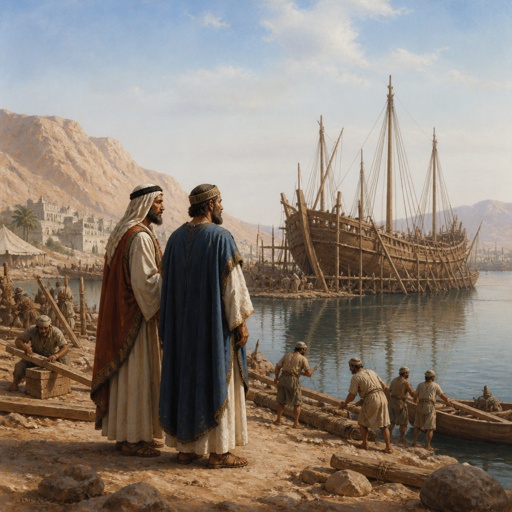
"And he joined himself with him to make ships to go to Tarshish: and they made the ships in Ezion-geber." - 2 Chronicles 20:36

2 Chronicles 36:20 - "And them that had escaped from the sword carried he away to Babylon; where they were servants to him and his sons until the reign of the kingdom of Persia:"

2 Chronicles 36:22

1 Chronicles 2:36 - "And Attai begat Nathan, and Nathan begat Zabad,"

2 Chronicles 20:37

2 Chronicles 20:28

2 Chronicles 36:2 - "Jehoahaz was twenty and three years old when he began to reign, and he reigned three months in Jerusalem."

2 Chronicles 29:36 - "And Hezekiah rejoiced, and all the people, that God had prepared the people: for the thing was done suddenly."

2 Chronicles 20:21

2 Chronicles 20:18

2 Chronicles 36:7 - "Nebuchadnezzar also carried of the vessels of the house of the LORD to Babylon, and put them in his temple at Babylon."

2 Kings 15:36 - "¶ Now the rest of the acts of Jotham, and all that he did, are they not written in the book of the chronicles of the kings of Judah?"

2 Chronicles 11:20

2 Chronicles 36:3 - "And the king of Egypt put him down at Jerusalem, and condemned the land in an hundred talents of silver and a talent of gold."

2 Chronicles 36:11 - "¶ Zedekiah was one and twenty years old when he began to reign, and reigned eleven years in Jerusalem."

2 Chronicles 36:1 - "Then the people of the land took Jehoahaz the son of Josiah, and made him king in his father's stead in Jerusalem."

2 Chronicles 36:6 - "Against him came up Nebuchadnezzar king of Babylon, and bound him in fetters, to carry him to Babylon."
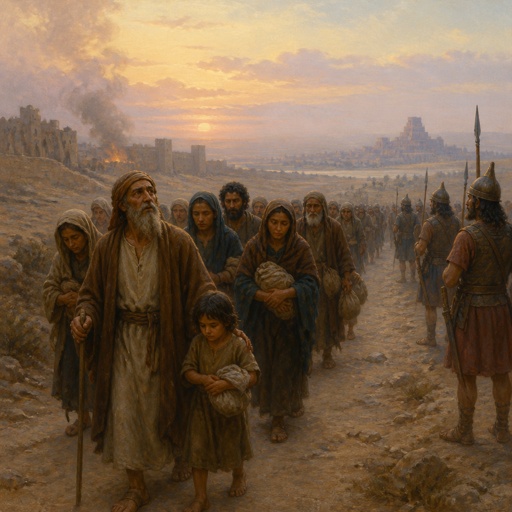
"And them that had escaped from the sword carried he away to Babylon; where they were servants to him and his sons until the reign of the kingdom of Persia:" - 2 Chronicles 36:20

"And Attai begat Nathan, and Nathan begat Zabad," - 1 Chronicles 2:36

2 Chronicles 30:20 - "And the LORD hearkened to Hezekiah, and healed the people."

1 Chronicles 2:20 - "And Hur begat Uri, and Uri begat Bezaleel."

2 Chronicles 36:12 - "And he did that which was evil in the sight of the LORD his God, and humbled not himself before Jeremiah the prophet speaking from the mouth of the LORD."

2 Chronicles 36:18 - "And all the vessels of the house of God, great and small, and the treasures of the house of the LORD, and the treasures of the king, and of his princes; all these he brought to Babylon."

2 Chronicles 36:19 - "And they burnt the house of God, and brake down the wall of Jerusalem, and burnt all the palaces thereof with fire, and destroyed all the goodly vessels thereof."

2 Chronicles 36:16 - "But they mocked the messengers of God, and despised his words, and misused his prophets, until the wrath of the LORD arose against his people, till there was no remedy."

2 Chronicles 20:28 - "And they came to Jerusalem with psalteries and harps and trumpets unto the house of the LORD."

2 Chronicles 36:14 - "¶ Moreover all the chief of the priests, and the people, transgressed very much after all the abominations of the heathen; and polluted the house of the LORD which he had hallowed in Jerusalem."

2 Chronicles 36:15 - "And the LORD God of their fathers sent to them by his messengers, rising up betimes, and sending; because he had compassion on his people, and on his dwelling place:"

2 Chronicles 20:13 - "And all Judah stood before the LORD, with their little ones, their wives, and their children."