What does 2 Chronicles 25:3 mean?
“Now it came to pass, when the kingdom was established to him, that he slew his servants that had killed the king his father.” — 2 Chronicles 25:3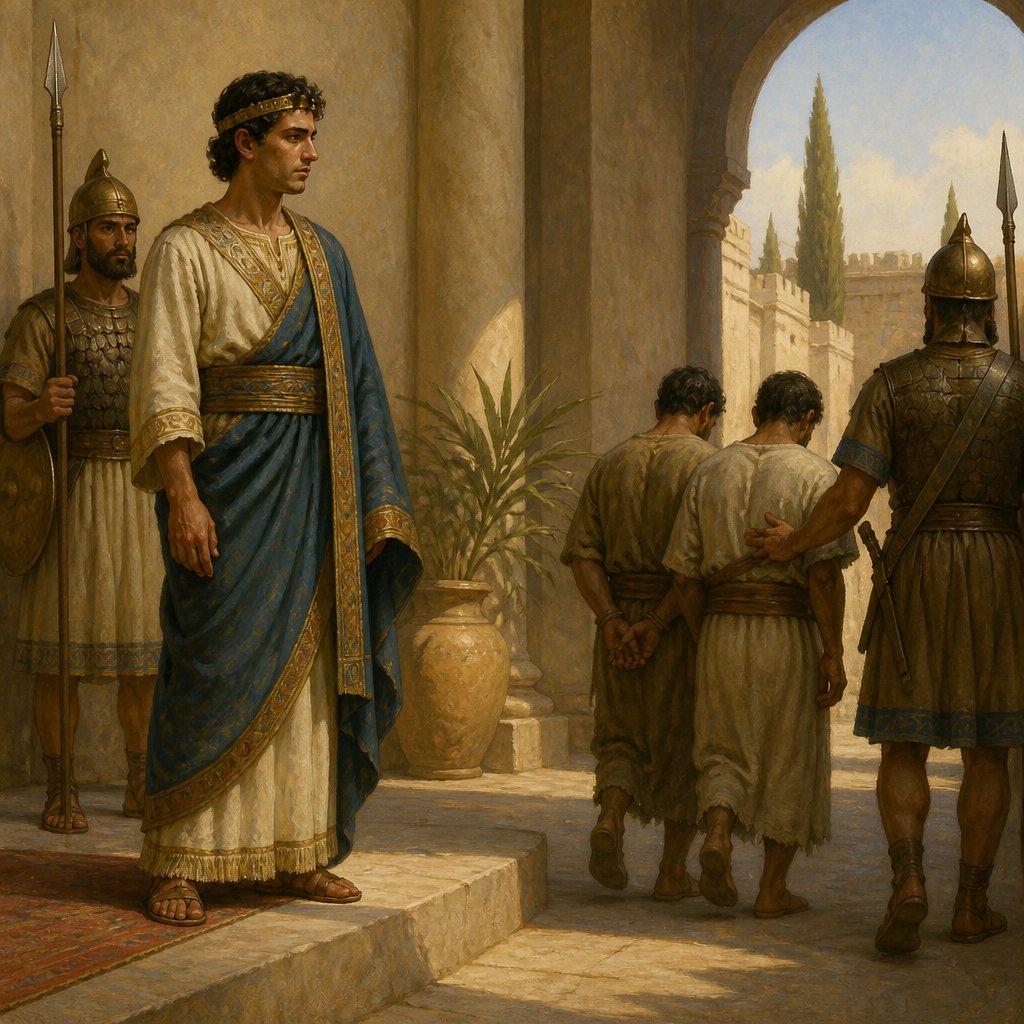
The Bible verse 2 Chronicles 25:3 in the King James Version (KJV) states, "Now it came to pass, when the kingdom was established to him, that he slew his servants that had killed the king his father."
This verse is part of the historical account of King Amaziah, who ruled over Judah. This period in Israel's history was a time of political instability and internal strife. Amaziah became king at the age of 25 after his father, Joash, was assassinated. In his early reign, Amaziah sought to establish his kingdom and consolidate his power.
The verse, "Now it came to pass, when the kingdom was established to him, that he slew his servants that had killed the king his father," highlights Amaziah's response to the assassination of his father. Despite the loyalty of these servants before Amaziah's reign, the new king's actions were an expression of his determination to avenge his father's death and assert his authority as the ruler of Judah.
This verse raises several themes and important insights that speak to the human condition and human nature. The themes of power, loyalty, vengeance, and justice are evident in this passage. It also reflects the complexities and challenges of leadership and the consequences of political intrigue and betrayal.
One of the key themes in this verse is the exercise of power. Amaziah's ruthless actions against those who killed his father demonstrate the extent to which some individuals are willing to go to maintain and consolidate their power. The verse highlights the brutal and unforgiving nature of political power dynamics in ancient kingdoms, and it serves as a cautionary tale about the destructive potential of power when wielded without wisdom and compassion.
The theme of loyalty is also significant in this passage. The betrayal of King Joash by his own servants is a stark reminder of the precarious nature of trust and loyalty in the political realm. The verse underscores the reality that those in positions of power often face internal threats and challenges from those closest to them, leading to the erosion of trust and the potential for betrayal.
Vengeance is another theme that emerges from this passage. Amaziah's decision to execute his father's killers reflects an instinctive desire for retribution and justice. This act of vengeance is a striking example of the human inclination to pursue revenge in the face of personal loss and injustice.
Furthermore, the theme of justice is also apparent in this verse. Amaziah's actions can be interpreted as an attempt to restore justice for the murder of his father. In the ancient Near Eastern context, the concept of justice was closely linked to the idea of maintaining stability and order in society. By eliminating the perpetrators of his father's assassination, Amaziah sought to establish a sense of justice and security within his kingdom.
The broader context of this passage can be found in the historical narrative of the Books of Chronicles, which provide a detailed account of the kings of Israel and Judah. The passage is situated within a larger story of political upheaval, shifting alliances, and the struggle for power. It serves as a reminder of the complexities of leadership and the turbulent nature of human history.
Symbolically, the slaying of the servants who killed King Joash can be seen as a representation of the recurring cycle of violence and betrayal that characterizes the pursuit of power. It also serves as a cautionary tale about the destructive consequences of unchecked ambition and the moral compromises that often accompany the quest for power.
In conclusion, 2 Chronicles 25:3 offers valuable insights into the themes of power, loyalty, vengeance, and justice, and it provides a nuanced portrayal of the complexities of leadership and the consequences of political intrigue. This verse serves as a reminder of the enduring relevance of biblical narratives in illuminating the human condition and the timeless struggles for power and justice.
Get our apps


Artwork for 2 Chronicles 25:3

2 Chronicles 25:3 - "¶ Now it came to pass, when the kingdom was established to him, that he slew his servants that had killed the king his father."
"¶ Now it came to pass, when the kingdom was established to him, that he slew his servants that had killed the king his father." - 2 Chronicles 25:3

2 Chronicles 25:2 - "And he did that which was right in the sight of the LORD, but not with a perfect heart."

2 Chronicles 25:25 - "¶ And Amaziah the son of Joash king of Judah lived after the death of Joash son of Jehoahaz king of Israel fifteen years."

2 Chronicles 25:28 - "And they brought him upon horses, and buried him with his fathers in the city of Judah."

2 Chronicles 25:22 - "And Judah was put to the worse before Israel, and they fled every man to his tent."

1 Chronicles 2:25 - "¶ And the sons of Jerahmeel the firstborn of Hezron were, Ram the firstborn, and Bunah, and Oren, and Ozem, and Ahijah."

2 Chronicles 28:3

2 Chronicles 25:26 - "Now the rest of the acts of Amaziah, first and last, behold, are they not written in the book of the kings of Judah and Israel?"

2 Kings 21:25 - "Now the rest of the acts of Amon which he did, are they not written in the book of the chronicles of the kings of Judah?"

2 Chronicles 25:6 - "He hired also an hundred thousand mighty men of valour out of Israel for an hundred talents of silver."

"And he did that which was right in the sight of the LORD, but not with a perfect heart." - 2 Chronicles 25:2
1 Chronicles 25:3 - "Of Jeduthun: the sons of Jeduthun; Gedaliah, and Zeri, and Jeshaiah, Hashabiah, and Mattithiah, six, under the hands of their father Jeduthun, who prophesied with a harp, to give thanks and to praise the LORD."

2 Chronicles 18:25 - "Then the king of Israel said, Take ye Micaiah, and carry him back to Amon the governor of the city, and to Joash the king's son;"

2 Chronicles 8:3 - "And Solomon went to Hamath-zobah, and prevailed against it."

2 Chronicles 25:11 - "¶ And Amaziah strengthened himself, and led forth his people, and went to the valley of salt, and smote of the children of Seir ten thousand."

2 Chronicles 3:2 - "And he began to build in the second day of the second month, in the fourth year of his reign."

1 Chronicles 25:2 - "Of the sons of Asaph; Zaccur, and Joseph, and Nethaniah, and Asarelah, the sons of Asaph under the hands of Asaph, which prophesied according to the order of the king."

2 Kings 25:3 - "And on the ninth day of the fourth month the famine prevailed in the city, and there was no bread for the people of the land."

2 Chronicles 25:20 - "But Amaziah would not hear; for it came of God, that he might deliver them into the hand of their enemies, because they sought after the gods of Edom."

2 Chronicles 9:25 - "¶ And Solomon had four thousand stalls for horses and chariots, and twelve thousand horsemen; whom he bestowed in the chariot cities, and with the king at Jerusalem."

2 Chronicles 30:25 - "And all the congregation of Judah, with the priests and the Levites, and all the congregation that came out of Israel, and the strangers that came out of the land of Israel, and that dwelt in Judah, rejoiced."

2 Chronicles 25:7 - "But there came a man of God to him, saying, O king, let not the army of Israel go with thee; for the LORD is not with Israel, to wit, with all the children of Ephraim."

2 Chronicles 3:6 - "And he garnished the house with precious stones for beauty: and the gold was gold of Parvaim."

2 Chronicles 24:3 - "And Jehoiada took for him two wives; and he begat sons and daughters."

2 Chronicles 32:25 - "But Hezekiah rendered not again according to the benefit done unto him; for his heart was lifted up: therefore there was wrath upon him, and upon Judah and Jerusalem."

2 Chronicles 35:25 - "¶ And Jeremiah lamented for Josiah: and all the singing men and the singing women spake of Josiah in their lamentations to this day, and made them an ordinance in Israel: and, behold, they are written in the lamentations."

2 Chronicles 33:25 - "¶ But the people of the land slew all them that had conspired against king Amon; and the people of the land made Josiah his son king in his stead."

2 Chronicles 25:8 - "But if thou wilt go, do it, be strong for the battle: God shall make thee fall before the enemy: for God hath power to help, and to cast down."

2 Chronicles 28:25 - "And in every several city of Judah he made high places to burn incense unto other gods, and provoked to anger the LORD God of his fathers."