What does 2 Chronicles 28:8 mean?
“And the children of Israel carried away captive of their brethren two hundred thousand, women, sons, and daughters, and took also away much spoil from them, and brought the spoil to Samaria.” — 2 Chronicles 28:8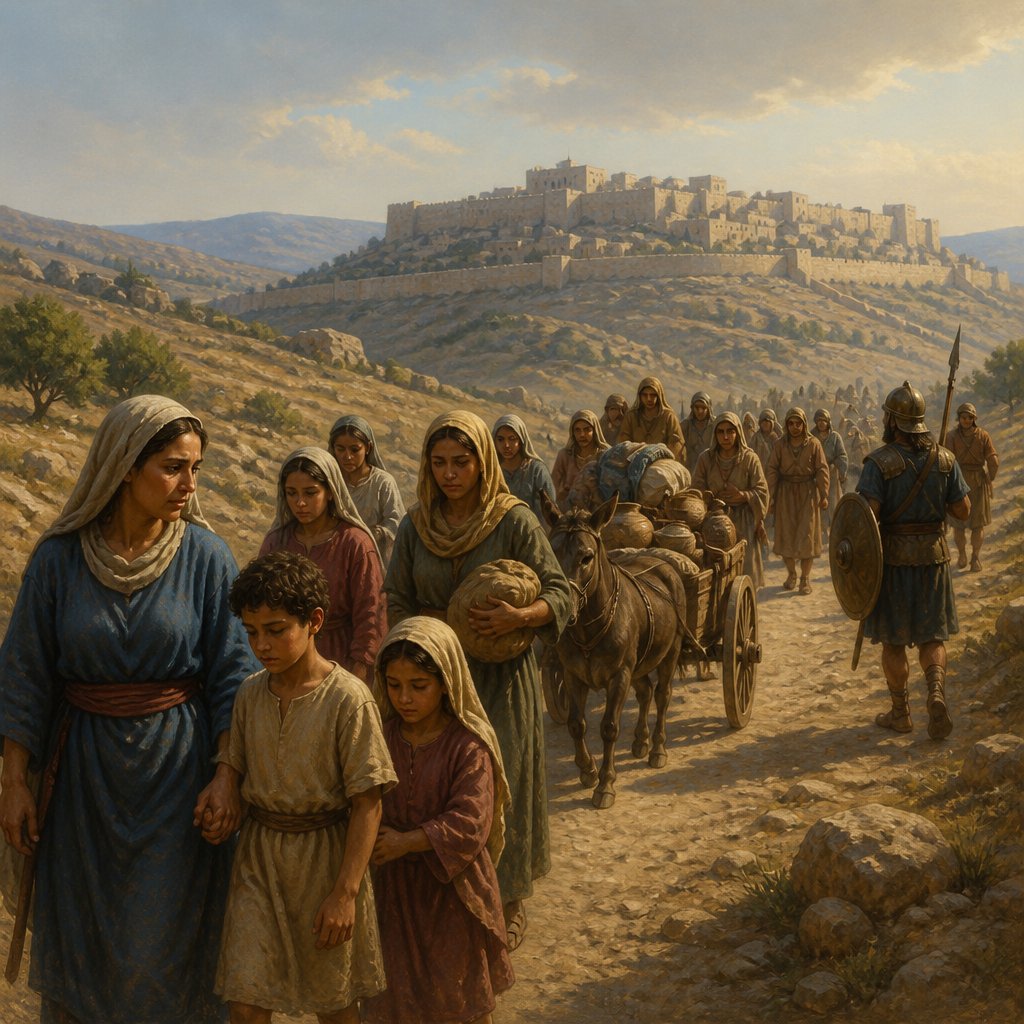
The verse 2 Chronicles 28:8 from the King James Version of the Bible reads, "And the children of Israel carried away captive of their brethren two hundred thousand, women, sons, and daughters, and took also away much spoil from them, and brought the spoil to Samaria." This verse comes from the book of 2 Chronicles, which is a historical account of the kings of Judah and the events that took place during their reigns.
To understand the full meaning and commentary of this verse, it is important to look at the context in which it is situated. In the preceding verses, we learn about King Ahaz of Judah, who was described as an unfaithful king who did not do what was right in the eyes of the Lord. He followed the ways of the kings of Israel, even sacrificing his own sons in the fire, according to the detestable practices of the nations the Lord had driven out before the Israelites. This had angered the Lord, and as a result, Judah fell into the hands of the king of Aram who inflicted heavy losses on them.
In the verse 2 Chronicles 28:8, we see the consequence of King Ahaz's unfaithfulness as the children of Israel (the northern kingdom) carried away captive two hundred thousand of their brethren, including women, sons, and daughters, and took much spoil from them, bringing it to Samaria. This act of carrying away captives and spoils from their own people reflects the division and disunity among the Israelites. The northern kingdom's actions not only caused suffering and loss for their brethren but also deepened the divide between the kingdoms of Israel and Judah.
The themes present in this verse are those of judgment, consequence, and the consequences of unfaithfulness. The actions of King Ahaz brought about the judgment of the Lord, leading to the capture of Judah's people and the plundering of their possessions by their fellow Israelites. This serves as a reminder of the inevitable consequences of turning away from God's ways and the impact it can have on not just the individual but the community as a whole.
The verse also reflects the historical and political context of the time, highlighting the division and conflict between the northern and southern kingdoms of Israel. The capture of Judah's people by their brethren from the northern kingdom further emphasizes the disunity and discord that existed among the Israelites, ultimately leading to their downfall and exile.
Symbolism can be found in the act of carrying away captives and spoils, representing the consequences of sin and unfaithfulness. The loss and suffering experienced by the people of Judah serve as a tangible representation of the spiritual and moral consequences of turning away from God. The plundering of possessions also reflects the loss of spiritual blessings and prosperity that comes with disobedience.
In conclusion, 2 Chronicles 28:8 serves as a sobering reminder of the consequences of unfaithfulness and disobedience to God. The verse highlights the judgment and division that resulted from King Ahaz's actions, as well as the broader context of political conflict and disunity among the Israelites. Through its themes of consequence and judgment, as well as its symbolism of loss and suffering, this verse serves as a cautionary tale and a call to remain faithful to God and His ways.
Get our apps


Artwork for 2 Chronicles 28:8

2 Chronicles 28:8 - "And the children of Israel carried away captive of their brethren two hundred thousand, women, sons, and daughters, and took also away much spoil from them, and brought the spoil to Samaria."
"And the children of Israel carried away captive of their brethren two hundred thousand, women, sons, and daughters, and took also away much spoil from them, and brought the spoil to Samaria." - 2 Chronicles 28:8

1 Chronicles 8:28 - "These were heads of the fathers, by their generations, chief men. These dwelt in Jerusalem."

2 Chronicles 28:3

2 Chronicles 20:28

2 Chronicles 28:2 - "For he walked in the ways of the kings of Israel, and made also molten images for Baalim."

2 Chronicles 20:28 - "And they came to Jerusalem with psalteries and harps and trumpets unto the house of the LORD."

2 Chronicles 9:28 - "And they brought unto Solomon horses out of Egypt, and out of all lands."

1 Chronicles 2:28 - "And the sons of Onam were, Shammai, and Jada. And the sons of Shammai; Nadab, and Abishur."

2 Chronicles 28:17 - "For again the Edomites had come and smitten Judah, and carried away captives."

2 Chronicles 28:14 - "So the armed men left the captives and the spoil before the princes and all the congregation."

2 Chronicles 18:28 - "So the king of Israel and Jehoshaphat the king of Judah went up to Ramoth-gilead."

2 Chronicles 28:16 - "¶ At that time did king Ahaz send unto the kings of Assyria to help him."

2 Chronicles 25:28 - "And they brought him upon horses, and buried him with his fathers in the city of Judah."

2 Chronicles 28:20 - "And Tilgath-pilneser king of Assyria came unto him, and distressed him, but strengthened him not."

1 Chronicles 2:8 - "And the sons of Ethan; Azariah."

2 Chronicles 11:8 - "And Gath, and Mareshah, and Ziph,"

1 Chronicles 8:2 - "Nohah the fourth, and Rapha the fifth."

2 Chronicles 28:22 - "¶ And in the time of his distress did he trespass yet more against the LORD: this is that king Ahaz."

2 Chronicles 28:4 - "He sacrificed also and burnt incense in the high places, and on the hills, and under every green tree."

2 Kings 23:28 - "Now the rest of the acts of Josiah, and all that he did, are they not written in the book of the chronicles of the kings of Judah?"

2 Chronicles 32:28 - "Storehouses also for the increase of corn, and wine, and oil; and stalls for all manner of beasts, and cotes for flocks."

"These were heads of the fathers, by their generations, chief men. These dwelt in Jerusalem." - 1 Chronicles 8:28

2 Chronicles 29:28 - "And all the congregation worshipped, and the singers sang, and the trumpeters sounded: and all this continued until the burnt offering was finished."

2 Chronicles 28:7 - "And Zichri, a mighty man of Ephraim, slew Maaseiah the king's son, and Azrikam the governor of the house, and Elkanah that was next to the king."

2 Chronicles 8:3 - "And Solomon went to Hamath-zobah, and prevailed against it."

2 Chronicles 28:26 - "¶ Now the rest of his acts and of all his ways, first and last, behold, they are written in the book of the kings of Judah and Israel."

2 Chronicles 6:28 - "¶ If there be dearth in the land, if there be pestilence, if there be blasting, or mildew, locusts, or caterpillers; if their enemies besiege them in the cities of their land; whatsoever sore or whatsoever sickness there be:"

2 Chronicles 28:19 - "For the LORD brought Judah low because of Ahaz king of Israel; for he made Judah naked, and transgressed sore against the LORD."

2 Chronicles 8:2 - "That the cities which Huram had restored to Solomon, Solomon built them, and caused the children of Israel to dwell there."