What does 2 Chronicles 31:14 mean?
“And Kore the son of Imnah the Levite, the porter toward the east, was over the freewill offerings of God, to distribute the oblations of the LORD, and the most holy things.” — 2 Chronicles 31:14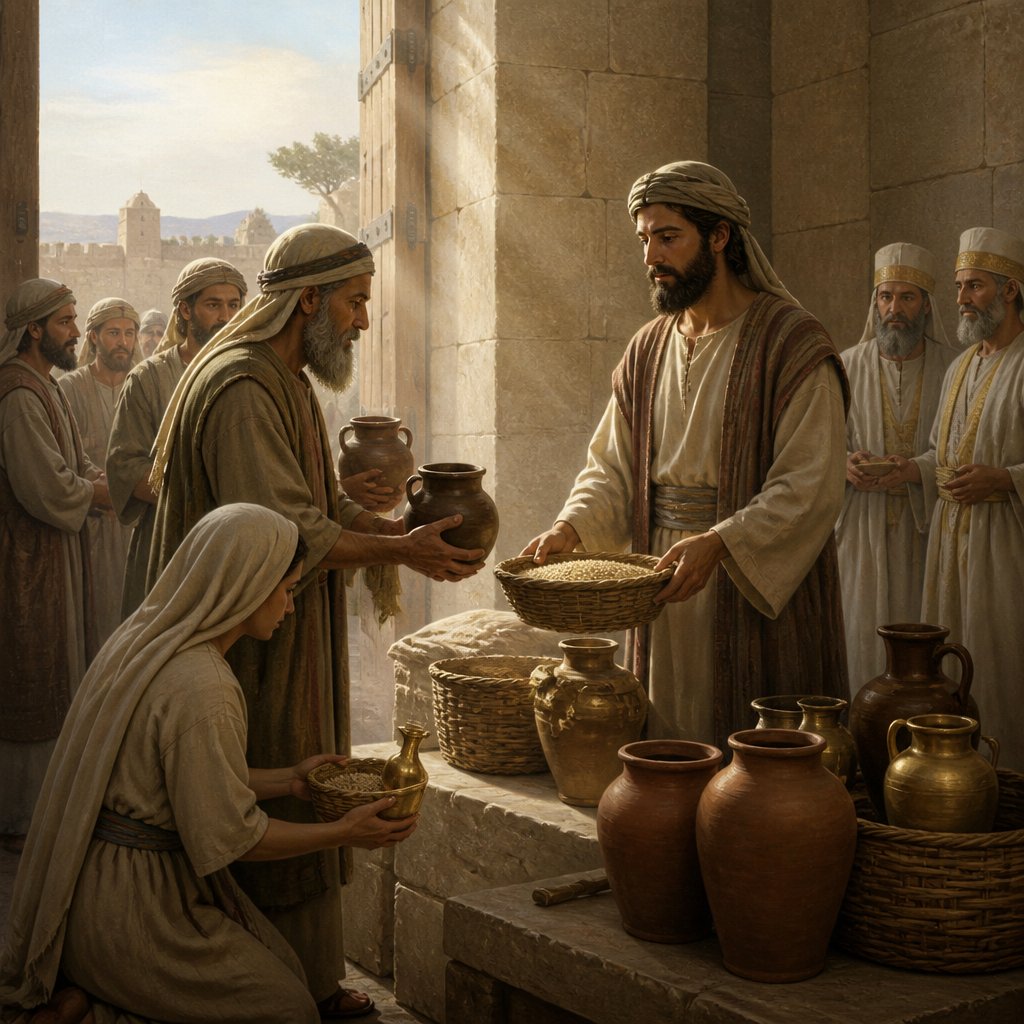
The Bible verse 2 Chronicles 31:14 from the King James Version (KJV) states:
"And Kore the son of Imnah the Levite, the porter toward the east, was over the freewill offerings of God, to distribute the oblations of the LORD, and the most holy things."
This verse is part of a larger passage describing the reforms initiated by King Hezekiah of Judah. Hezekiah was a righteous king who sought to bring about spiritual renewal and revival in the nation of Judah. He restored proper worship practices in the Temple, reinstituted the sacrificial system, and appointed priests and Levites to carry out their duties faithfully.
The specific verse 14 focuses on a man named Kore, who was a Levite and the son of Imnah. In the Old Testament, the Levites were a tribe of Israel set apart for religious service. They were responsible for the care and maintenance of the Tabernacle and, later, the Temple. The verse mentions that Kore held the position of porter toward the east, which means he was responsible for guarding the entrance to the Temple from the east side. This was a position of great responsibility, as it involved ensuring that only those who were ritually pure and properly prepared could enter the sacred space of the Temple.
In addition to his duties as a porter, Kore was also appointed to be in charge of the freewill offerings of God. Freewill offerings were distinct from the required sacrifices and were given voluntarily by individuals as an expression of devotion, thanksgiving, or as part of a vow. These offerings were considered to be holy and set apart for the Lord, and it was Kore's responsibility to oversee their distribution.
The verse also mentions that Kore was tasked with distributing the oblations of the Lord and the most holy things. Oblations were offerings of grain, oil, and wine that were presented to the Lord as part of the sacrificial system. The "most holy things" likely refers to the portions of the sacrifices that were reserved for the priests and Levites to eat in a sacred manner.
This verse highlights several important themes that are relevant not only to the historical context of ancient Judah but also to the broader religious and spiritual principles found in the Bible. One of the key themes is that of faithful stewardship and service. Kore was entrusted with the oversight of valuable and sacred offerings, and he was expected to carry out his duties with integrity and diligence. This speaks to the biblical principle of stewardship, which emphasizes the responsible management of resources and gifts that ultimately belong to God.
Another theme is that of devotion and worship. The mention of freewill offerings and most holy things underscores the importance of sincere and voluntary acts of worship. The Israelites were called to give of their resources and possessions as an expression of their gratitude and dedication to the Lord.
The verse also highlights the significance of structure and order in religious practices. The appointment of Kore to his specific roles within the Temple reflects a deliberate organization of responsibilities and duties. This emphasis on orderliness and proper procedure in worship is consistent with the broader themes of holiness and reverence found throughout the Bible.
Symbolically, Kore's role as the porter to the east can be seen as a representation of guardian or gatekeeper. In a spiritual sense, the east is often associated with the dawn and the rising sun, symbolizing a new beginning or spiritual awakening. Kore's position as the guardian of the eastern entrance to the Temple can be seen as a symbol of his role in facilitating the spiritual renewal and revival that was taking place under King Hezekiah's leadership.
In conclusion, 2 Chronicles 31:14 from the King James Version of the Bible provides a rich and multifaceted glimpse into the religious and spiritual practices of ancient Judah. It highlights themes of stewardship, devotion, and orderliness, while also offering symbolic insights into the role of guardianship and spiritual renewal. As with all passages of Scripture, it invites readers to consider the broader implications and applications of these themes in their own lives and faith journeys.
Get our apps


Artwork for 2 Chronicles 31:14

2 Chronicles 31:14 - "And Kore the son of Imnah the Levite, the porter toward the east, was over the freewill offerings of God, to distribute the oblations of the LORD, and the most holy things."
"And Kore the son of Imnah the Levite, the porter toward the east, was over the freewill offerings of God, to distribute the oblations of the LORD, and the most holy things." - 2 Chronicles 31:14
2 Chronicles 31:1

2 Chronicles 31:1

2 Chronicles 31:9 - "Then Hezekiah questioned with the priests and the Levites concerning the heaps."

2 Chronicles 31:11 - "¶ Then Hezekiah commanded to prepare chambers in the house of the LORD; and they prepared them,"

1 Chronicles 2:31 - "And the sons of Appaim; Ishi. And the sons of Ishi; Sheshan. And the children of Sheshan; Ahlai."

2 Chronicles 31:7 - "In the third month they began to lay the foundation of the heaps, and finished them in the seventh month."

2 Chronicles 31:8 - "And when Hezekiah and the princes came and saw the heaps, they blessed the LORD, and his people Israel."

2 chronicles 7:14

2 chronicles 7:14
2 Kings 15:31 - "And the rest of the acts of Pekah, and all that he did, behold, they are written in the book of the chronicles of the kings of Israel."

2 Chronicles 31:17 - "Both to the genealogy of the priests by the house of their fathers, and the Levites from twenty years old and upward, in their charges by their courses;"

1 Chronicles 2:14 - "Nethaneel the fourth, Raddai the fifth,"

2 Chronicles 14:2 - "And Asa did that which was good and right in the eyes of the LORD his God:"

2 Chronicles 31:4 - "Moreover he commanded the people that dwelt in Jerusalem to give the portion of the priests and the Levites, that they might be encouraged in the law of the LORD."

2 Chronicles 31:18 - "And to the genealogy of all their little ones, their wives, and their sons, and their daughters, through all the congregation: for in their set office they sanctified themselves in holiness:"

2 Chronicles 31:12 - "And brought in the offerings and the tithes and the dedicated things faithfully: over which Cononiah the Levite was ruler, and Shimei his brother was the next."

2 Chronicles 31:20 - "¶ And thus did Hezekiah throughout all Judah, and wrought that which was good and right and truth before the LORD his God."

"Then Hezekiah questioned with the priests and the Levites concerning the heaps." - 2 Chronicles 31:9

2 Chronicles 6:31 - "That they may fear thee, to walk in thy ways, so long as they live in the land which thou gavest unto our fathers."

2 Chronicles 9:31 - "And Solomon slept with his fathers, and he was buried in the city of David his father: and Rehoboam his son reigned in his stead."

2 Kings 14:18 - "And the rest of the acts of Amaziah, are they not written in the book of the chronicles of the kings of Judah?"

2 Chronicles 29:14 - "And of the sons of Heman; Jehiel, and Shimei: and of the sons of Jeduthun; Shemaiah, and Uzziel."

2 Chronicles 15:14 - "And they sware unto the LORD with a loud voice, and with shouting, and with trumpets, and with cornets."

Humble ourselves and pray 2 Chronicles 7:14

2 Chronicles 31:21 - "And in every work that he began in the service of the house of God, and in the law, and in the commandments, to seek his God, he did it with all his heart, and prospered."

2 Chronicles 4:14 - "He made also bases, and lavers made he upon the bases;"

2 Chronicles 31:2 - "¶ And Hezekiah appointed the courses of the priests and the Levites after their courses, every man according to his service, the priests and Levites for burnt offerings and for peace offerings, to minister, and to give thanks, and to praise in the gates of the tents of the LORD."

2 Chronicles 14:4 - "And commanded Judah to seek the LORD God of their fathers, and to do the law and the commandment."