What does 2 Chronicles 33:13 mean?
“And prayed unto him: and he was intreated of him, and heard his supplication, and brought him again to Jerusalem into his kingdom. Then Manasseh knew that the LORD he was God.” — 2 Chronicles 33:13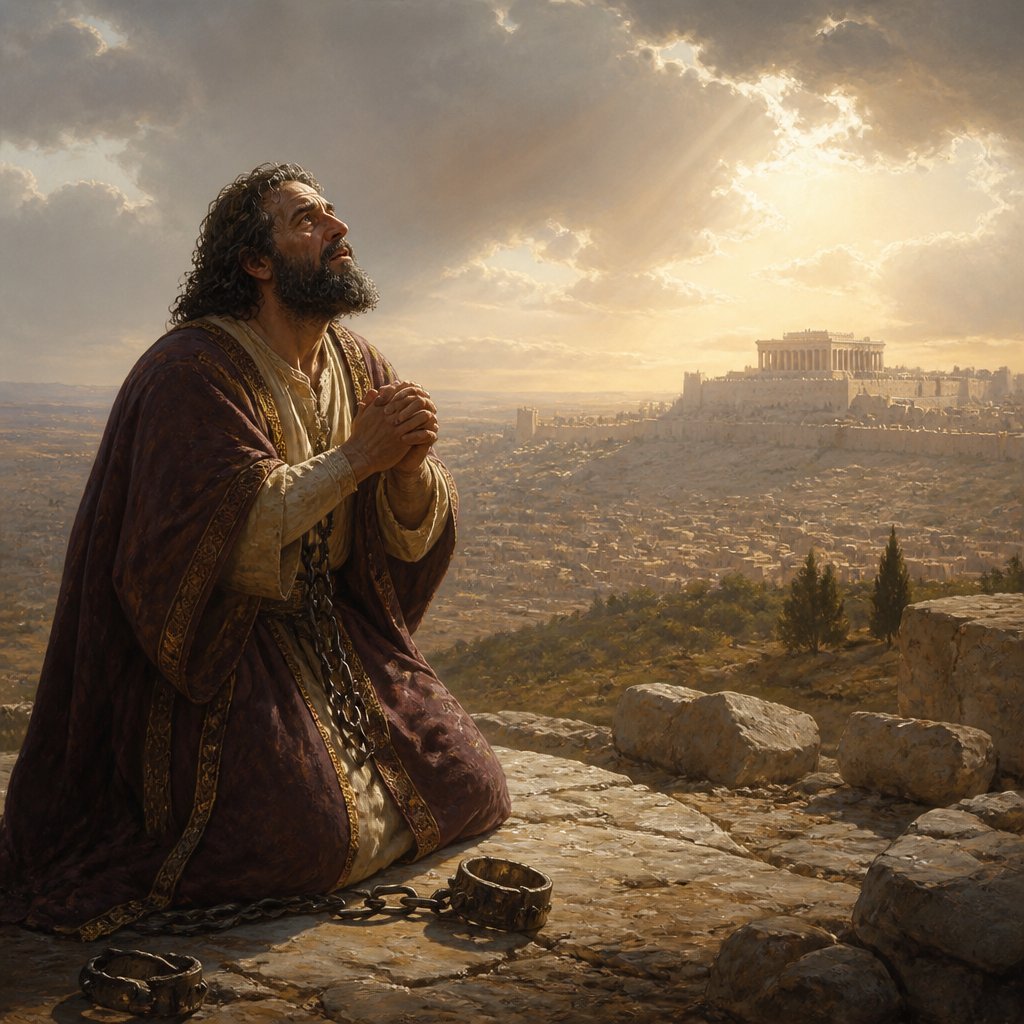
2 Chronicles 33:13 (KJV) states, "And prayed unto him: and he was intreated of him, and heard his supplication, and brought him again to Jerusalem into his kingdom. Then Manasseh knew that the LORD he was God."
This verse is from the book of 2 Chronicles in the Old Testament and it recounts the reign of Manasseh, one of the kings of Judah. This specific verse is part of the narrative that describes Manasseh's repentance and restoration after a period of great wickedness and idolatry.
The context of this verse is important to understand its full meaning. Manasseh was one of the most wicked kings in the history of Judah. He reigned for 55 years and during this time, he led his people into idolatry, built altars for false gods in the temple of the Lord, and even sacrificed his own son in the fire. His reign was marked by extreme evil and immorality, and the people of Judah followed his lead in abandoning the worship of the true God.
However, in 2 Chronicles 33:12-13, we see a dramatic shift in Manasseh's behavior. The verse 12 states, "And when he was in affliction, he besought the LORD his God, and humbled himself greatly before the God of his fathers." This displays a clear change in his heart, as he turns to the Lord in a time of distress and sincerely seeks His mercy and forgiveness. In response to Manasseh's prayer, verse 13 reveals that the Lord was moved by his supplication and restored him to his kingdom in Jerusalem. It also signifies that Manasseh came to realize the true nature of God and acknowledged His sovereignty.
The themes within this verse are ones of repentance, forgiveness, and restoration. Despite Manasseh’s extreme wickedness, his prayer and repentance demonstrate the mercy and grace of God. It is a powerful reminder that no one is beyond redemption, and God's forgiveness knows no bounds. Manasseh's story serves as a testament to the transformative power of genuine repentance and the willingness of God to receive those who turn to Him in sincerity.
The passage holds significant symbolism as well. Manasseh's initial wickedness represents the sinful nature of humanity and the propensity to turn away from God. His subsequent repentance and restoration symbolize God's willingness to forgive and restore those who humbly seek Him. It signifies the spiritual journey of turning away from sin and returning to God, and the hope of redemption that comes with sincere repentance.
This verse has a broader message for all believers. It serves as a reminder that regardless of our past transgressions, God is always ready to forgive and restore us if we genuinely repent and turn to Him. It encourages us to humble ourselves before God, seek His mercy, and acknowledge His sovereignty in our lives.
In conclusion, 2 Chronicles 33:13 from the King James Version highlights the powerful themes of repentance, forgiveness, and restoration. It presents a profound example of God's mercy and grace, and the transformative power of genuine repentance. The verse holds important symbolism and delivers a timeless message of hope and redemption for all who seek God with a contrite heart.
Get our apps


Artwork for 2 Chronicles 33:13

2 Chronicles 33:13 - "And prayed unto him: and he was intreated of him, and heard his supplication, and brought him again to Jerusalem into his kingdom. Then Manasseh knew that the LORD he was God."
"And prayed unto him: and he was intreated of him, and heard his supplication, and brought him again to Jerusalem into his kingdom. Then Manasseh knew that the LORD he was God." - 2 Chronicles 33:13

1 Chronicles 2:33 - "And the sons of Jonathan; Peleth, and Zaza. These were the sons of Jerahmeel."

2 Chronicles 33:10 - "And the LORD spake to Manasseh, and to his people: but they would not hearken."

2 Chronicles 29:33 - "And the consecrated things were six hundred oxen and three thousand sheep."

2 Chronicles 33:5 - "And he built altars for all the host of heaven in the two courts of the house of the LORD."

2 Chronicles 33:24 - "And his servants conspired against him, and slew him in his own house."

2 Chronicles 33:2 - "But did that which was evil in the sight of the LORD, like unto the abominations of the heathen, whom the LORD had cast out before the children of Israel."

2 Chronicles 33:17 - "Nevertheless the people did sacrifice still in the high places, yet unto the LORD their God only."

2 Chronicles 33:21 - "¶ Amon was two and twenty years old when he began to reign, and reigned two years in Jerusalem."

2 Chronicles 6:13

2 Chronicles 20:33 - "Howbeit the high places were not taken away: for as yet the people had not prepared their hearts unto the God of their fathers."

2 chronicles 13:12

2 Chronicles 33:23 - "And humbled not himself before the LORD, as Manasseh his father had humbled himself; but Amon trespassed more and more."

2 Chronicles 33:1 - "Manasseh was twelve years old when he began to reign, and he reigned fifty and five years in Jerusalem:"

2 Chronicles 33:12 - "And when he was in affliction, he besought the LORD his God, and humbled himself greatly before the God of his fathers,"

2 Chronicles 33:4 - "Also he built altars in the house of the LORD, whereof the LORD had said, In Jerusalem shall my name be for ever."

2 Chronicles 33:20 - "¶ So Manasseh slept with his fathers, and they buried him in his own house: and Amon his son reigned in his stead."

2 Chronicles 33:16 - "And he repaired the altar of the LORD, and sacrificed thereon peace offerings and thank offerings, and commanded Judah to serve the LORD God of Israel."

"And the LORD spake to Manasseh, and to his people: but they would not hearken." - 2 Chronicles 33:10

"And the sons of Jonathan; Peleth, and Zaza. These were the sons of Jerahmeel." - 1 Chronicles 2:33

2 Chronicles 2:13 - "And now I have sent a cunning man, endued with understanding, of Huram my father's,"

2 Chronicles 33:9 - "So Manasseh made Judah and the inhabitants of Jerusalem to err, and to do worse than the heathen, whom the LORD had destroyed before the children of Israel."

2 Chronicles 13:13 - "¶ But Jeroboam caused an ambushment to come about behind them: so they were before Judah, and the ambushment was behind them."

2 Chronicles 33:25 - "¶ But the people of the land slew all them that had conspired against king Amon; and the people of the land made Josiah his son king in his stead."

2 Chronicles 29:13 - "And of the sons of Elizaphan; Shimri, and Jeiel: and of the sons of Asaph; Zechariah, and Mattaniah:"

2 Chronicles 33:11 - "¶ Wherefore the LORD brought upon them the captains of the host of the king of Assyria, which took Manasseh among the thorns, and bound him with fetters, and carried him to Babylon."

2 Samuel 13:33 - "Now therefore let not my lord the king take the thing to his heart, to think that all the king's sons are dead: for Amnon only is dead."

2 Chronicles 20:13 - "And all Judah stood before the LORD, with their little ones, their wives, and their children."

2 Chronicles 13:16 - "And the children of Israel fled before Judah: and God delivered them into their hand."