What does 2 Chronicles 33:16 mean?
“And he repaired the altar of the LORD, and sacrificed thereon peace offerings and thank offerings, and commanded Judah to serve the LORD God of Israel.” — 2 Chronicles 33:16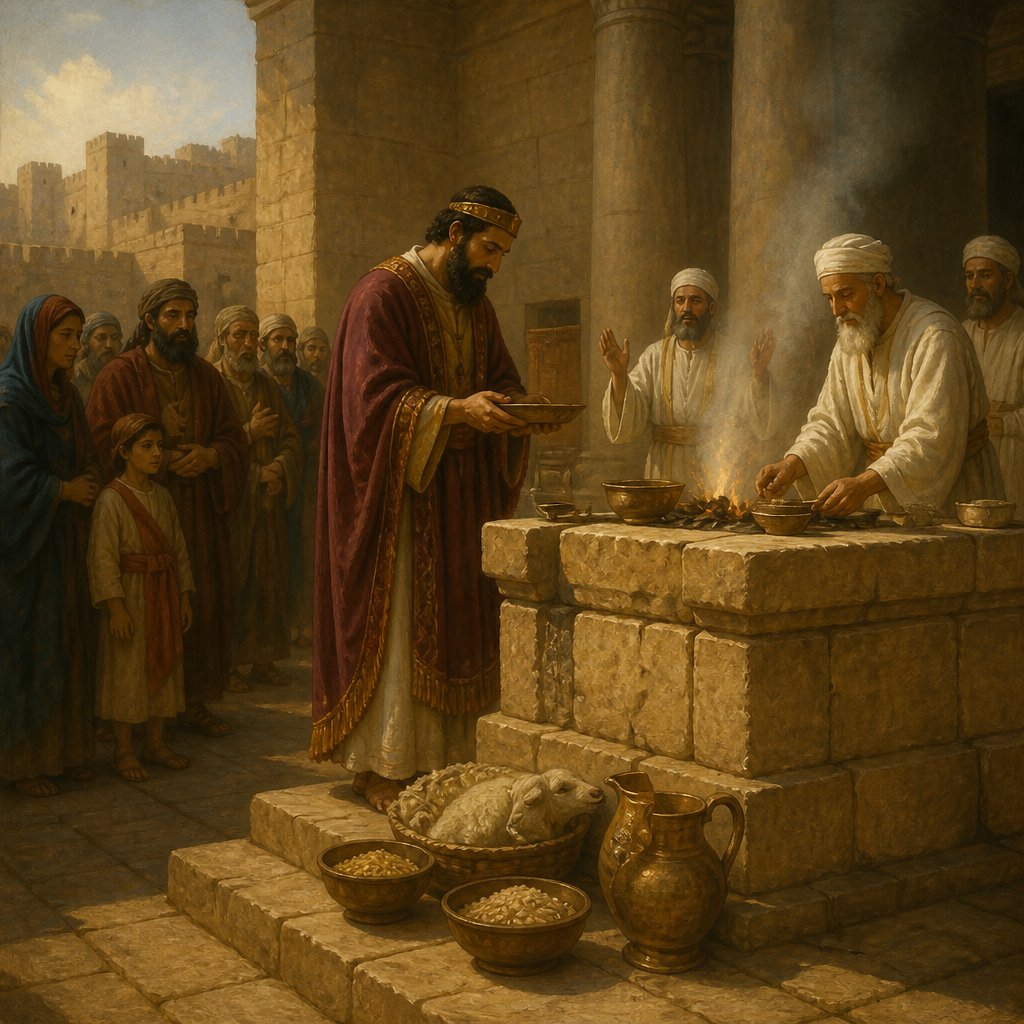
2 Chronicles 33:16 (KJV) - "And he repaired the altar of the Lord, and sacrificed thereon peace offerings and thank offerings, and commanded Judah to serve the Lord God of Israel."
This verse comes from the Old Testament, specifically from the book of 2 Chronicles, which chronicles the history of Judah, the southern kingdom of Israel. The verse is part of the narrative of King Manasseh, who was one of the most wicked and idolatrous kings in the history of Judah. However, despite his earlier transgressions, Manasseh repented of his sins and turned back to the Lord. This verse describes his actions as he sought to restore the worship of the true God in Judah.
The verse begins by stating, "And he repaired the altar of the Lord." This action is significant because the altar was the central place of worship in ancient Israel. It was where the people would bring their offerings and sacrifices to seek forgiveness for their sins and to express their devotion to God. By repairing the altar, Manasseh was signaling his intention to restore the proper worship of the Lord in Judah.
The verse goes on to say that Manasseh "sacrificed thereon peace offerings and thank offerings." Peace offerings were a type of sacrifice that expressed gratitude and fellowship with God, while thank offerings were given as expressions of gratitude for God's blessings. By offering these sacrifices, Manasseh was acknowledging the goodness and mercy of the Lord and seeking reconciliation with Him.
Furthermore, the verse states that Manasseh "commanded Judah to serve the Lord God of Israel." This command is a clear indication of Manasseh's desire to lead his people back to the worship of the true God. He was not only seeking personal repentance and restoration, but he was also concerned with the spiritual well-being of his kingdom.
The themes present in this verse are repentance, restoration, and the worship of the true God. Manasseh's actions illustrate the possibility of turning away from sin and returning to God. His example shows that no one is beyond redemption, and that genuine repentance can lead to restoration and reconciliation with God. The verse also emphasizes the importance of sincere worship and devotion to God, as demonstrated by the repair of the altar and the offering of sacrifices.
The context of this verse is important for understanding its significance. Manasseh's reign was marked by idolatry, wickedness, and immorality. He led the people of Judah astray and provoked the Lord to anger. However, in the midst of this darkness, Manasseh's repentance and the subsequent reforms he instituted stand as a powerful example of God's mercy and the possibility of spiritual renewal. The verse serves as a reminder that God is willing to forgive those who genuinely seek Him, no matter how far they have strayed.
Symbolically, Manasseh's repair of the altar can be seen as a metaphor for the restoration of the relationship between God and His people. The altar was the place where the people of Israel met with God, and by repairing it, Manasseh was symbolically repairing the broken relationship between the people and their Lord. The sacrifices offered on the altar represent the desire for reconciliation and the acknowledgment of God's goodness and mercy. Finally, Manasseh's command to serve the Lord signifies his desire to lead his people back to the true worship of God.
In conclusion, 2 Chronicles 33:16 is a powerful and inspiring verse that highlights the possibility of repentance and restoration, as well as the importance of sincere worship and devotion to God. Manasseh's actions serve as a testament to God's mercy and the transformative power of genuine repentance. The verse offers hope and encouragement to all who have strayed from the path of righteousness, reminding them that reconciliation with God is possible through sincere repentance and worship.
Get our apps


Artwork for 2 Chronicles 33:16

2 Chronicles 33:16 - "And he repaired the altar of the LORD, and sacrificed thereon peace offerings and thank offerings, and commanded Judah to serve the LORD God of Israel."
"And he repaired the altar of the LORD, and sacrificed thereon peace offerings and thank offerings, and commanded Judah to serve the LORD God of Israel." - 2 Chronicles 33:16

1 Chronicles 16:33 – "Then shall the trees of the forest sing for joy before the Lord, for he comes to judge the earth."

1 Chronicles 16:33 - "Then shall the trees of the wood sing out at the presence of the LORD, because he cometh to judge the earth."

1 Chronicles 2:33 - "And the sons of Jonathan; Peleth, and Zaza. These were the sons of Jerahmeel."

2 Chronicles 33:10 - "And the LORD spake to Manasseh, and to his people: but they would not hearken."

2 Chronicles 29:33 - "And the consecrated things were six hundred oxen and three thousand sheep."

2 Chronicles 33:5 - "And he built altars for all the host of heaven in the two courts of the house of the LORD."

2 Chronicles 33:24 - "And his servants conspired against him, and slew him in his own house."

1 Chronicles 16:33 – "Then shall the trees of the forest sing for joy before the Lord, for he comes to judge the earth."

1 Chronicles 16:33 – "Then shall the trees of the forest sing for joy before the Lord, for he comes to judge the earth."

2 Chronicles 33:2 - "But did that which was evil in the sight of the LORD, like unto the abominations of the heathen, whom the LORD had cast out before the children of Israel."

2 Chronicles 33:17 - "Nevertheless the people did sacrifice still in the high places, yet unto the LORD their God only."

2 Chronicles 33:21 - "¶ Amon was two and twenty years old when he began to reign, and reigned two years in Jerusalem."

2 Chronicles 20:33 - "Howbeit the high places were not taken away: for as yet the people had not prepared their hearts unto the God of their fathers."

2 Chronicles 33:23 - "And humbled not himself before the LORD, as Manasseh his father had humbled himself; but Amon trespassed more and more."

2 Chronicles 33:1 - "Manasseh was twelve years old when he began to reign, and he reigned fifty and five years in Jerusalem:"

2 Chronicles 33:12 - "And when he was in affliction, he besought the LORD his God, and humbled himself greatly before the God of his fathers,"

2 Chronicles 33:4 - "Also he built altars in the house of the LORD, whereof the LORD had said, In Jerusalem shall my name be for ever."

2 Chronicles 33:20 - "¶ So Manasseh slept with his fathers, and they buried him in his own house: and Amon his son reigned in his stead."

John 16:33

John 16:33

John 16:33

"And the LORD spake to Manasseh, and to his people: but they would not hearken." - 2 Chronicles 33:10

John 16:33
John 16:33

John 16:33

"And the sons of Jonathan; Peleth, and Zaza. These were the sons of Jerahmeel." - 1 Chronicles 2:33

2 Chronicles 33:9 - "So Manasseh made Judah and the inhabitants of Jerusalem to err, and to do worse than the heathen, whom the LORD had destroyed before the children of Israel."

"Then shall the trees of the wood sing out at the presence of the LORD, because he cometh to judge the earth." - 1 Chronicles 16:33