What does 2 Chronicles 36:4 mean?
“And the king of Egypt made Eliakim his brother king over Judah and Jerusalem, and turned his name to Jehoiakim. And Necho took Jehoahaz his brother, and carried him to Egypt.” — 2 Chronicles 36:4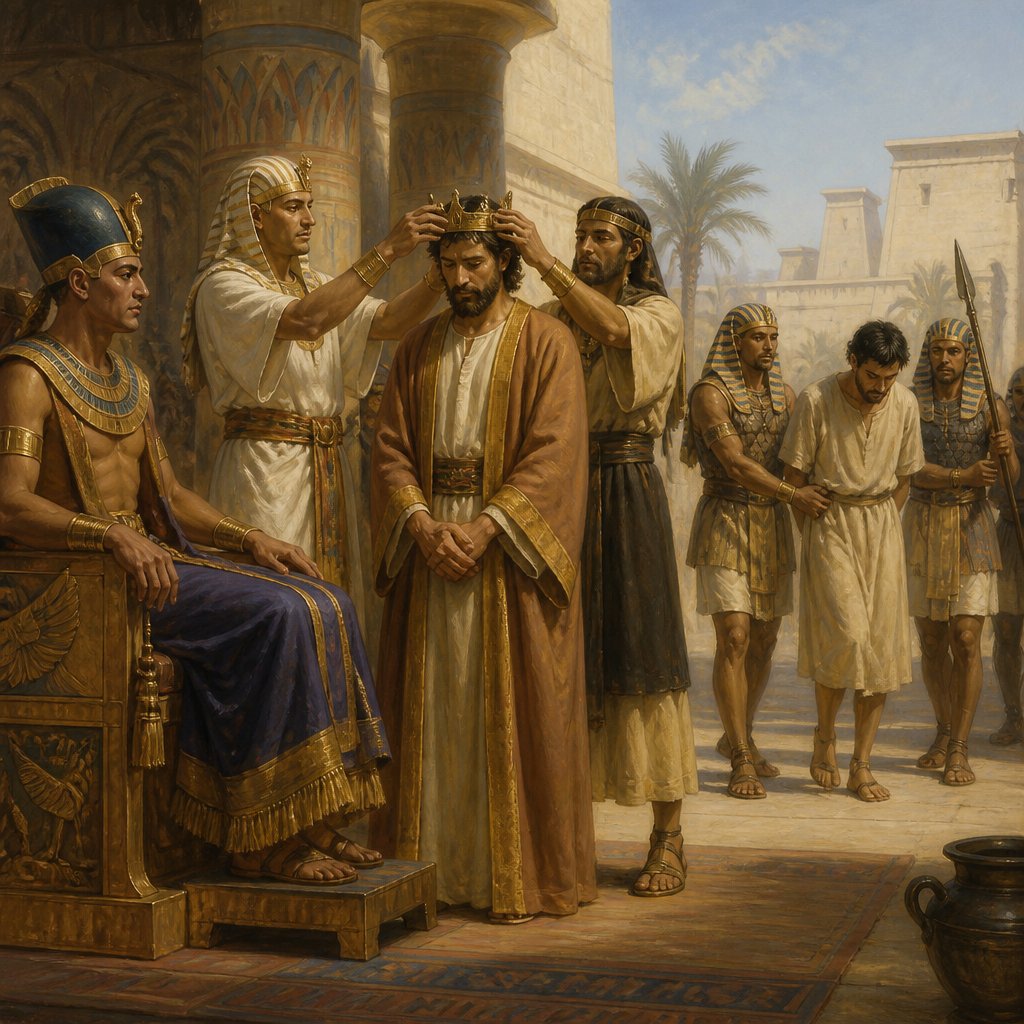
The Bible verse 2 Chronicles 36:4 in the King James Version (KJV) reads: "And the king of Egypt made Eliakim his brother king over Judah and Jerusalem, and turned his name to Jehoiakim. And Necho took Jehoahaz his brother, and carried him to Egypt."
This verse is part of the historical account of the kings of Judah as recorded in the books of 1 and 2 Chronicles. In this specific verse, it tells of the political maneuverings and power struggles between the nations of Egypt and Judah during the time of the divided monarchy. To fully understand the depth and significance of this verse, it is important to provide some context and background.
The books of 1 and 2 Chronicles were written to provide a historical record of the Davidic line of kings and to highlight the significance of the temple and the priesthood in Israel's history. The Chronicler's account reveals the long-term effects of the kings' actions, both good and bad, as well as the spiritual condition of the nation.
In 2 Chronicles 36, the chapter from which this verse is taken, the writer recounts the downfall of the southern kingdom of Judah, culminating in the destruction of Jerusalem and the temple by the Babylonians. The verse specifically refers to the reign of Jehoahaz, who was made king by the people of Judah after the death of his father, King Josiah. However, his reign was short-lived, as he was taken captive to Egypt by Pharaoh Necho.
Necho then installed Jehoahaz's brother, Eliakim, as king over Judah and Jerusalem, renaming him Jehoiakim. This act of appointing puppet kings was a common political strategy used by foreign powers to exert control over smaller nations. It is a clear sign of the defeat and subjugation of Judah by Egypt.
The symbolism and themes in this verse are profound and far-reaching. At its core, it speaks to the consequences of disobedience and the failure of Judah's kings to follow God's will. The Babylonian and Egyptian invasions were the direct result of the people's persistent idolatry, injustice, and unfaithfulness. The usurping of the throne and the deportation of the king to a foreign land symbolize the loss of sovereignty and the judgment of God upon the nation.
Moreover, this verse underscores the profound impact of leadership on a nation. The actions and decisions of the kings had far-reaching implications for the people. Jehoahaz's captivity and the installation of a puppet king signified the loss of autonomy and the imposition of foreign rule. The failure of the kings to lead with wisdom, justice, and righteousness led to the downfall of the nation.
Furthermore, this verse also highlights the sovereignty of God in the midst of geopolitical upheavals. Despite the political maneuverings of nations and the actions of rulers, God remained in control of the destiny of Judah. The rise and fall of kings were ultimately subject to His divine purposes.
In conclusion, 2 Chronicles 36:4 serves as a poignant reminder of the consequences of human actions, the importance of leadership, and the enduring sovereignty of God. It stands as a warning to future generations about the perils of unfaithfulness and the enduring repercussions of disobedience. The verse is emblematic of the larger narrative of the Israelites' history, showcasing both the faithfulness and the failings of God's chosen people.
Get our apps


Artwork for 2 Chronicles 36:4

2 Chronicles 36:4 - "And the king of Egypt made Eliakim his brother king over Judah and Jerusalem, and turned his name to Jehoiakim. And Necho took Jehoahaz his brother, and carried him to Egypt."
"And the king of Egypt made Eliakim his brother king over Judah and Jerusalem, and turned his name to Jehoiakim. And Necho took Jehoahaz his brother, and carried him to Egypt." - 2 Chronicles 36:4

2 Chronicles 36:22

1 Chronicles 4:36 - "And Elioenai, and Jaakobah, and Jeshohaiah, and Asaiah, and Adiel, and Jesimiel, and Benaiah,"

1 Chronicles 2:36 - "And Attai begat Nathan, and Nathan begat Zabad,"

2 Chronicles 36:2 - "Jehoahaz was twenty and three years old when he began to reign, and he reigned three months in Jerusalem."

2 Chronicles 29:36 - "And Hezekiah rejoiced, and all the people, that God had prepared the people: for the thing was done suddenly."

2 Chronicles 20:36 - "And he joined himself with him to make ships to go to Tarshish: and they made the ships in Ezion-geber."

2 Chronicles 36:7 - "Nebuchadnezzar also carried of the vessels of the house of the LORD to Babylon, and put them in his temple at Babylon."

2 Kings 15:36 - "¶ Now the rest of the acts of Jotham, and all that he did, are they not written in the book of the chronicles of the kings of Judah?"

"And Elioenai, and Jaakobah, and Jeshohaiah, and Asaiah, and Adiel, and Jesimiel, and Benaiah," - 1 Chronicles 4:36

2 Chronicles 36:3 - "And the king of Egypt put him down at Jerusalem, and condemned the land in an hundred talents of silver and a talent of gold."

2 Chronicles 36:11 - "¶ Zedekiah was one and twenty years old when he began to reign, and reigned eleven years in Jerusalem."

2 Chronicles 36:1 - "Then the people of the land took Jehoahaz the son of Josiah, and made him king in his father's stead in Jerusalem."

2 Chronicles 36:6 - "Against him came up Nebuchadnezzar king of Babylon, and bound him in fetters, to carry him to Babylon."

"And Attai begat Nathan, and Nathan begat Zabad," - 1 Chronicles 2:36

2 Chronicles 36:18 - "And all the vessels of the house of God, great and small, and the treasures of the house of the LORD, and the treasures of the king, and of his princes; all these he brought to Babylon."

2 Chronicles 36:12 - "And he did that which was evil in the sight of the LORD his God, and humbled not himself before Jeremiah the prophet speaking from the mouth of the LORD."

2 Chronicles 36:19 - "And they burnt the house of God, and brake down the wall of Jerusalem, and burnt all the palaces thereof with fire, and destroyed all the goodly vessels thereof."

2 Chronicles 36:16 - "But they mocked the messengers of God, and despised his words, and misused his prophets, until the wrath of the LORD arose against his people, till there was no remedy."

2 Chronicles 36:20 - "And them that had escaped from the sword carried he away to Babylon; where they were servants to him and his sons until the reign of the kingdom of Persia:"

2 Chronicles 4:22

2 Chronicles 36:14 - "¶ Moreover all the chief of the priests, and the people, transgressed very much after all the abominations of the heathen; and polluted the house of the LORD which he had hallowed in Jerusalem."

2 Chronicles 36:15 - "And the LORD God of their fathers sent to them by his messengers, rising up betimes, and sending; because he had compassion on his people, and on his dwelling place:"

2 Chronicles 36:9 - "¶ Jehoiachin was eight years old when he began to reign, and he reigned three months and ten days in Jerusalem: and he did that which was evil in the sight of the LORD."

2 Chronicles 36:10 - "And when the year was expired, king Nebuchadnezzar sent, and brought him to Babylon, with the goodly vessels of the house of the LORD, and made Zedekiah his brother king over Judah and Jerusalem."

2 Chronicles 36:21 - "To fulfil the word of the LORD by the mouth of Jeremiah, until the land had enjoyed her sabbaths: for as long as she lay desolate she kept sabbath, to fulfil threescore and ten years."

2 Chronicles 36:5 - "¶ Jehoiakim was twenty and five years old when he began to reign, and he reigned eleven years in Jerusalem: and he did that which was evil in the sight of the LORD his God."

2 Chronicles 4:15 - "One sea, and twelve oxen under it."

2 Chronicles 30:4 - "And the thing pleased the king and all the congregation."