What does 2 Chronicles 4:1 mean?
“Moreover he made an altar of brass, twenty cubits the length thereof, and twenty cubits the breadth thereof, and ten cubits the height thereof.” — 2 Chronicles 4:1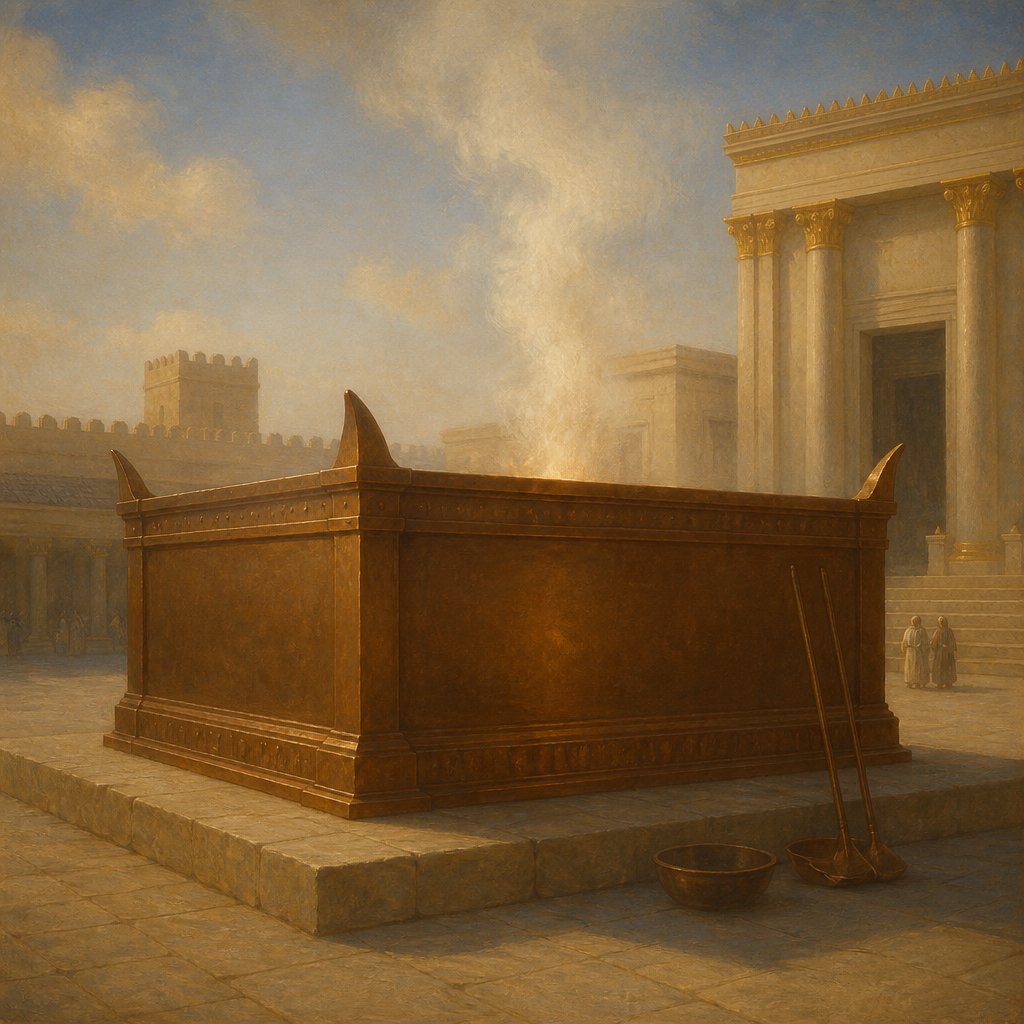
2 Chronicles 4:1 (KJV)
"Moreover he made an altar of brass, twenty cubits the length thereof, and twenty cubits the breadth thereof, and ten cubits the height thereof."
The verse 2 Chronicles 4:1 describes the construction of the altar of brass by King Solomon. This passage is part of a larger narrative found in the Old Testament of the Bible, chronicling the reign of King Solomon and the construction of the temple in Jerusalem. This particular verse details the dimensions of the altar, which was a significant and central element of the temple.
To fully understand the significance of this verse, it is important to consider the historical and religious context of the time. During Solomon's reign, the temple in Jerusalem was the focal point of Israel's religious life. As such, the construction and details of the temple were of great importance to the people of Israel. The altar of brass mentioned in 2 Chronicles 4:1 was a place of sacrifice and worship, representing the connection between God and His people. It was where the priests offered burnt offerings and incense to seek forgiveness and favor from God.
The use of brass in the construction of the altar is also significant. In biblical symbolism, brass is often associated with judgment and purification. The use of brass in the altar's construction signifies the purity and holiness of the offerings presented to God. It also serves as a reminder of the righteousness and justice of God, as well as the need for His people to approach Him with reverence and humility.
The specific dimensions of the altar, twenty cubits in length, twenty cubits in breadth, and ten cubits in height, also hold symbolic meaning. In biblical numerology, the number 20 is often associated with redemption and completion, while the number 10 signifies divine order and authority. The size and proportions of the altar reflect the balance and harmony of God's design and the perfection of His plan for redemption.
Furthermore, the altar of brass served as a representation of the ultimate sacrifice that would be made by Jesus Christ. The burnt offerings and sacrifices made on the altar in the temple were a foreshadowing of the atoning sacrifice of Jesus on the cross. This connection between the Old Testament rituals and the New Testament fulfillment in Christ underscores the continuity of God's redemptive plan throughout history.
In addition to its religious and symbolic significance, 2 Chronicles 4:1 also highlights the craftsmanship and artistry involved in the construction of the temple. The temple, including the altar of brass, was built with meticulous attention to detail and reverence for God. This serves as a reminder of the importance of excellence in the service of God and the honoring of His presence.
Overall, 2 Chronicles 4:1 offers a rich and multi-layered insight into the spiritual, historical, and artistic significance of the altar of brass in the temple of Jerusalem. It reminds believers of the centrality of worship and sacrifice in their relationship with God, the symbolism of purity and redemption, and the anticipation of the ultimate sacrifice in Jesus Christ. It also underscores the value of craftsmanship and excellence in honoring and glorifying God.
Get our apps


Artwork for 2 Chronicles 4:1

2 Chronicles 4:1 - "Moreover he made an altar of brass, twenty cubits the length thereof, and twenty cubits the breadth thereof, and ten cubits the height thereof."
"Moreover he made an altar of brass, twenty cubits the length thereof, and twenty cubits the breadth thereof, and ten cubits the height thereof." - 2 Chronicles 4:1

2 Chronicles 4:22

1 Chronicles 4:2 - "And Reaiah the son of Shobal begat Jahath; and Jahath begat Ahumai, and Lahad. These are the families of the Zorathites."

1 Chronicles 4:1 - "The sons of Judah; Pharez, Hezron, and Carmi, and Hur, and Shobal."

1 Chronicles 2:4 - "And Tamar his daughter in law bare him Pharez and Zerah. All the sons of Judah were five."

1 Chronicles 1:4 - "Noah, Shem, Ham, and Japheth."
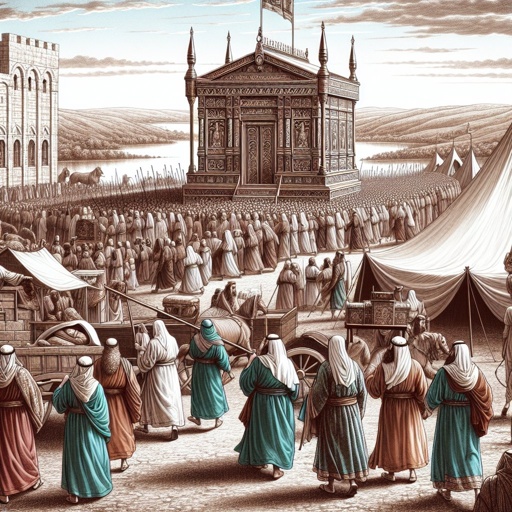
2 Chronicles 1:4 - "But the ark of God had David brought up from Kirjath-jearim to the place which David had prepared for it: for he had pitched a tent for it at Jerusalem."

"The sons of Judah; Pharez, Hezron, and Carmi, and Hur, and Shobal." - 1 Chronicles 4:1

1 Chronicles 4 : 10

2 Chronicles 4:15 - "One sea, and twelve oxen under it."

1 Chronicles 4:29 - "And at Bilhah, and at Ezem, and at Tolad,"

1 Chronicles 4:30 - "And at Bethuel, and at Hormah, and at Ziklag,"

1 Chronicles 8:4 - "And Abishua, and Naaman, and Ahoah,"

2 Chronicles 30:4 - "And the thing pleased the king and all the congregation."

1 Chronicles 15:4 - "And David assembled the children of Aaron, and the Levites:"

2 Chronicles 7:4 - "¶ Then the king and all the people offered sacrifices before the LORD."

1 Chronicles 4:34 - "And Meshobab, and Jamlech, and Joshah the son of Amaziah,"

1 Chronicles 1:2 - "Kenan, Mahalaleel, Jered,"

"One sea, and twelve oxen under it." - 2 Chronicles 4:15

2 Chronicles 4:14 - "He made also bases, and lavers made he upon the bases;"

2 Chronicles 4:21 - "And the flowers, and the lamps, and the tongs, made he of gold, and that perfect gold;"

1 Chronicles 4:28 - "And they dwelt at Beer-sheba, and Moladah, and Hazar-shual,"

1 Chronicles 4:16 - "And the sons of Jehaleleel; Ziph, and Ziphah, Tiria, and Asareel."

1 Chronicles 4:7 - "And the sons of Helah were, Zereth, and Jezoar, and Ethnan."

2 Chronicles 24:4 - "¶ And it came to pass after this, that Joash was minded to repair the house of the LORD."

2 Chronicles 5:4 - "And all the elders of Israel came; and the Levites took up the ark."

1 Chronicles 6:4 - "¶ Eleazar begat Phinehas, Phinehas begat Abishua,"

1 Chronicles 4:4 - "And Penuel the father of Gedor, and Ezer the father of Hushah. These are the sons of Hur, the firstborn of Ephratah, the father of Beth-lehem."

2 Chronicles 29:4 - "And he brought in the priests and the Levites, and gathered them together into the east street,"