What does 2 Chronicles 8:8 mean?
“But of their children, who were left after them in the land, whom the children of Israel consumed not, them did Solomon make to pay tribute until this day.” — 2 Chronicles 8:8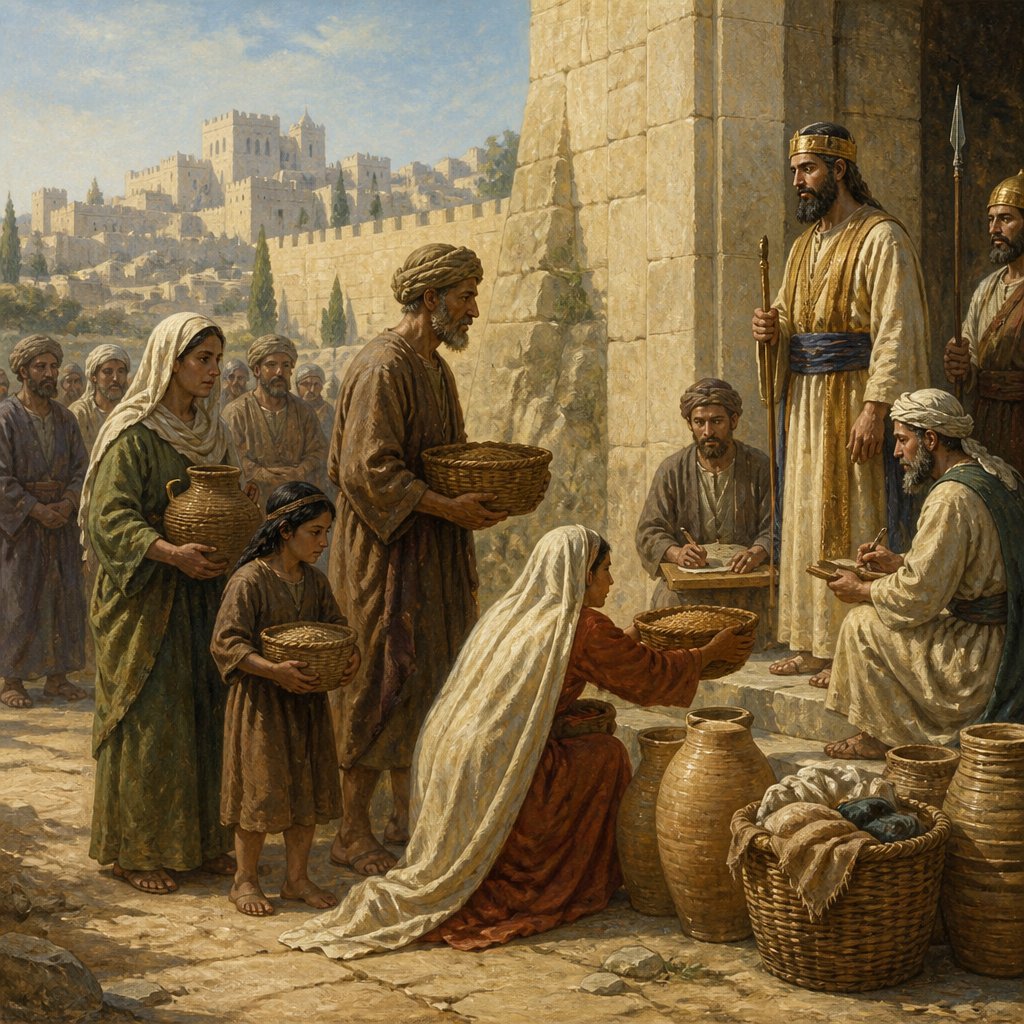
The verse 2 Chronicles 8:8 in the King James Version states, "But of their children, who were left after them in the land, whom the children of Israel consumed not, them did Solomon make to pay tribute until this day." This verse comes from the Old Testament and is part of a passage that describes the building and expansion of King Solomon's kingdom in Israel.
To fully understand the meaning and significance of this verse, it is important to have some context about the book of 2 Chronicles and the historical events surrounding it. 2 Chronicles is a historical narrative that covers the period from the reign of King Solomon to the Babylonian exile of Judah. It is a continuation of the narrative found in 1 Chronicles, and it focuses mostly on the reigns of the kings of Judah, with particular attention given to the religious and spiritual aspects of their rule.
In the verse 2 Chronicles 8:8, it is stated that Solomon made the descendants of the Canaanites, who were not exterminated by the children of Israel, to pay tribute. This practice of imposing tribute on conquered peoples was common in the ancient world, and it served as a way for Solomon to assert his authority over the land and its inhabitants. By making the descendants of the Canaanites pay tribute, Solomon was able to establish and maintain control over the land that had previously been inhabited by the Canaanites.
From a historical perspective, this verse reflects the political and military strategies employed by King Solomon to solidify his kingdom. It also underscores the contrast between the way Solomon treated the Canaanites and how the children of Israel interacted with them. While the children of Israel were instructed to completely destroy and drive out the Canaanites from the land (Deuteronomy 20:16-18), Solomon chose to exert his influence over the remaining descendants by imposing tribute on them.
On a deeper level, this verse also carries spiritual and moral implications. The fact that Solomon made the descendants of the Canaanites pay tribute can be seen as a reflection of the consequences of failing to completely follow the will of God. The failure to fully carry out God's commands to eliminate the Canaanites led to a continued presence of these people in the land, and Solomon had to deal with the aftermath of this incomplete conquest.
The theme of obedience to God's commands and the consequences of disobedience is a recurring motif in the Bible, and it is evident in this verse as well. The verse serves as a reminder of the importance of following God's instructions completely and not compromising with the world. It also highlights the complexities and challenges of living in a fallen world, where the repercussions of past actions continue to have an impact on future generations.
In addition to its historical and spiritual dimensions, this verse also holds symbolic significance. It can be seen as a representation of the ongoing struggle between good and evil, and the need to constantly maintain vigilance against the forces that seek to undermine the establishment of God's kingdom. The descendants of the Canaanites paying tribute to Solomon can be seen as a metaphor for the ongoing presence of sin and temptation in the world, and the need to resist and overcome these influences in order to ensure the establishment of God's kingdom on earth.
In conclusion, the verse 2 Chronicles 8:8 in the King James Version contains layers of meaning and significance that make it a rich and thought-provoking passage. It offers insights into the political and spiritual dimensions of King Solomon's reign, while also serving as a reminder of the consequences of incomplete obedience and the ongoing struggle against evil. Ultimately, this verse invites readers to reflect on the complexities of human history and the enduring relevance of God's word in navigating the challenges of life.
Get our apps


Artwork for 2 Chronicles 8:8

2 Chronicles 8:8 - "But of their children, who were left after them in the land, whom the children of Israel consumed not, them did Solomon make to pay tribute until this day."
"But of their children, who were left after them in the land, whom the children of Israel consumed not, them did Solomon make to pay tribute until this day." - 2 Chronicles 8:8

1 Chronicles 2:8 - "And the sons of Ethan; Azariah."

2 Chronicles 11:8 - "And Gath, and Mareshah, and Ziph,"

1 Chronicles 8:2 - "Nohah the fourth, and Rapha the fifth."

2 Chronicles 8:3 - "And Solomon went to Hamath-zobah, and prevailed against it."

2 Chronicles 24:8 - "And at the king's commandment they made a chest, and set it without at the gate of the house of the LORD."

"And the sons of Ethan; Azariah." - 1 Chronicles 2:8

"And Gath, and Mareshah, and Ziph," - 2 Chronicles 11:8

2 Chronicles 8:17 - "¶ Then went Solomon to Ezion-geber, and to Eloth, at the sea side in the land of Edom."

2 Chronicles 8:2 - "That the cities which Huram had restored to Solomon, Solomon built them, and caused the children of Israel to dwell there."

2 Chronicles 20:8 - "And they dwelt therein, and have built thee a sanctuary therein for thy name, saying,"

2 Chronicles 31:8 - "And when Hezekiah and the princes came and saw the heaps, they blessed the LORD, and his people Israel."

2 Chronicles 8:4 - "And he built Tadmor in the wilderness, and all the store cities, which he built in Hamath."

2 Chronicles 12:8 - "Nevertheless they shall be his servants; that they may know my service, and the service of the kingdoms of the countries."

2 Chronicles 21:8 - "¶ In his days the Edomites revolted from under the dominion of Judah, and made themselves a king."

"Nohah the fourth, and Rapha the fifth." - 1 Chronicles 8:2

2 Kings 8:23 - "And the rest of the acts of Joram, and all that he did, are they not written in the book of the chronicles of the kings of Judah?"

2 Chronicles 8:15 - "And they departed not from the commandment of the king unto the priests and Levites concerning any matter, or concerning the treasures."

2 Chronicles 18:8 - "And the king of Israel called for one of his officers, and said, Fetch quickly Micaiah the son of Imla."

2 Chronicles 8:7 - "¶ As for all the people that were left of the Hittites, and the Amorites, and the Perizzites, and the Hivites, and the Jebusites, which were not of Israel,"

2 Chronicles 5:8 - "For the cherubims spread forth their wings over the place of the ark, and the cherubims covered the ark and the staves thereof above."

2 Chronicles 27:8 - "He was five and twenty years old when he began to reign, and reigned sixteen years in Jerusalem."

2 Chronicles 8:10 - "And these were the chief of king Solomon's officers, even two hundred and fifty, that bare rule over the people."

2 Chronicles 8:1 - "And it came to pass at the end of twenty years, wherein Solomon had built the house of the LORD, and his own house,"

2 Chronicles 8:12 - "¶ Then Solomon offered burnt offerings unto the LORD on the altar of the LORD, which he had built before the porch,"

2 Kings 13:8 - "¶ Now the rest of the acts of Jehoahaz, and all that he did, and his might, are they not written in the book of the chronicles of the kings of Israel?"

2 Chronicles 8:5 - "Also he built Beth-horon the upper, and Beth-horon the nether, fenced cities, with walls, gates, and bars;"

2 Chronicles 26:8 - "And the Ammonites gave gifts to Uzziah: and his name spread abroad even to the entering in of Egypt; for he strengthened himself exceedingly."

"And Solomon went to Hamath-zobah, and prevailed against it." - 2 Chronicles 8:3