What does 2 Kings 13:10 mean?
“In the thirty and seventh year of Joash king of Judah began Jehoash the son of Jehoahaz to reign over Israel in Samaria, and reigned sixteen years.” — 2 Kings 13:10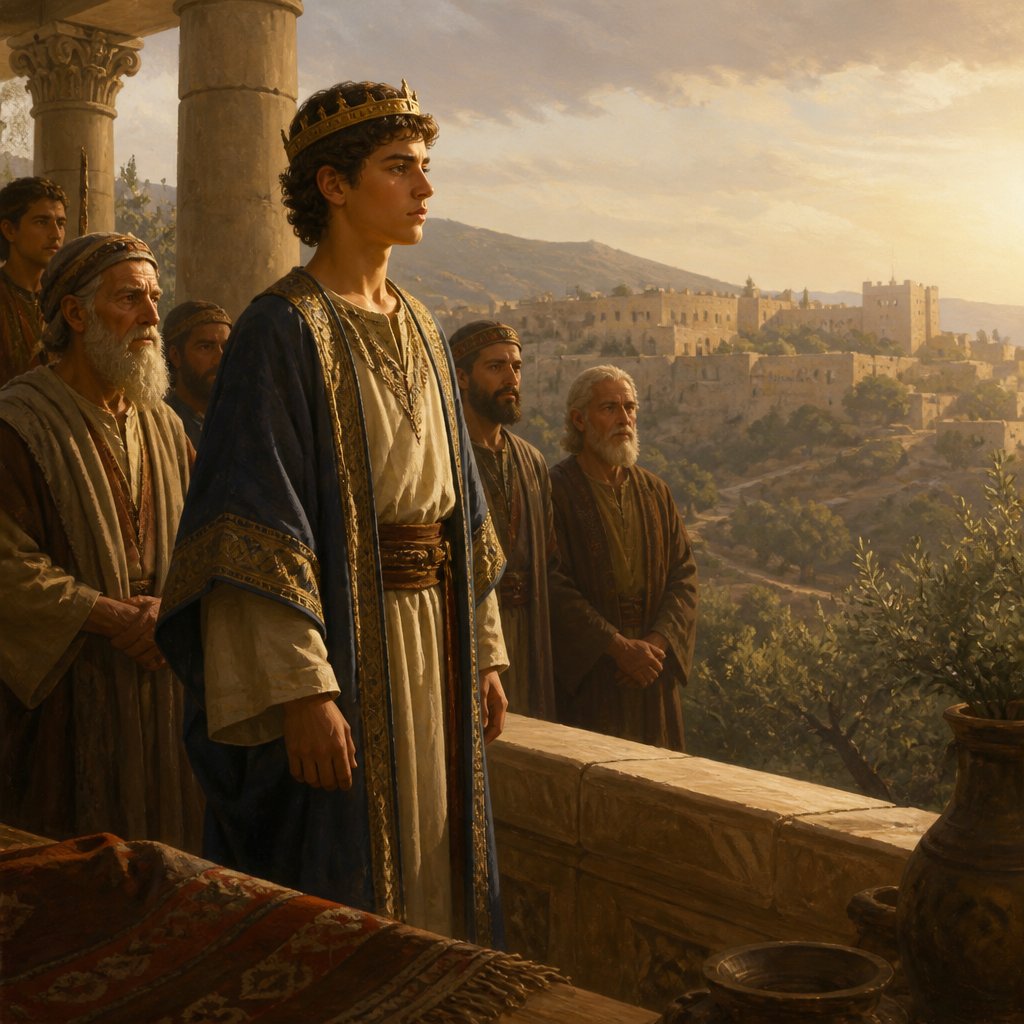
2 Kings 13:10 (KJV) reads: "In the thirty and seventh year of Joash king of Judah began Jehoash the son of Jehoahaz to reign over Israel in Samaria, and reigned sixteen years."
This verse is part of the historical narrative in the books of Kings, which chronicles the tumultuous history of Israel and Judah, their kings, and their relationship with God. In this particular verse, the focus is on the accession of Jehoash, also known as Joash, as the king of Israel. This moment marks a significant transition in the leadership of the Israelite nation and carries profound implications for the spiritual and political trajectory of the kingdom.
To understand the deeper meaning and commentary of this verse, it is essential to consider its themes, context, and symbolism.
Themes:
1. Divine sovereignty: Throughout the books of Kings, the sovereignty of God is a central theme. The rise and fall of kings, as well as the fate of nations, are portrayed as being under the control of the divine will. The accession of Jehoash as the king of Israel is a reminder of God's overarching authority in the affairs of men.
2. Political succession: The transfer of power from one ruler to another is a recurring theme in the biblical narrative. The manner in which a king ascends to the throne often has implications for the stability and prosperity of the nation. In the case of Jehoash, his reign signifies a new era for Israel, with potential ramifications for its relations with neighboring kingdoms and its internal governance.
3. Historical context: The historical context of this verse is crucial for understanding its significance. The thirty-seventh year of Joash, the king of Judah, provides a specific timeframe for the events being described. The political dynamics of the region, the state of the Israelite monarchy, and the broader historical backdrop all contribute to the deeper meaning of Jehoash's reign.
Context:
The broader context of 2 Kings 13 involves the divided kingdom of Israel and Judah, with each nation experiencing its own set of challenges and triumphs. In the case of Jehoash's accession to the throne, the preceding chapters detail the decline of the northern kingdom of Israel under the rule of various kings, including Jehoash's father, Jehoahaz. The political instability and spiritual apostasy that plagued Israel set the stage for Jehoash's reign, presenting him with the arduous task of leading a nation in need of renewal and restoration.
Jehoash's sixteen-year reign represents a period of considerable significance in the history of Israel. His actions, decisions, and alliances would shape the destiny of his kingdom and leave a lasting impact on the people he governed. From military campaigns to internal reforms, Jehoash's rule would reflect the challenges and opportunities of his time as a leader.
Symbolism:
The symbolic significance of Jehoash's reign extends beyond its immediate historical context. As a figure entrusted with the authority to govern and guide the nation of Israel, Jehoash embodies the responsibility of leadership and the accountability that accompanies it. His actions as king would reflect not only his personal character but also the spiritual and moral state of the nation as a whole.
Furthermore, the transition of power from one ruler to another carries symbolic weight in the biblical narrative. It signifies the passing of an era, the potential for renewal and change, and the continuity of God's plan for His people. Jehoash's reign stands as a symbol of the complexities and challenges inherent in leadership, as well as the enduring hope for a brighter future.
In conclusion, 2 Kings 13:10 presents a concise yet rich account of the beginning of Jehoash's reign as the king of Israel. Its themes of divine sovereignty, political succession, and historical context provide a framework for understanding the significance of this pivotal moment in Israel's history. Through its themes, context, and symbolism, this verse invites readers to contemplate the complexities of leadership, the interplay of human and divine agency, and the enduring relevance of biblical history.
Get our apps


Artwork for 2 Kings 13:10

2 Kings 13:10 - "¶ In the thirty and seventh year of Joash king of Judah began Jehoash the son of Jehoahaz to reign over Israel in Samaria, and reigned sixteen years."
"¶ In the thirty and seventh year of Joash king of Judah began Jehoash the son of Jehoahaz to reign over Israel in Samaria, and reigned sixteen years." - 2 Kings 13:10

2 Kings 10:13 - "Jehu met with the brethren of Ahaziah king of Judah, and said, Who are ye? And they answered, We are the brethren of Ahaziah; and we go down to salute the children of the king and the children of the queen."

2 Kings 13:13 - "And Joash slept with his fathers; and Jeroboam sat upon his throne: and Joash was buried in Samaria with the kings of Israel."

1 Kings 13:10 - "So he went another way, and returned not by the way that he came to Beth-el."

2 Kings 3:10 - "And the king of Israel said, Alas! that the LORD hath called these three kings together, to deliver them into the hand of Moab!"

2 Kings 13:22 - "¶ But Hazael king of Syria oppressed Israel all the days of Jehoahaz."

2 Kings 13:8 - "¶ Now the rest of the acts of Jehoahaz, and all that he did, and his might, are they not written in the book of the chronicles of the kings of Israel?"

2 Kings 21:10 - "¶ And the LORD spake by his servants the prophets, saying,"

2 Kings 10:28 - "Thus Jehu destroyed Baal out of Israel."

2 Kings 10:4 - "But they were exceedingly afraid, and said, Behold, two kings stood not before him: how then shall we stand?"

2 Kings 19:13 - "Where is the king of Hamath, and the king of Arpad, and the king of the city of Sepharvaim, of Hena, and Ivah?"

2 Kings 10:34 - "Now the rest of the acts of Jehu, and all that he did, and all his might, are they not written in the book of the chronicles of the kings of Israel?"

2 Kings 10:20 - "And Jehu said, Proclaim a solemn assembly for Baal. And they proclaimed it."

2 Kings 2:13 - "He took up also the mantle of Elijah that fell from him, and went back, and stood by the bank of Jordan;"

2 Kings 13:12 - "And the rest of the acts of Joash, and all that he did, and his might wherewith he fought against Amaziah king of Judah, are they not written in the book of the chronicles of the kings of Israel?"

1 Kings 2:10 - "So David slept with his fathers, and was buried in the city of David."

2 Kings 10:26 - "And they brought forth the images out of the house of Baal, and burned them."

2 Kings 13:24 - "So Hazael king of Syria died; and Ben-hadad his son reigned in his stead."

2 Kings 10:12 - "¶ And he arose and departed, and came to Samaria. And as he was at the shearing house in the way,"

2 Kings 13:20 - "¶ And Elisha died, and they buried him. And the bands of the Moabites invaded the land at the coming in of the year."

Psalms 2:10 - "Be wise now therefore, O ye kings: be instructed, ye judges of the earth."

2 Kings 10:36 - "And the time that Jehu reigned over Israel in Samaria was twenty and eight years."

2 Kings 24:10 - "¶ At that time the servants of Nebuchadnezzar king of Babylon came up against Jerusalem, and the city was besieged."

"And Joash slept with his fathers; and Jeroboam sat upon his throne: and Joash was buried in Samaria with the kings of Israel." - 2 Kings 13:13

2 Chronicles 10:13 - "And the king answered them roughly; and king Rehoboam forsook the counsel of the old men,"

Daniel 10:13 - "But the prince of the kingdom of Persia withstood me one and twenty days: but, lo, Michael, one of the chief princes, came to help me; and I remained there with the kings of Persia."

2 Kings 11:13 - "¶ And when Athaliah heard the noise of the guard and of the people, she came to the people into the temple of the LORD."
"So he went another way, and returned not by the way that he came to Beth-el." - 1 Kings 13:10

2 Kings 13:2 - "And he did that which was evil in the sight of the LORD, and followed the sins of Jeroboam the son of Nebat, which made Israel to sin; he departed not therefrom."