What does 2 Kings 18:13 mean?
“Now in the fourteenth year of king Hezekiah did Sennacherib king of Assyria come up against all the fenced cities of Judah, and took them.” — 2 Kings 18:13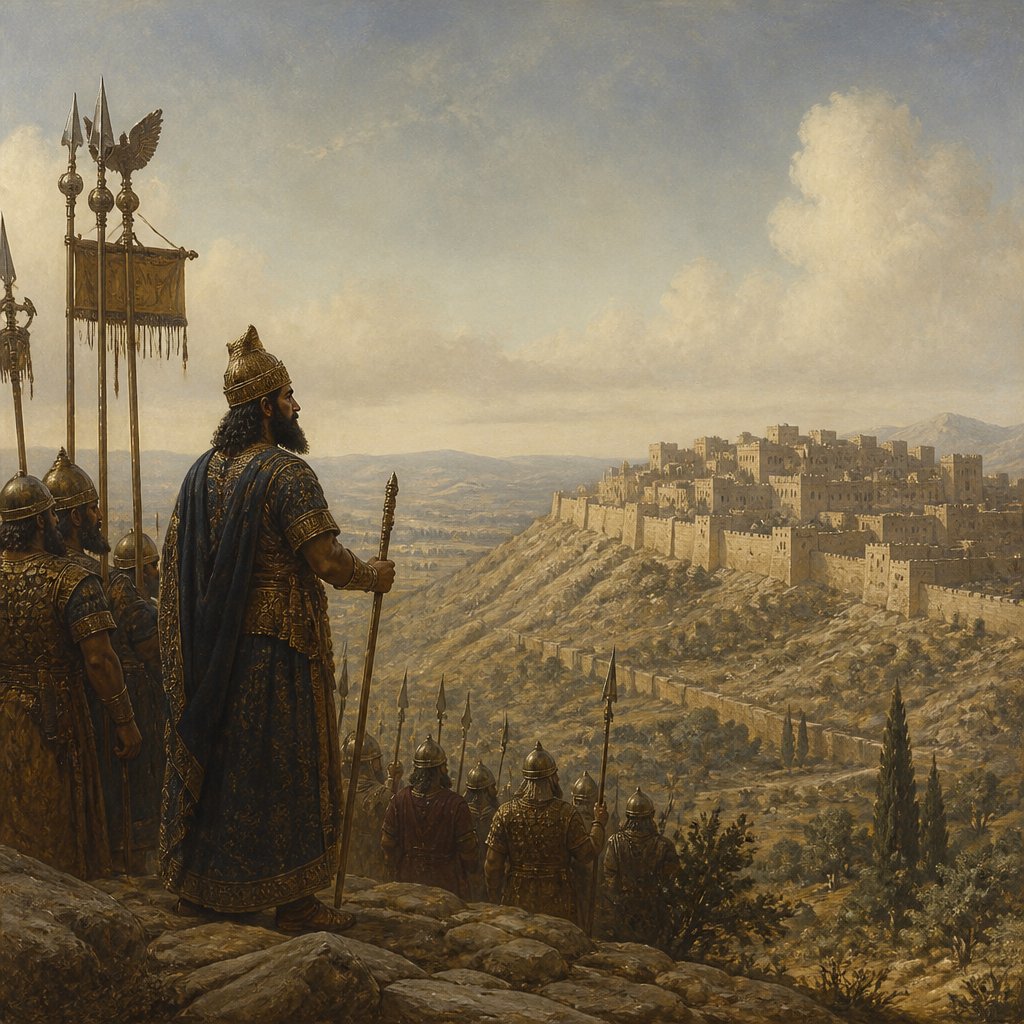
2 Kings 18:13 (KJV) states, "Now in the fourteenth year of king Hezekiah did Sennacherib king of Assyria come up against all the fenced cities of Judah, and took them." This verse is part of the historical record found in the Old Testament and is a crucial moment in the history of the nation of Judah.
The context of this verse takes place during the reign of King Hezekiah, who was a significant figure in the history of Judah. Hezekiah is known for his religious reforms and his efforts to bring Judah back to the worship of Yahweh, the God of Israel. He was a righteous king who did what was right in the sight of the Lord, and this verse is a key moment in his reign.
Sennacherib, the king of Assyria, was a powerful and ruthless ruler who had expanded his empire through conquest and domination. In the fourteenth year of Hezekiah's reign, Sennacherib launched an invasion against Judah, specifically targeting the fortified cities of the nation. The term "fenced cities" refers to cities that were fortified with walls and other defenses, making them difficult to conquer.
The symbolism and themes present in this verse are deeply meaningful and resonate throughout the biblical narrative. The invasion of Judah by Sennacherib represents the threat of external forces and the vulnerability of God's people when they turn away from Him. It serves as a reminder of the consequences of disobedience and the importance of staying faithful to God's commands.
Moreover, this verse highlights the significance of leadership in the face of adversity. Hezekiah's response to the invasion of Sennacherib reflects the importance of relying on God in times of crisis. Hezekiah's leadership and faith in God's deliverance are evident in the subsequent events, and his actions serve as an example of trust and reliance on God's intervention.
The historical context of this verse also sheds light on the broader geopolitical dynamics of the ancient world. The conflict between Judah and Assyria is a recurring theme in the Old Testament, and it underscores the constant struggle for power and dominance in the region. The invasion of Judah by Sennacherib is a reflection of the ongoing tensions and conflicts between ancient empires, and it serves as a backdrop for the unfolding narrative of God's redemptive plan for His people.
Ultimately, this verse serves as a powerful reminder of the faithfulness of God in the midst of adversity. Despite the overwhelming odds against them, the people of Judah ultimately find deliverance through God's miraculous intervention. The events that follow in the biblical narrative, including the miraculous defeat of Sennacherib's army, underscore the overarching theme of God's sovereignty and His faithfulness to His covenant with His people.
In conclusion, 2 Kings 18:13 is a pivotal moment in the history of Judah, and it carries profound significance in terms of its themes, context, and symbolism. It serves as a powerful reminder of the importance of faith, leadership, and reliance on God in times of crisis. It also highlights the broader geopolitical dynamics of the ancient world and the ongoing struggle for power and dominance. Ultimately, this verse points to the overarching theme of God's faithfulness and deliverance, which is a central theme throughout the biblical narrative.
Get our apps


Artwork for 2 Kings 18:13

2 Kings 18:13 - "¶ Now in the fourteenth year of king Hezekiah did Sennacherib king of Assyria come up against all the fenced cities of Judah, and took them."
"¶ Now in the fourteenth year of king Hezekiah did Sennacherib king of Assyria come up against all the fenced cities of Judah, and took them." - 2 Kings 18:13

2 Kings 13:18 - "And he said, Take the arrows. And he took them. And he said unto the king of Israel, Smite upon the ground. And he smote thrice, and stayed."

2 Kings 14:18 - "And the rest of the acts of Amaziah, are they not written in the book of the chronicles of the kings of Judah?"

2 Kings 13:13 - "And Joash slept with his fathers; and Jeroboam sat upon his throne: and Joash was buried in Samaria with the kings of Israel."

2 Kings 1:18 - "Now the rest of the acts of Ahaziah which he did, are they not written in the book of the chronicles of the kings of Israel?"

1 Kings 2:18 - "And Bath-sheba said, Well; I will speak for thee unto the king."

2 Kings 13:22 - "¶ But Hazael king of Syria oppressed Israel all the days of Jehoahaz."

2 Kings 18:18 - "And when they had called to the king, there came out to them Eliakim the son of Hilkiah, which was over the household, and Shebna the scribe, and Joah the son of Asaph the recorder."

2 Kings 8:18 - "And he walked in the way of the kings of Israel, as did the house of Ahab: for the daughter of Ahab was his wife: and he did evil in the sight of the LORD."

2 Kings 13:8 - "¶ Now the rest of the acts of Jehoahaz, and all that he did, and his might, are they not written in the book of the chronicles of the kings of Israel?"

1 Kings 18:2 - "And Elijah went to shew himself unto Ahab. And there was a sore famine in Samaria."

2 Kings 18:15 - "And Hezekiah gave him all the silver that was found in the house of the LORD, and in the treasures of the king's house."

2 Kings 18:36 - "But the people held their peace, and answered him not a word: for the king's commandment was, saying, Answer him not."

2 Kings 19:13 - "Where is the king of Hamath, and the king of Arpad, and the king of the city of Sepharvaim, of Hena, and Ivah?"

"And the rest of the acts of Amaziah, are they not written in the book of the chronicles of the kings of Judah?" - 2 Kings 14:18

2 Kings 3:18 - "And this is but a light thing in the sight of the LORD: he will deliver the Moabites also into your hand."

2 Kings 18:33 - "Hath any of the gods of the nations delivered at all his land out of the hand of the king of Assyria?"

2 Kings 2:13 - "He took up also the mantle of Elijah that fell from him, and went back, and stood by the bank of Jordan;"

2 Kings 18:5 - "He trusted in the LORD God of Israel; so that after him was none like him among all the kings of Judah, nor any that were before him."

2 Kings 13:12 - "And the rest of the acts of Joash, and all that he did, and his might wherewith he fought against Amaziah king of Judah, are they not written in the book of the chronicles of the kings of Israel?"

2 Kings 16:18 - "And the covert for the sabbath that they had built in the house, and the king's entry without, turned he from the house of the LORD for the king of Assyria."

2 Kings 2:18 - "And when they came again to him, (for he tarried at Jericho,) he said unto them, Did I not say unto you, Go not?"

2 Kings 4:18 - "¶ And when the child was grown, it fell on a day, that he went out to his father to the reapers."

2 Kings 18:3 - "And he did that which was right in the sight of the LORD, according to all that David his father did."

2 Kings 25:18 - "¶ And the captain of the guard took Seraiah the chief priest, and Zephaniah the second priest, and the three keepers of the door:"
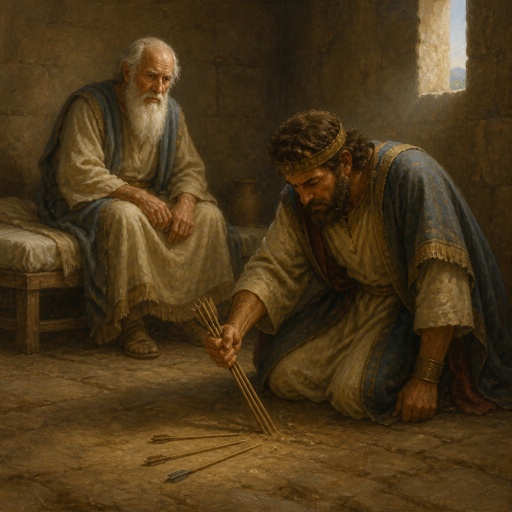
"And he said, Take the arrows. And he took them. And he said unto the king of Israel, Smite upon the ground. And he smote thrice, and stayed." - 2 Kings 13:18

2 Kings 13:20 - "¶ And Elisha died, and they buried him. And the bands of the Moabites invaded the land at the coming in of the year."

"And Joash slept with his fathers; and Jeroboam sat upon his throne: and Joash was buried in Samaria with the kings of Israel." - 2 Kings 13:13

2 Kings 13:24 - "So Hazael king of Syria died; and Ben-hadad his son reigned in his stead."