What does 2 Kings 18:21 mean?
“Now, behold, thou trustest upon the staff of this bruised reed, even upon Egypt, on which if a man lean, it will go into his hand, and pierce it: so is Pharaoh king of Egypt unto all that trust on him.” — 2 Kings 18:21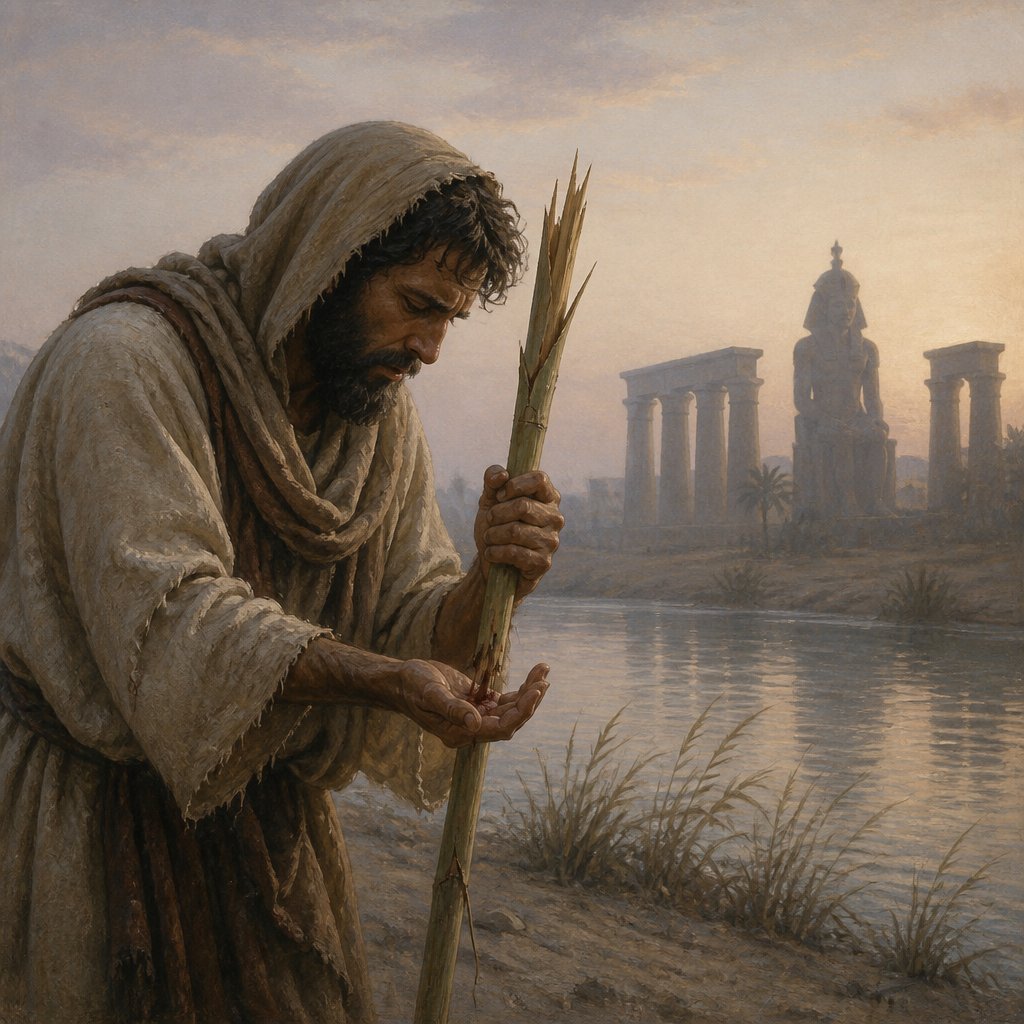
2 Kings 18:21 (KJV) states, "Now, behold, thou trustest upon the staff of this bruised reed, even upon Egypt, on which if a man lean, it will go into his hand, and pierce it: so is Pharaoh king of Egypt unto all that trust on him."
This verse comes from the historical books of the Old Testament, specifically during the reign of Hezekiah, the king of Judah. During Hezekiah's reign, the kingdom of Judah was under threat from the Assyrian Empire, and the king of Assyria, Sennacherib, sent his general, Rabshakeh, to intimidate and persuade the people of Judah to surrender to them. Rabshakeh's speech, including the words of 2 Kings 18:21, was an attempt to undermine Hezekiah's trust in Egypt as an ally and encourage the people to trust in Assyria instead.
In this verse, the "staff of this bruised reed" symbolizes the reliance on Egypt as a source of protection and support. A bruised reed is weak and unreliable, unable to bear any weight or support. Likewise, Egypt, in the context of this verse, is portrayed as a weak and unreliable ally. The imagery of a bruised reed highlights the vulnerability and precariousness of relying on Egypt for safety and security.
The verse goes on to compare Pharaoh, the king of Egypt, to a reed that will pierce the hand of the one who leans on it. This metaphor emphasizes the danger and harm that comes from depending on Egypt for help. Just as a bruised reed will break and cause injury to the one who leans on it, relying on Egypt will ultimately bring harm and disappointment to those who trust in it.
The larger context of this verse reveals the theme of trust and reliance on earthly powers versus trust in God. Hezekiah's trust in Egypt as an ally was ultimately a lack of trust in God's ability to protect and deliver his people. The verse serves as a warning against putting our trust in human resources or earthly powers rather than placing our trust in God.
The symbolic significance of Egypt in this verse is profound. Egypt is often used symbolically in the Bible to represent the world and the power of man. It is a reminder that human strength and resources are ultimately weak and unreliable, and those who trust in them will be disappointed. The imagery of the reed piercing the hand of the one who leans on it serves as a powerful warning against trusting in anything other than God.
Furthermore, the verse challenges the reader to consider their own sources of reliance and trust. It prompts us to examine whether we are leaning on "bruised reeds" in our own lives, whether it be material possessions, human relationships, or other earthly sources of security. Ultimately, the verse serves as a call to turn our trust towards God, the one true and reliable source of strength and security.
In conclusion, 2 Kings 18:21 is a powerful and thought-provoking verse that challenges us to consider the source of our trust and reliance. It serves as a warning against trusting in human powers and earthly resources, reminding us that they are ultimately unreliable. Instead, it calls us to turn to God as the only true and reliable source of protection and security. The imagery of the bruised reed and the piercing hand serves as a vivid illustration of this truth, and prompts us to evaluate our own sources of trust and reliance.
Get our apps


Artwork for 2 Kings 18:21

2 Kings 18:21 - "Now, behold, thou trustest upon the staff of this bruised reed, even upon Egypt, on which if a man lean, it will go into his hand, and pierce it: so is Pharaoh king of Egypt unto all that trust on him."
"Now, behold, thou trustest upon the staff of this bruised reed, even upon Egypt, on which if a man lean, it will go into his hand, and pierce it: so is Pharaoh king of Egypt unto all that trust on him." - 2 Kings 18:21

2 Kings 21:18 - "And Manasseh slept with his fathers, and was buried in the garden of his own house, in the garden of Uzza: and Amon his son reigned in his stead."

2 Kings 2:21

2 Kings 14:18 - "And the rest of the acts of Amaziah, are they not written in the book of the chronicles of the kings of Judah?"

2 Kings 15:21 - "¶ And the rest of the acts of Menahem, and all that he did, are they not written in the book of the chronicles of the kings of Israel?"

2 Kings 21:25 - "Now the rest of the acts of Amon which he did, are they not written in the book of the chronicles of the kings of Judah?"

2 Kings 1:18 - "Now the rest of the acts of Ahaziah which he did, are they not written in the book of the chronicles of the kings of Israel?"

2 Kings 21:10 - "¶ And the LORD spake by his servants the prophets, saying,"

1 Kings 21:18 - "Arise, go down to meet Ahab king of Israel, which is in Samaria: behold, he is in the vineyard of Naboth, whither he is gone down to possess it."

2 Kings 21:21 - "And he walked in all the way that his father walked in, and served the idols that his father served, and worshipped them:"

2 Kings 11:21 - "Seven years old was Jehoash when he began to reign."

2 Kings 21:17 - "¶ Now the rest of the acts of Manasseh, and all that he did, and his sin that he sinned, are they not written in the book of the chronicles of the kings of Judah?"

2 Kings 21:23 - "¶ And the servants of Amon conspired against him, and slew the king in his own house."

2 Chronicles 21:18 - "¶ And after all this the LORD smote him in his bowels with an incurable disease."

1 Kings 2:18 - "And Bath-sheba said, Well; I will speak for thee unto the king."

"And Manasseh slept with his fathers, and was buried in the garden of his own house, in the garden of Uzza: and Amon his son reigned in his stead." - 2 Kings 21:18

2 Kings 18:18 - "And when they had called to the king, there came out to them Eliakim the son of Hilkiah, which was over the household, and Shebna the scribe, and Joah the son of Asaph the recorder."

2 Kings 21:22 - "And he forsook the LORD God of his fathers, and walked not in the way of the LORD."

2 Kings 8:18 - "And he walked in the way of the kings of Israel, as did the house of Ahab: for the daughter of Ahab was his wife: and he did evil in the sight of the LORD."

2 Kings 21:5 - "And he built altars for all the host of heaven in the two courts of the house of the LORD."

1 Kings 18:2 - "And Elijah went to shew himself unto Ahab. And there was a sore famine in Samaria."

2 Kings 18:15 - "And Hezekiah gave him all the silver that was found in the house of the LORD, and in the treasures of the king's house."

2 Kings 18:36 - "But the people held their peace, and answered him not a word: for the king's commandment was, saying, Answer him not."

2 Kings 20:21 - "And Hezekiah slept with his fathers: and Manasseh his son reigned in his stead."

2 Kings 21:20 - "And he did that which was evil in the sight of the LORD, as his father Manasseh did."

1 Kings 2:21 - "And she said, Let Abishag the Shunammite be given to Adonijah thy brother to wife."

2 Kings 21:2 - "And he did that which was evil in the sight of the LORD, after the abominations of the heathen, whom the LORD cast out before the children of Israel."

2 Kings 3:21 - "¶ And when all the Moabites heard that the kings were come up to fight against them, they gathered all that were able to put on armour, and upward, and stood in the border."

"And the rest of the acts of Amaziah, are they not written in the book of the chronicles of the kings of Judah?" - 2 Kings 14:18