What does 2 Kings 18:22 mean?
“But if ye say unto me, We trust in the LORD our God: is not that he, whose high places and whose altars Hezekiah hath taken away, and hath said to Judah and Jerusalem, Ye shall worship before this altar in Jerusalem?” — 2 Kings 18:22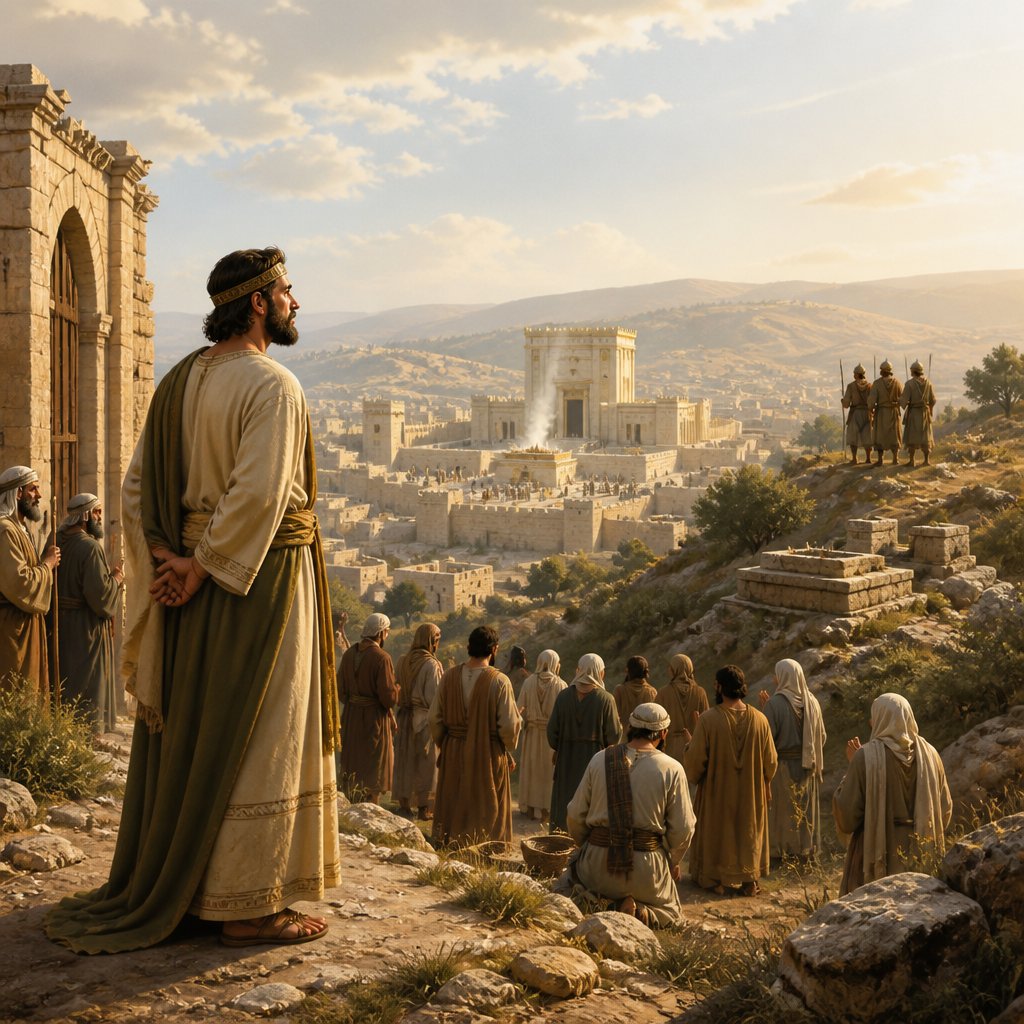
2 Kings 18:22 in the King James Version of the Bible reads, "But if ye say unto me, We trust in the Lord our God: is not that he, whose high places and whose altars Hezekiah hath taken away, and hath said to Judah and Jerusalem, Ye shall worship before this altar in Jerusalem?"
This verse is part of a larger passage which describes the events surrounding the reign of King Hezekiah in the southern kingdom of Judah. During his reign, Hezekiah made significant reforms aimed at purifying the worship of the nation and turning the people back to the worship of Yahweh, the one true God. In this particular verse, the Rabshakeh, an Assyrian official, is challenging the people of Judah and their trust in their God, Yahweh.
The verse can be understood in its specific historical context, as well as in a broader theological and spiritual context. In its historical context, this verse reflects the political and religious tensions between the Assyrian empire and the kingdom of Judah. The Assyrians, under King Sennacherib, had invaded Judah and were attempting to subdue it. The Rabshakeh was sent by Sennacherib to persuade the people of Judah to surrender without a fight, and one of the tactics used was to undermine their faith in Yahweh, their God.
The Rabshakeh suggests that the people's trust in Yahweh is misplaced because Hezekiah has removed the high places and altars where the people used to worship. This refers to Hezekiah's religious reforms, which aimed to centralize worship in Jerusalem and eliminate the worship of false gods. The Rabshakeh is essentially questioning the people's faith in Yahweh, suggesting that Hezekiah's reforms have disrupted their ability to worship and receive the protection of their God.
In a broader theological and spiritual context, this verse raises important questions about faith, religious practice, and the nature of true worship. The Rabshakeh's challenge echoes age-old questions about the relationship between religious rituals and true faith. It also highlights the tension between external forms of worship and the internal state of the heart. The Rabshakeh's argument represents a worldly perspective that prioritizes outward displays of religion and believes that the removal of physical places of worship weakens the people's connection to their God.
From a theological standpoint, this verse invites reflection on the nature of God and the ways in which He is worshiped. It raises the question of whether external religious practices are the foundation of faith, or whether true worship comes from a sincere and devoted heart. It also highlights the tension between human efforts to control and manipulate religious practices and the sovereignty of God.
Symbolically, the high places and altars represent the various places and forms of false worship that had been prevalent in Judah. Hezekiah's removal of these places signifies a return to a purer form of worship and a rejection of idolatry. The challenge posed by the Rabshakeh highlights the ongoing struggle between true worship of God and the temptation to turn to false gods or rely on human-made systems of religion.
Ultimately, the response to the Rabshakeh's challenge is found in the faith and trust of the people in the Lord their God. The verse serves as a reminder of the importance of remaining steadfast in faith, even in the face of external challenges and doubts. It also underscores the significance of sincere and genuine worship that comes from the heart rather than mere adherence to religious customs and practices.
In conclusion, 2 Kings 18:22 carries significant historical, theological, and spiritual implications. It reflects the political and religious tensions of its time, as well as timeless questions about faith, worship, and the nature of God. The verse invites readers to consider the true nature of worship and the importance of genuine faith in the face of worldly challenges and doubts. It serves as a reminder of the enduring relevance of these themes in the lives of believers and the ongoing tension between the world's perspective and God's sovereignty.
Get our apps


Artwork for 2 Kings 18:22

2 Kings 18:22 - "But if ye say unto me, We trust in the LORD our God: is not that he, whose high places and whose altars Hezekiah hath taken away, and hath said to Judah and Jerusalem, Ye shall worship before this altar in Jerusalem?"
"But if ye say unto me, We trust in the LORD our God: is not that he, whose high places and whose altars Hezekiah hath taken away, and hath said to Judah and Jerusalem, Ye shall worship before this altar in Jerusalem?" - 2 Kings 18:22

2 Kings 22:18 - "But to the king of Judah which sent you to enquire of the LORD, thus shall ye say to him, Thus saith the LORD God of Israel, As touching the words which thou hast heard;"

2 Kings 14:18 - "And the rest of the acts of Amaziah, are they not written in the book of the chronicles of the kings of Judah?"
2 Kings 23:22 - "Surely there was not holden such a passover from the days of the judges that judged Israel, nor in all the days of the kings of Israel, nor of the kings of Judah;"

1 Kings 22:18 - "And the king of Israel said unto Jehoshaphat, Did I not tell thee that he would prophesy no good concerning me, but evil?"

2 Kings 1:18 - "Now the rest of the acts of Ahaziah which he did, are they not written in the book of the chronicles of the kings of Israel?"

2 Kings 13:22 - "¶ But Hazael king of Syria oppressed Israel all the days of Jehoahaz."

2 Chronicles 9:22 - "And king Solomon passed all the kings of the earth in riches and wisdom."

1 Kings 18:22 - "Then said Elijah unto the people, I, even I only, remain a prophet of the LORD; but Baal's prophets are four hundred and fifty men."

2 Kings 2:22 - "So the waters were healed unto this day, according to the saying of Elisha which he spake."

2 Kings 14:22 - "He built Elath, and restored it to Judah, after that the king slept with his fathers."

1 Kings 2:18 - "And Bath-sheba said, Well; I will speak for thee unto the king."

1 Kings 22:2 - "And it came to pass in the third year, that Jehoshaphat the king of Judah came down to the king of Israel."

2 Kings 21:22 - "And he forsook the LORD God of his fathers, and walked not in the way of the LORD."

2 Kings 18:18 - "And when they had called to the king, there came out to them Eliakim the son of Hilkiah, which was over the household, and Shebna the scribe, and Joah the son of Asaph the recorder."

2 Kings 8:18 - "And he walked in the way of the kings of Israel, as did the house of Ahab: for the daughter of Ahab was his wife: and he did evil in the sight of the LORD."

2 Kings 22:7 - "Howbeit there was no reckoning made with them of the money that was delivered into their hand, because they dealt faithfully."

1 Kings 18:2 - "And Elijah went to shew himself unto Ahab. And there was a sore famine in Samaria."

2 Kings 18:15 - "And Hezekiah gave him all the silver that was found in the house of the LORD, and in the treasures of the king's house."

2 Kings 18:36 - "But the people held their peace, and answered him not a word: for the king's commandment was, saying, Answer him not."

2 Kings 22:6 - "Unto carpenters, and builders, and masons, and to buy timber and hewn stone to repair the house."

2 Kings 15:22 - "And Menahem slept with his fathers; and Pekahiah his son reigned in his stead."

2 Kings 22:11 - "And it came to pass, when the king had heard the words of the book of the law, that he rent his clothes."

"And the rest of the acts of Amaziah, are they not written in the book of the chronicles of the kings of Judah?" - 2 Kings 14:18

2 Kings 22:2 - "And he did that which was right in the sight of the LORD, and walked in all the way of David his father, and turned not aside to the right hand or to the left."

2 Kings 3:18 - "And this is but a light thing in the sight of the LORD: he will deliver the Moabites also into your hand."

2 Kings 18:33 - "Hath any of the gods of the nations delivered at all his land out of the hand of the king of Assyria?"

2 Kings 18:5 - "He trusted in the LORD God of Israel; so that after him was none like him among all the kings of Judah, nor any that were before him."

2 Kings 22:12 - "And the king commanded Hilkiah the priest, and Ahikam the son of Shaphan, and Achbor the son of Michaiah, and Shaphan the scribe, and Asahiah a servant of the king's, saying,"