What does 2 Kings 18:19 mean?
“And Rab-shakeh said unto them, Speak ye now to Hezekiah, Thus saith the great king, the king of Assyria, What confidence is this wherein thou trustest?” — 2 Kings 18:19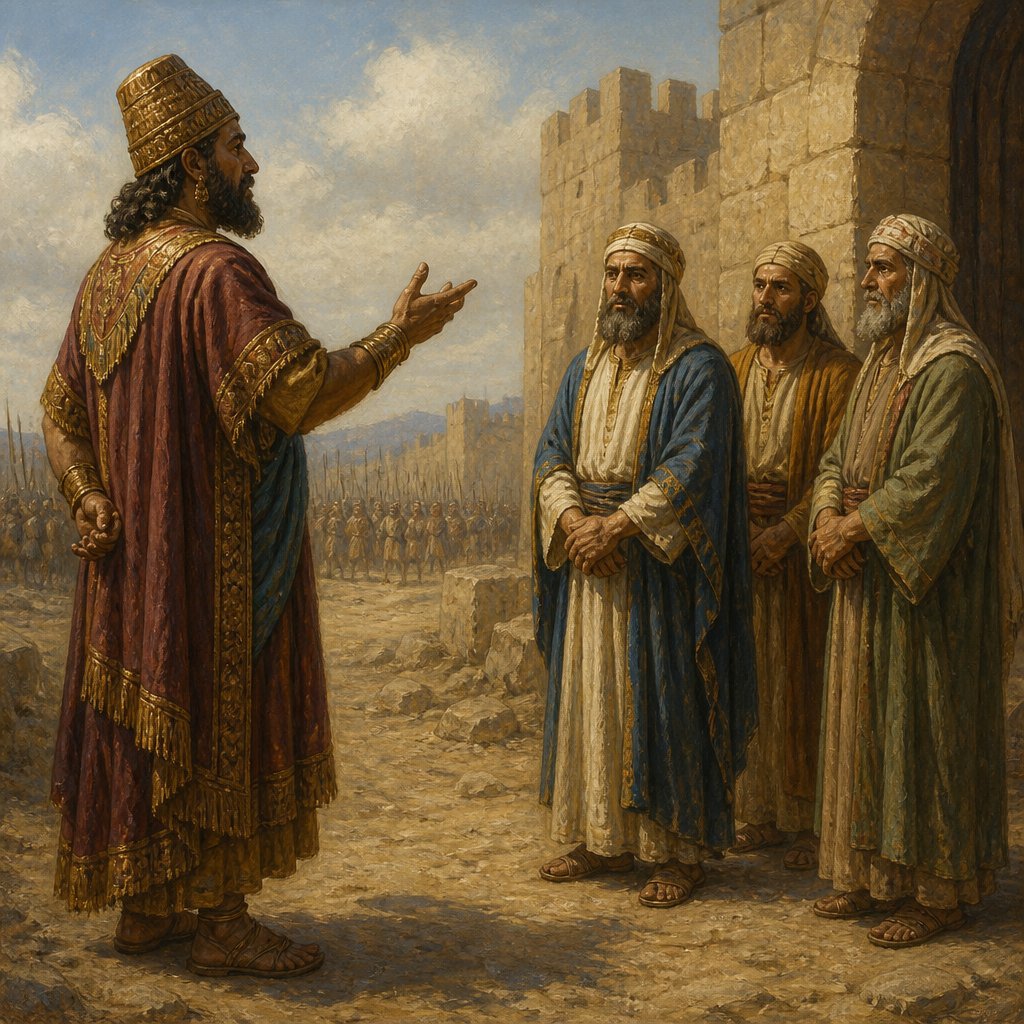
2 Kings 18:19 from the King James Version reads: "And Rabshakeh said unto them, Speak ye now to Hezekiah, Thus saith the great king, the king of Assyria, What confidence is this wherein thou trustest?"
This verse is part of a larger narrative that details the interaction between King Hezekiah of Judah and the Assyrian army during the siege of Jerusalem. In this specific passage, Rabshakeh, the chief cupbearer of the Assyrian king, delivers a message to Hezekiah, questioning his confidence and trust in resisting the Assyrian army.
The context of this verse is set during a tumultuous time in the history of ancient Israel. The Assyrian Empire, under the leadership of King Sennacherib, was aggressively expanding its territory and exerting its dominance over the region. Judah, a small kingdom in the midst of this geopolitical turmoil, found itself under threat as the Assyrian army laid siege to Jerusalem. King Hezekiah, who is portrayed as a faithful and reformative king in the biblical narrative, faced a significant challenge in defending his kingdom from the powerful Assyrian forces.
The verse carries several themes and layers of meaning. On one level, it reflects the geopolitical and military struggle between two ancient kingdoms. The Assyrian representative's message to Hezekiah is a form of psychological warfare, attempting to undermine the king's confidence and provoke fear and doubt among the people of Judah. This theme of psychological warfare and manipulation is still relevant in modern conflict situations, where psychological tactics are often employed alongside military force to weaken the morale of the opposing side.
On a deeper level, this verse can also be viewed through a spiritual and theological lens. Hezekiah's response to the Assyrian threat is a reflection of his faith and trust in God's protection and deliverance. His confidence is rooted in his allegiance to the God of Israel, and his refusal to succumb to the intimidation of the Assyrian army is a testament to his steadfast faith. This theme of faith in the face of adversity is a recurring motif throughout the Bible, and Hezekiah's unwavering trust in God serves as an inspirational example for believers.
The symbolism in this passage is also profound. The figure of Rabshakeh, representing the military might and arrogance of the Assyrian Empire, can be seen as a symbol of worldly power and pride. In contrast, Hezekiah stands as a symbol of faith, humility, and reliance on divine providence. The confrontation between these two figures embodies the timeless struggle between human strength and divine intervention, a theme that resonates throughout biblical literature.
Overall, 2 Kings 18:19 is a verse that captures the tension and conflict between earthly powers and spiritual fortitude. It speaks to the enduring struggle of faith against doubt, trust against fear, and the ultimate victory of God's sovereignty over the threats and challenges faced by His people. In the larger narrative of the siege of Jerusalem, this verse serves as a pivotal moment that showcases the triumph of faith and the assurance of divine protection in the face of overwhelming odds.
Get our apps


Artwork for 2 Kings 18:19

2 Kings 18:19 - "And Rabshakeh said unto them, Speak ye now to Hezekiah, Thus saith the great king, the king of Assyria, What confidence is this wherein thou trustest?"

"And Rabshakeh said unto them, Speak ye now to Hezekiah, Thus saith the great king, the king of Assyria, What confidence is this wherein thou trustest?" - 2 Kings 18:19

2 Kings 19:18 - "And have cast their gods into the fire: for they were no gods, but the work of men's hands, wood and stone: therefore they have destroyed them."

1 Kings 19:1-18

2 Kings 19:2

2 Kings 19:2

2 Kings 19:2

2 Kings 19:17 - "Of a truth, LORD, the kings of Assyria have destroyed the nations and their lands,"

2 Kings 14:18 - "And the rest of the acts of Amaziah, are they not written in the book of the chronicles of the kings of Judah?"

2 Kings 12:19 - "¶ And the rest of the acts of Joash, and all that he did, are they not written in the book of the chronicles of the kings of Judah?"

2 Kings 3:16-19

2 Kings 16:19 - "¶ Now the rest of the acts of Ahaz which he did, are they not written in the book of the chronicles of the kings of Judah?"

2 Kings 19:5 - "So the servants of king Hezekiah came to Isaiah."

2 Kings 1:18 - "Now the rest of the acts of Ahaziah which he did, are they not written in the book of the chronicles of the kings of Israel?"

"And have cast their gods into the fire: for they were no gods, but the work of men's hands, wood and stone: therefore they have destroyed them." - 2 Kings 19:18

2 Kings 19:36 - "So Sennacherib king of Assyria departed, and went and returned, and dwelt at Nineveh."

2 Kings 19:13 - "Where is the king of Hamath, and the king of Arpad, and the king of the city of Sepharvaim, of Hena, and Ivah?"

1 Kings 2:18 - "And Bath-sheba said, Well; I will speak for thee unto the king."

2 Kings 18:18 - "And when they had called to the king, there came out to them Eliakim the son of Hilkiah, which was over the household, and Shebna the scribe, and Joah the son of Asaph the recorder."

2 Kings 8:18 - "And he walked in the way of the kings of Israel, as did the house of Ahab: for the daughter of Ahab was his wife: and he did evil in the sight of the LORD."

2 Kings 19:11 - "Behold, thou hast heard what the kings of Assyria have done to all lands, by destroying them utterly: and shalt thou be delivered?"

1 Kings 18:2 - "And Elijah went to shew himself unto Ahab. And there was a sore famine in Samaria."

2 Kings 18:15 - "And Hezekiah gave him all the silver that was found in the house of the LORD, and in the treasures of the king's house."

2 Kings 18:36 - "But the people held their peace, and answered him not a word: for the king's commandment was, saying, Answer him not."

1 Kings 19:18 - "Yet I have left me seven thousand in Israel, all the knees which have not bowed unto Baal, and every mouth which hath not kissed him."

2 Kings 19:2 - "And he sent Eliakim, which was over the household, and Shebna the scribe, and the elders of the priests, covered with sackcloth, to Isaiah the prophet the son of Amoz."

"And the rest of the acts of Amaziah, are they not written in the book of the chronicles of the kings of Judah?" - 2 Kings 14:18

2 Kings 19:34 - "For I will defend this city, to save it, for mine own sake, and for my servant David's sake."

2 Kings 3:18 - "And this is but a light thing in the sight of the LORD: he will deliver the Moabites also into your hand."

"Of a truth, LORD, the kings of Assyria have destroyed the nations and their lands," - 2 Kings 19:17