What does 2 Kings 4:6 mean?
“And it came to pass, when the vessels were full, that she said unto her son, Bring me yet a vessel. And he said unto her, There is not a vessel more. And the oil stayed.” — 2 Kings 4:6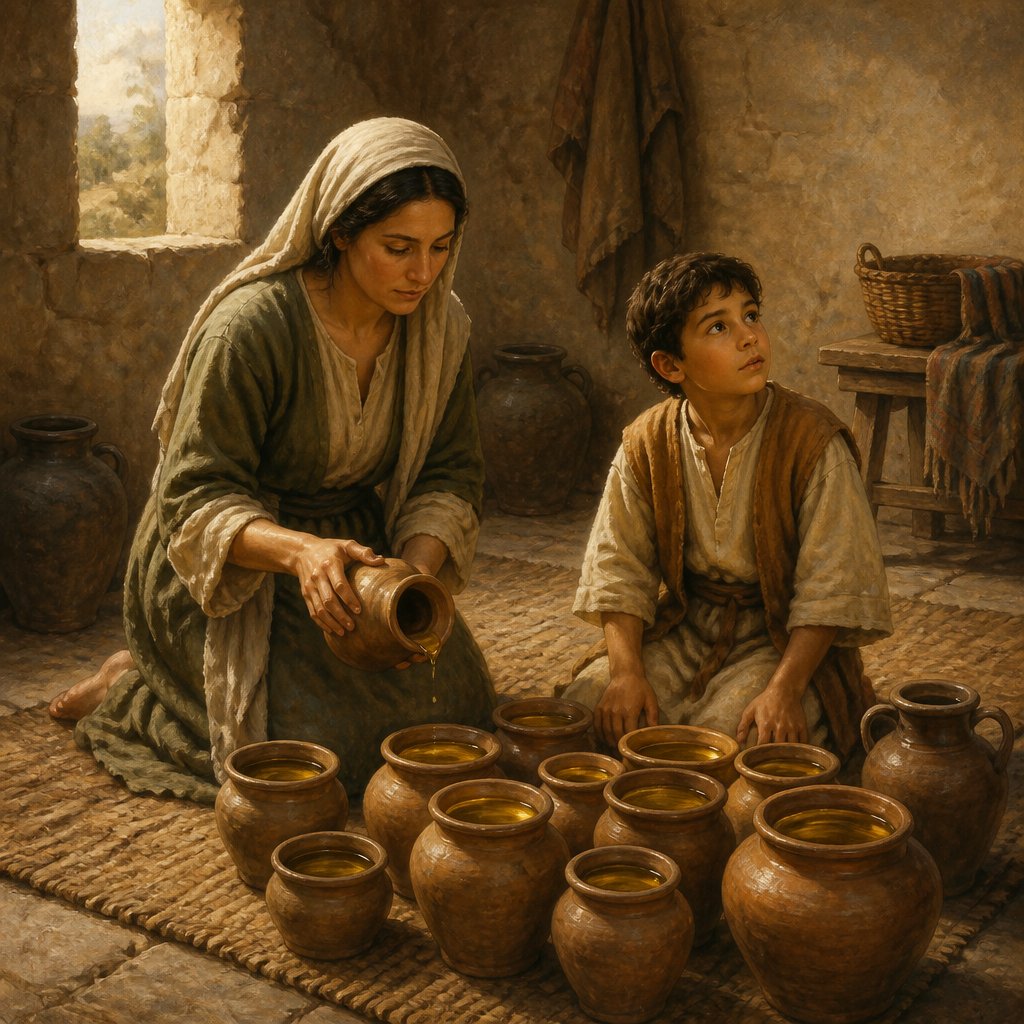
2 Kings 4:6 (KJV) - "And it came to pass, when the vessels were full, that she said unto her son, Bring me yet a vessel. And he said unto her, There is not a vessel more. And the oil stayed."
This verse is from the Old Testament in the book of 2 Kings, which contains stories about the prophet Elisha and his miracles. This particular verse is part of a story about a widow who was in debt and facing severe financial hardship. In desperation, she sought help from Elisha, who instructed her to borrow as many empty vessels as she could from her neighbors and then pour the small amount of oil she had left into them. Miraculously, the oil filled every vessel until there were no more left, providing enough oil for her to sell and pay off her debts.
The story of the widow's oil is rich in symbolism and spiritual lessons. It portrays the power of faith, the abundance of God's provision, and the importance of obedience to His commands. It also serves as a powerful illustration of the principle of sowing and reaping, as the woman's act of faith and obedience resulted in a miraculous harvest of oil.
One of the central themes of this verse is the concept of abundance. Despite the limited resources the widow had, God was able to multiply them and provide abundantly for her needs. This serves as a powerful reminder that God is able to exceed our expectations and supply all our needs according to His riches in glory (Philippians 4:19).
Another important theme is the idea of obedience and faith. The widow demonstrated remarkable faith by following Elisha's instructions without question, and her obedience resulted in a miraculous provision. This underscores the importance of trusting in God's word and being obedient to His commands, even when they may seem unconventional or illogical.
The imagery of the vessels in this verse also carries symbolic significance. The vessels represent our capacity to receive God's blessings. The more vessels the widow borrowed, the more oil she was able to receive. This serves as a powerful metaphor for our own lives - the more we make ourselves available to God and open ourselves up to receive His blessings, the more He is able to pour out His abundance upon us.
The overflowing oil also serves as a symbol of God's anointing and blessing. In the Bible, oil is often used to symbolize the Holy Spirit and His empowering presence. The fact that the oil continued to flow until there were no more vessels left symbolizes the limitless nature of God's blessings and the extent of His provision for His people.
Overall, this verse is a powerful reminder of God's faithfulness, provision, and abundance. It encourages us to have faith in His promises, to be obedient to His commands, and to open ourselves up to receive His blessings. It also serves as a reminder of the importance of trusting in God's provision, even in the midst of difficult circumstances, and the limitless nature of His ability to provide for His people.
Get our apps


Artwork for 2 Kings 4:6

2 Kings 4:6 - "And it came to pass, when the vessels were full, that she said unto her son, Bring me yet a vessel. And he said unto her, There is not a vessel more. And the oil stayed."
"And it came to pass, when the vessels were full, that she said unto her son, Bring me yet a vessel. And he said unto her, There is not a vessel more. And the oil stayed." - 2 Kings 4:6

2 Kings 6:4 - "So he went with them. And when they came to Jordan, they cut down wood."

2 Kings 4:4-5

1 Kings 4:6 - "And Ahishar was over the household: and Adoniram the son of Abda was over the tribute."

1 Kings 6:4 - "And for the house he made windows of narrow lights."

"So he went with them. And when they came to Jordan, they cut down wood." - 2 Kings 6:4

2 kings 6:24

2 Corinthians 4:6

2 Corinthians 4:6

2 Corinthians 4:6

2 Corinthians 4:6

2 Corinthians 4:6

2 Corinthians 4:6

2 Corinthians 4:6

2 Corinthians 4:6

2 Corinthians 4:6

2 Corinthians 4:6

2 Corinthians 4:6

2 Corinthians 4:6

2 Corinthians 4:6

2 Corinthians 4:6

2 Corinthians 4:6
2 Kings 15:6 - "And the rest of the acts of Azariah, and all that he did, are they not written in the book of the chronicles of the kings of Judah?"

2 Kings 6:16 - "And he answered, Fear not: for they that be with us are more than they that be with them."

2 Kings 10:4 - "But they were exceedingly afraid, and said, Behold, two kings stood not before him: how then shall we stand?"

2 Kings 3:6 - "¶ And king Jehoram went out of Samaria the same time, and numbered all Israel."

2 Kings 12:6 - "But it was so, that in the three and twentieth year of king Jehoash the priests had not repaired the breaches of the house."

"And Ahishar was over the household: and Adoniram the son of Abda was over the tribute." - 1 Kings 4:6

"And for the house he made windows of narrow lights." - 1 Kings 6:4