What does 2 Kings 4:19 mean?
“And he said unto his father, My head, my head. And he said to a lad, Carry him to his mother.” — 2 Kings 4:19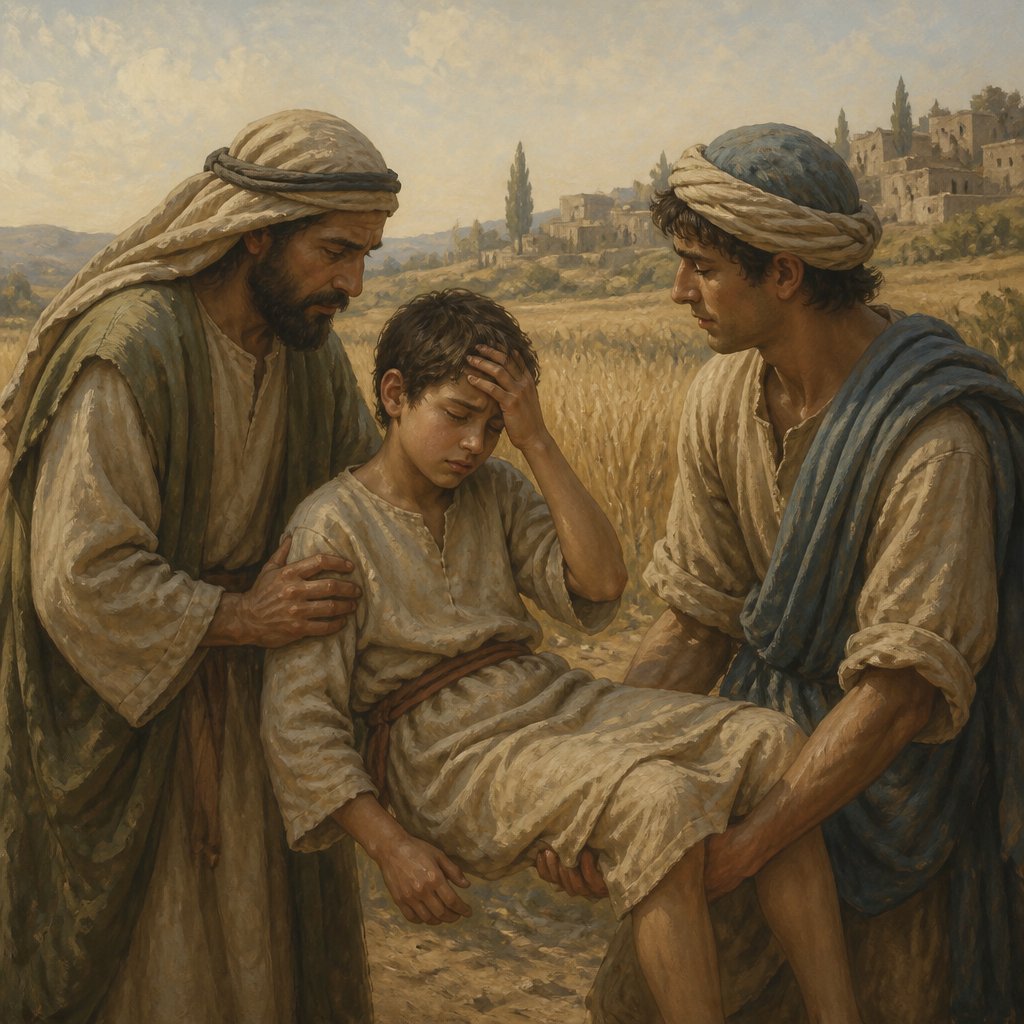
2 Kings 4:19 (KJV) reads, "And he said unto his father, My head, my head. And he said to a lad, Carry him to his mother." This verse is part of a larger narrative in the book of 2 Kings that tells the story of Elisha, the prophet who succeeded Elijah. In this particular verse, Elisha is in the town of Shunem, and he has previously performed a miracle by helping a childless woman conceive a son. Now, that child has suddenly fallen ill, and his father is seeking help for him.
The immediate context of this verse is crucial to understanding its meaning and significance. The child in question is the son of the Shunammite woman, a woman who had shown kindness to Elisha by providing him with a place to stay whenever he passed through her town. In gratitude for her hospitality, Elisha had promised her a son, despite her old age and her husband's advanced years. The birth of this child was itself a miracle, and now the child is facing a crisis.
When the child complains of a headache, his father instructs a servant to carry him to his mother. This action is significant in a number of ways. First, it shows the intimacy and love within the family. The concern and care of the father for the well-being of his son is evident in his immediate response to the child's pain. Second, it reveals the trust and reliance on the mother's nurturing and comforting abilities. The father turns to the mother as the one best equipped to provide immediate comfort and care for the child.
The child's cry of "My head, my head" is a poignant and distressing moment in the narrative, as it emphasizes the seriousness of the child's condition. This cry also serves as a reminder of the vulnerability of children and the need for parental protection and care. In a broader sense, it points to the universal experience of human suffering and the longing for someone to alleviate that suffering.
The theme of parental love and concern for children is a central element of this verse. The immediate response of the father to the child's distress reflects the natural and instinctive desire of parents to protect and comfort their children. The instruction to carry the child to his mother underscores the unique and irreplaceable role of the mother in providing nurturing and care for her child.
Additionally, this verse also highlights the concept of intercession. The father, unable to provide relief to his son himself, seeks out someone who can help – in this case, the child's mother. This act of seeking help for the child from someone with the ability to provide comfort and relief can be seen as a form of intercession. It reflects the idea of turning to others, whether human or divine, for assistance in times of need.
The symbolism of the child's cry for help and the father's response can also be interpreted in a spiritual sense. In the Christian tradition, children are often seen as symbols of innocence and vulnerability, and the caring response of the father can be viewed as a reflection of God's care for his people. Just as the father in the verse seeks help for his child, believers are encouraged to turn to God in times of trouble, trusting in his love and provision.
In conclusion, 2 Kings 4:19 offers a rich depiction of familial love and concern, as well as themes of intercession and divine care. The verse serves as a poignant reminder of the universal experience of suffering and the need for comfort and support. It also offers a powerful image of parental love and the instinctive desire to protect and care for one's children. In a broader sense, this verse can be seen as an invitation to turn to others for help in times of need, and as a reminder of the ultimate source of comfort and care in God.
Get our apps


Artwork for 2 Kings 4:19

2 Kings 4:19 - "And he said unto his father, My head, my head. And he said to a lad, Carry him to his mother."
"And he said unto his father, My head, my head. And he said to a lad, Carry him to his mother." - 2 Kings 4:19

2 Kings 19:2

2 Kings 19:2

2 Kings 19:2

2 Kings 19:17 - "Of a truth, LORD, the kings of Assyria have destroyed the nations and their lands,"

2 Kings 12:19 - "¶ And the rest of the acts of Joash, and all that he did, are they not written in the book of the chronicles of the kings of Judah?"

2 Kings 4:4-5

2 Kings 3:16-19

2 Kings 16:19 - "¶ Now the rest of the acts of Ahaz which he did, are they not written in the book of the chronicles of the kings of Judah?"

2 Kings 19:5 - "So the servants of king Hezekiah came to Isaiah."

2 Kings 19:36 - "So Sennacherib king of Assyria departed, and went and returned, and dwelt at Nineveh."

2 Kings 19:13 - "Where is the king of Hamath, and the king of Arpad, and the king of the city of Sepharvaim, of Hena, and Ivah?"

2 Kings 19:4 - "It may be the LORD thy God will hear all the words of Rabshakeh, whom the king of Assyria his master hath sent to reproach the living God; and will reprove the words which the LORD thy God hath heard: wherefore lift up thy prayer for the remnant that are left."

2 Kings 19:11 - "Behold, thou hast heard what the kings of Assyria have done to all lands, by destroying them utterly: and shalt thou be delivered?"

1 Kings 4:19 - "Geber the son of Uri was in the country of Gilead, in the country of Sihon king of the Amorites, and of Og king of Bashan; and he was the only officer which was in the land."

2 Timothy 4:19 - "Salute Prisca and Aquila, and the household of Onesiphorus."

2 Kings 19:2 - "And he sent Eliakim, which was over the household, and Shebna the scribe, and the elders of the priests, covered with sackcloth, to Isaiah the prophet the son of Amoz."

2 Kings 19:34 - "For I will defend this city, to save it, for mine own sake, and for my servant David's sake."

"Of a truth, LORD, the kings of Assyria have destroyed the nations and their lands," - 2 Kings 19:17

2 Kings 24:19 - "And he did that which was evil in the sight of the LORD, according to all that Jehoiakim had done."

2 Kings 17:19 - "Also Judah kept not the commandments of the LORD their God, but walked in the statutes of Israel which they made."

2 Kings 10:4 - "But they were exceedingly afraid, and said, Behold, two kings stood not before him: how then shall we stand?"

2 Kings 19:33 - "By the way that he came, by the same shall he return, and shall not come into this city, saith the LORD."

2 Kings 11:19 - "And he took the rulers over hundreds, and the captains, and the guard, and all the people of the land; and they brought down the king from the house of the LORD, and came by the way of the gate of the guard to the king's house. And he sat on the throne of the kings."

2 Kings 19:27 - "But I know thy abode, and thy going out, and thy coming in, and thy rage against me."

2 Kings 2:19 - "¶ And the men of the city said unto Elisha, Behold, I pray thee, the situation of this city is pleasant, as my lord seeth: but the water is naught, and the ground barren."

2 Kings 5:19 - "And he said unto him, Go in peace. So he departed from him a little way."

2 Kings 19:30 - "And the remnant that is escaped of the house of Judah shall yet again take root downward, and bear fruit upward."

"So the servants of king Hezekiah came to Isaiah." - 2 Kings 19:5