What does 2 Kings 6:25 mean?
“And there was a great famine in Samaria: and, behold, they besieged it, until an ass’s head was sold for fourscore pieces of silver, and the fourth part of a cab of dove’s dung for five pieces of silver.” — 2 Kings 6:25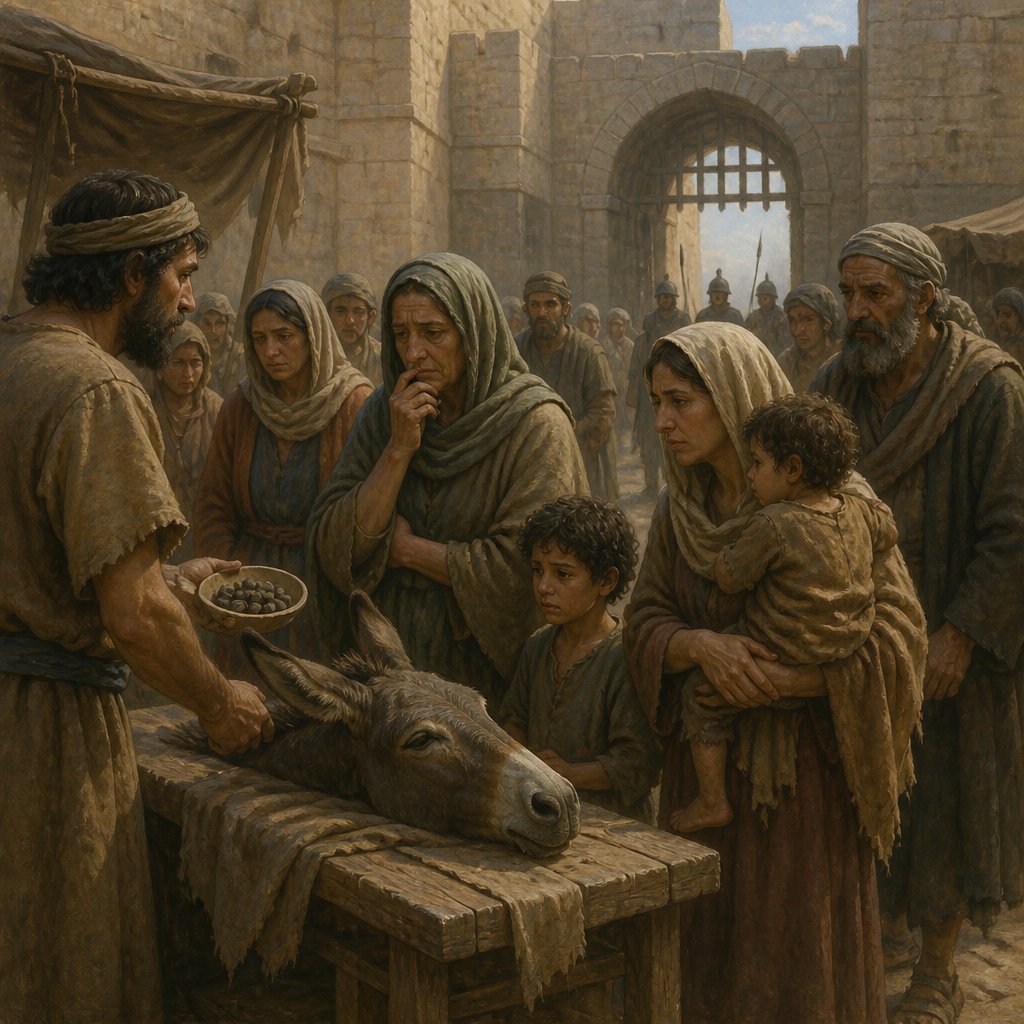
2 Kings 6:25 (KJV) says, "And there was a great famine in Samaria: and, behold, they besieged it, until an ass's head was sold for fourscore pieces of silver, and the fourth part of a cab of dove's dung for five pieces of silver."
The book of 2 Kings in the Old Testament recounts the history of the kings of Israel and Judah after the division of the kingdom. In this verse, the author describes a great famine in Samaria, the capital of the northern kingdom of Israel. The famine was so severe that the city was besieged, and the people were reduced to extreme measures to survive.
The imagery in this verse vividly illustrates the desperate situation faced by the people of Samaria. The fact that an ass's head was sold for fourscore (eighty) pieces of silver and a fourth part of a cab of dove's dung for five pieces of silver demonstrates the scarcity of food and the exorbitant prices that were being paid for even the most undesirable and unclean items. The mention of an ass's head and dove's dung highlights the extreme nature of the famine, as these were not typical or desirable sources of sustenance.
The theme of divine judgment is prevalent throughout the book of 2 Kings, and this verse is no exception. The famine in Samaria is often interpreted as a consequence of the people's disobedience to God. Throughout the Old Testament, the concept of famine is frequently associated with divine punishment for sin and unfaithfulness. In this context, the famine serves as a warning to the people of Israel to repent and return to God.
Additionally, the siege of Samaria and the resulting famine are a testament to the consequences of human pride and reliance on earthly power. The city's leaders had ignored the warnings of the prophets and had placed their trust in alliances with foreign nations rather than turning to God for protection and provision. The siege and subsequent famine serve as a sobering reminder of the futility of human efforts to secure safety and sustenance apart from God.
Symbolically, the famine in Samaria can be seen as a representation of the spiritual famine that occurs when people turn away from God. It serves as a warning of the dire consequences of straying from God's will and seeking fulfillment in worldly pursuits. The exorbitant prices paid for the most undesirable food items also symbolize the emptiness and futility of seeking satisfaction outside of God's provision.
In a broader context, this verse can also be seen as a reminder of the importance of humility and dependence on God. The people of Samaria had become prideful and self-sufficient, relying on their own strength and alliances with foreign powers. The severe famine served as a humbling and corrective experience, reminding the people of their need for God's mercy and provision.
In conclusion, 2 Kings 6:25 (KJV) offers a powerful commentary on the consequences of disobedience, the futility of human pride, and the importance of dependence on God. The vivid imagery and symbolism in this verse serve as a poignant reminder of the spiritual and practical implications of straying from God's will. It challenges readers to consider their own reliance on earthly provisions and to turn to God as the ultimate source of sustenance and fulfillment.
Get our apps


Artwork for 2 Kings 6:25

2 Kings 6:25 - "And there was a great famine in Samaria: and, behold, they besieged it, until an ass's head was sold for fourscore pieces of silver, and the fourth part of a cab of dove's dung for five pieces of silver."
"And there was a great famine in Samaria: and, behold, they besieged it, until an ass's head was sold for fourscore pieces of silver, and the fourth part of a cab of dove's dung for five pieces of silver." - 2 Kings 6:25

2 Kings 25:6 - "So they took the king, and brought him up to the king of Babylon to Riblah; and they gave judgment upon him."

1 Kings 6:25 - "And the other cherub was ten cubits: both the cherubims were of one measure and one size."

2 Kings 25:2 - "And the city was besieged unto the eleventh year of king Zedekiah."

"So they took the king, and brought him up to the king of Babylon to Riblah; and they gave judgment upon him." - 2 Kings 25:6

2 kings 6:24

2 Kings 21:25 - "Now the rest of the acts of Amon which he did, are they not written in the book of the chronicles of the kings of Judah?"

2 Kings 25:28 - "And he spake kindly to him, and set his throne above the throne of the kings that were with him in Babylon;"

2 Kings 2:25 - "And he went from thence to mount Carmel, and from thence he returned to Samaria."

2 Kings 25:12 - "But the captain of the guard left of the poor of the land to be vinedressers and husbandmen."

Proverbs 25:2 - "It is the glory of God to conceal a thing: but the honour of kings is to search out a matter."

2 Kings 25:20 - "And Nebuzar-adan captain of the guard took these, and brought them to the king of Babylon to Riblah:"
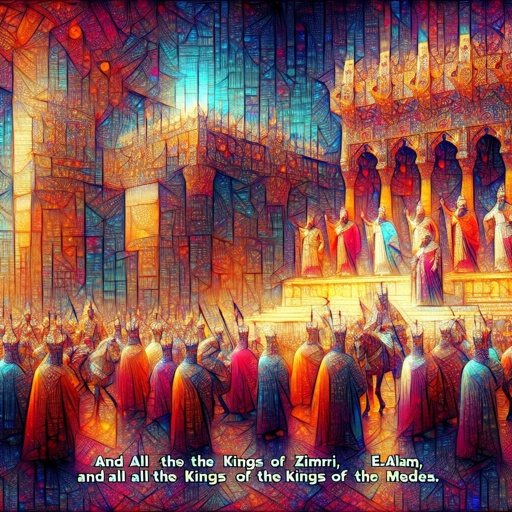
Jeremiah 25:25 - "And all the kings of Zimri, and all the kings of Elam, and all the kings of the Medes,"
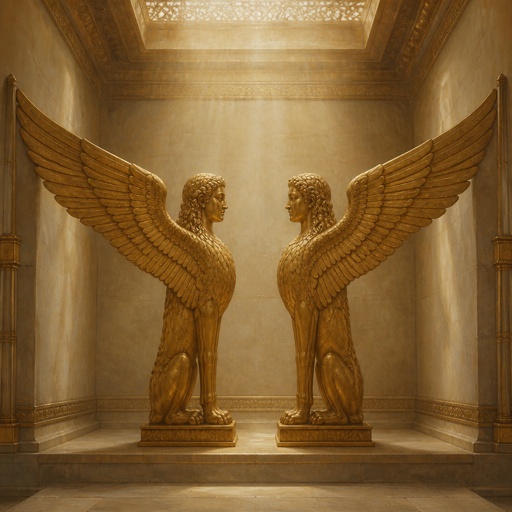
"And the other cherub was ten cubits: both the cherubims were of one measure and one size." - 1 Kings 6:25

"And the city was besieged unto the eleventh year of king Zedekiah." - 2 Kings 25:2

2 Kings 25:3 - "And on the ninth day of the fourth month the famine prevailed in the city, and there was no bread for the people of the land."

2 Kings 25:14 - "And the pots, and the shovels, and the snuffers, and the spoons, and all the vessels of brass wherewith they ministered, took they away."

2 Kings 25:1 show King Nebuchadnezzar and the army and the Temple

2 Kings 25:1 show King Nebuchadnezzar in war zone

1 Kings 2:25 - "And king Solomon sent by the hand of Benaiah the son of Jehoiada; and he fell upon him that he died."
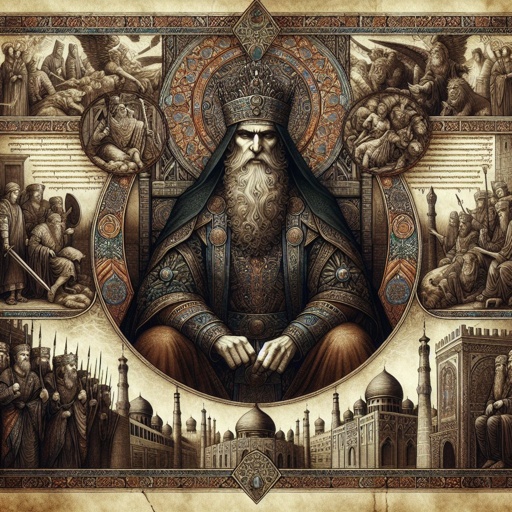
2 Kings 15:6 - "And the rest of the acts of Azariah, and all that he did, are they not written in the book of the chronicles of the kings of Judah?"

2 Kings 25:10 - "And all the army of the Chaldees, that were with the captain of the guard, brake down the walls of Jerusalem round about."

2 Kings 25:18 - "¶ And the captain of the guard took Seraiah the chief priest, and Zephaniah the second priest, and the three keepers of the door:"

2 Kings 25:15 - "And the firepans, and the bowls, and such things as were of gold, in gold, and of silver, in silver, the captain of the guard took away."

2 Chronicles 25:26 - "Now the rest of the acts of Amaziah, first and last, behold, are they not written in the book of the kings of Judah and Israel?"

Jehoiachin is released from Babylonian jail 2 kings 25: 27

2 Kings 8:25 - "¶ In the twelfth year of Joram the son of Ahab king of Israel did Ahaziah the son of Jehoram king of Judah begin to reign."

2 Kings 25:26 - "And all the people, both small and great, and the captains of the armies, arose, and came to Egypt: for they were afraid of the Chaldees."

2 Kings 25:30 - "And his allowance was a continual allowance given him of the king, a daily rate for every day, all the days of his life."