What does 2 Kings 7:3 mean?
“And there were four leprous men at the entering in of the gate: and they said one to another, Why sit we here until we die?” — 2 Kings 7:3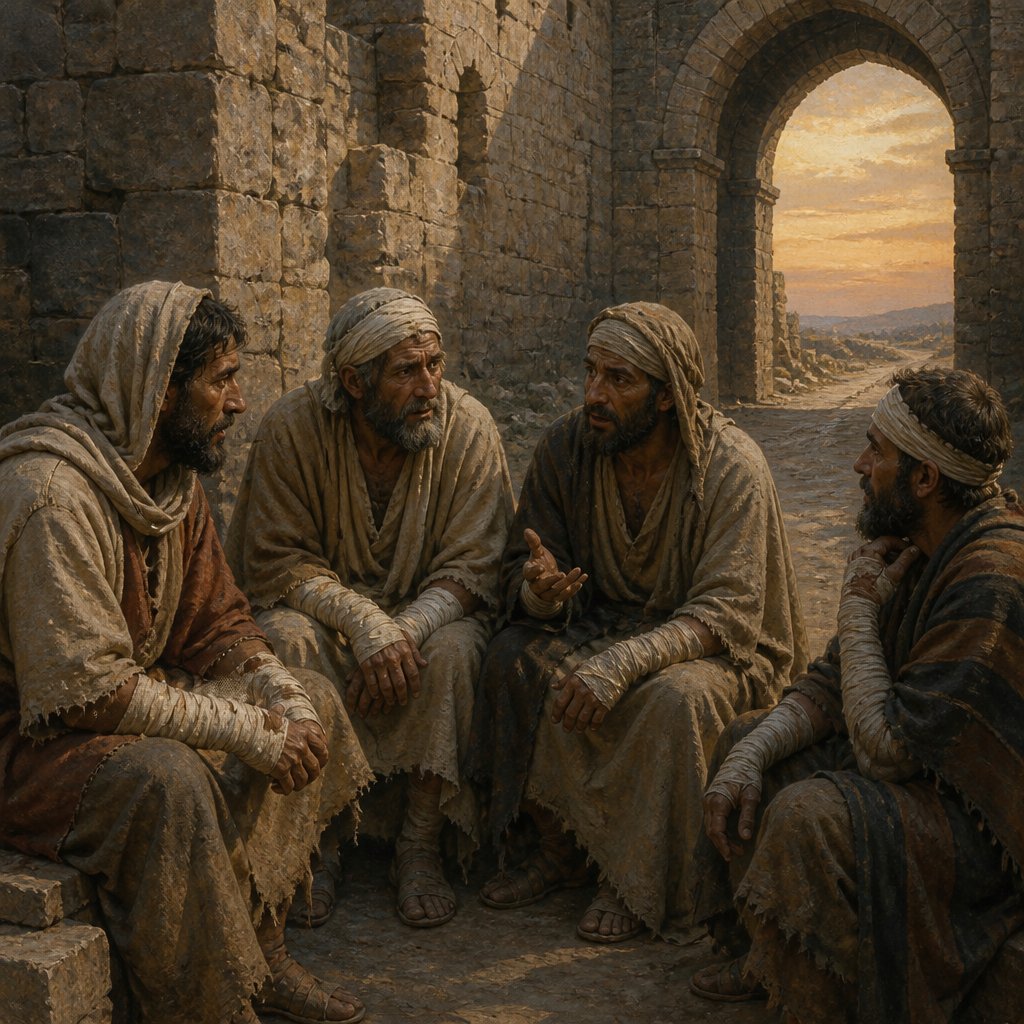
The bible verse 2 Kings 7:3 from the King James Version (KJV) states, "And there were four leprous men at the entering in of the gate: and they said one to another, Why sit we here until we die?" This verse is part of a larger narrative that takes place during a time of great famine in the land of Samaria. The city is under siege by the Aramean army, and the people are suffering from extreme hunger and scarcity of resources.
The four leprous men mentioned in this verse are, in many ways, the epitome of the outcasts and marginalized members of society. Leprosy was a highly contagious and disfiguring disease in ancient times, and those who suffered from it were often shunned and cast out from their communities. In this verse, we see these four individuals living at the gate of the city, unable to enter due to their condition.
The verse begins with the four men acknowledging their dire circumstances and posing a rhetorical question to each other: "Why sit we here until we die?" This question reflects their recognition of the hopelessness of their situation and their reevaluation of their current state. It indicates their willingness to seek a better outcome, rather than simply resigning themselves to their fate.
This verse is significant in the larger context of the biblical narrative as it illustrates the theme of hope and the unexpected ways in which God can work in desperate situations. The famine in Samaria represents the extreme hardship and suffering that the people are enduring, and the plight of the leprous men serves as a symbol of the marginalized and forgotten members of society.
The actions of the four leprous men serve as a catalyst for the events that unfold in the subsequent verses. After their conversation at the gate, the men make the decision to go to the camp of the Aramean army in search of food and provisions. What they find there is unexpected and miraculous - the enemy camp is deserted, and the men are able to partake in the abundance of food, drink, and treasure left behind by the fleeing army.
This turn of events demonstrates the theme of divine intervention and the idea that God can bring about deliverance in the most unexpected and unlikely ways. The actions of the four men also serve as a reflection of the biblical principle of faith in action. Despite their marginalized status and the apparent hopelessness of their situation, they take the bold step to seek a better outcome and are rewarded for their courage and initiative.
The larger context of this passage also speaks to the broader themes of redemption, restoration, and God's sovereignty. The famine and siege in Samaria were a result of the people's disobedience and unfaithfulness to God, and yet even in the midst of their suffering, God provides a way out and delivers them from their distress.
In addition to the thematic significance of this verse, there are also symbolic elements that can be gleaned from the story of the four leprous men. Their condition as outcasts and their subsequent discovery of the abandoned enemy camp can be seen as a metaphor for the transformative power of God's grace and the unexpected ways in which he works in the lives of those who are marginalized and overlooked.
In conclusion, 2 Kings 7:3 from the King James Version of the Bible is a powerful and evocative verse that speaks to themes of hope, divine intervention, faith in action, and the unexpected ways in which God can work in desperate situations. The story of the four leprous men serves as a poignant reminder of God's ability to bring about deliverance and restoration, even in the most unlikely and challenging circumstances.
Get our apps


Artwork for 2 Kings 7:3

2 Kings 7:3 - "¶ And there were four leprous men at the entering in of the gate: and they said one to another, Why sit we here until we die?"
"¶ And there were four leprous men at the entering in of the gate: and they said one to another, Why sit we here until we die?" - 2 Kings 7:3

1 Kings 7:3 - "And it was covered with cedar above upon the beams, that lay on forty five pillars, fifteen in a row."

2 Kings 7:2

2 Kings 3:15

2 Kings 3:15

2 Kings 3:15

2 Kings 7:11 - "And he called the porters; and they told it to the king's house within."

2 Kings 7:7 - "Wherefore they arose and fled in the twilight, and left their tents, and their horses, and their asses, even the camp as it was, and fled for their life."

2 Kings 3:16-19

2 Kings 3:10 - "And the king of Israel said, Alas! that the LORD hath called these three kings together, to deliver them into the hand of Moab!"

2 Kings 3:23 - "And they said, This is blood: the kings are surely slain, and they have smitten one another: now therefore, Moab, to the spoil."
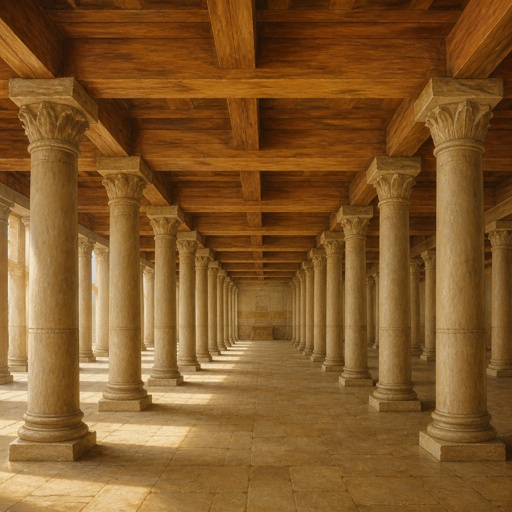
"And it was covered with cedar above upon the beams, that lay on forty five pillars, fifteen in a row." - 1 Kings 7:3

2 Kings 2:7 - "And fifty men of the sons of the prophets went, and stood to view afar off: and they two stood by Jordan."

2 Kings 3:7 - "And he went and sent to Jehoshaphat the king of Judah, saying, The king of Moab hath rebelled against me: wilt thou go with me against Moab to battle? And he said, I will go up: I am as thou art, my people as thy people, and my horses as thy horses."

2 Kings 3:3 - "Nevertheless he cleaved unto the sins of Jeroboam the son of Nebat, which made Israel to sin; he departed not therefrom."

2 Kings 3:6 - "¶ And king Jehoram went out of Samaria the same time, and numbered all Israel."

2 Thessalonians 3:6-7

2 Kings 22:7 - "Howbeit there was no reckoning made with them of the money that was delivered into their hand, because they dealt faithfully."

2 Kings 20:7 - "And Isaiah said, Take a lump of figs. And they took and laid it on the boil, and he recovered."

2 Kings 3:5 - "But it came to pass, when Ahab was dead, that the king of Moab rebelled against the king of Israel."

2 Kings 3:16 - "And he said, Thus saith the LORD, Make this valley full of ditches."

2 Kings 7:14 - "They took therefore two chariot horses; and the king sent after the host of the Syrians, saying, Go and see."

2 Kings 3:18 - "And this is but a light thing in the sight of the LORD: he will deliver the Moabites also into your hand."

2 Kings 25:3 - "And on the ninth day of the fourth month the famine prevailed in the city, and there was no bread for the people of the land."

2 Kings 3:21 - "¶ And when all the Moabites heard that the kings were come up to fight against them, they gathered all that were able to put on armour, and upward, and stood in the border."

2 Kings 6:7 - "Therefore said he, Take it up to thee. And he put out his hand, and took it."

2 Kings 7:20 - "And so it fell out unto him: for the people trode upon him in the gate, and he died."

2 Kings 7:6 - "For the Lord had made the host of the Syrians to hear a noise of chariots, and a noise of horses, even the noise of a great host: and they said one to another, Lo, the king of Israel hath hired against us the kings of the Hittites, and the kings of the Egyptians, to come upon us."

2 Timothy 3:7 - "Ever learning, and never able to come to the knowledge of the truth."