What does 2 Samuel 11:10 mean?
“And when they had told David, saying, Uriah went not down unto his house, David said unto Uriah, Camest thou not from thy journey? why then didst thou not go down unto thine house?” — 2 Samuel 11:10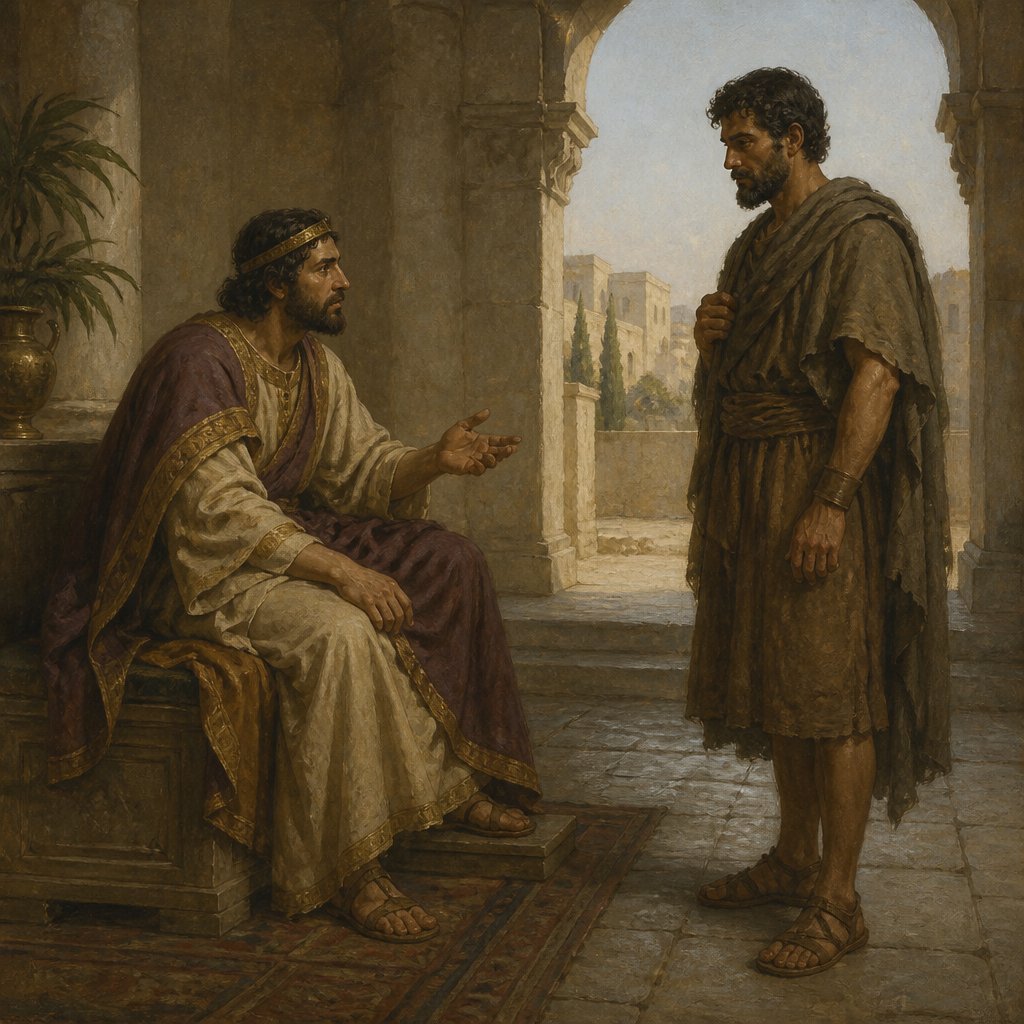
The passage 2 Samuel 11:10 from the King James Version of the Bible reads, "And when they had told David, saying, Uriah went not down unto his house, David said unto Uriah, Camest thou not from thy journey? why then didst thou not go down unto thine house?"
This verse comes from the story of King David's sinful affair with Bathsheba and his attempt to cover it up. The passage occurs after David has learned that Bathsheba, the wife of Uriah, has become pregnant with his child. In an attempt to hide his wrongdoing, David calls for Uriah to return from battle in the hopes that he will sleep with his wife and thus conceal the true parentage of the child. When Uriah refuses to indulge in the comforts of home while his fellow soldiers are at war, David becomes desperate and ultimately orchestrates Uriah's death in battle.
This passage speaks to several profound themes found throughout the Bible, including the consequences of sin, the abuse of power, and the destructive nature of deceit.
One of the primary themes found in this verse is the consequences of sin. David, a man after God's own heart, succumbs to temptation and commits adultery with Bathsheba. The resulting pregnancy leads him to attempt to cover up his actions through manipulation and eventually murder. This ultimately leads to severe consequences for David and his household, as God's judgment falls upon him, and the child born to Bathsheba dies. The passage serves as a warning about the far-reaching and devastating effects of sin and the importance of repentance and seeking forgiveness.
This verse also highlights the abuse of power and privilege. As king, David holds a position of immense authority and influence. In this instance, he abuses his power by exploiting his position to seduce Bathsheba and to manipulate Uriah in an attempt to cover up his actions. This abuse of power ultimately leads to tragic consequences for both Uriah and Bathsheba. The passage serves as a cautionary tale about the dangers of using one's power for selfish and immoral purposes.
Another significant theme in this passage is the destructive nature of deceit. Throughout this story, David engages in a web of deceit in an attempt to conceal his sin. He lies to Uriah, manipulates his actions, and ultimately arranges for his death. The consequences of this deceit are devastating, leading to the loss of life and the unraveling of David's integrity. The passage serves as a poignant reminder of the harmful effects of deceit and the importance of honesty and transparency in our actions.
Symbolism is also present in this passage, particularly in the image of Uriah's unwavering loyalty to his fellow soldiers and commitment to duty. Uriah's refusal to indulge in personal comfort while his comrades are at war contrasts sharply with David's self-serving actions. Uriah's steadfastness serves as a symbol of honor and righteousness, emphasizing the stark contrast between his character and David's moral failings.
Ultimately, this passage serves as a powerful and cautionary narrative about the consequences of sin, the abuse of power, and the destructive nature of deceit. It serves as a reminder of the importance of humility, integrity, and repentance in the face of temptation and wrongdoing. Through its themes and symbolism, it offers a timeless message about the enduring consequences of moral failings and the importance of seeking forgiveness and redemption.
Get our apps


Artwork for 2 Samuel 11:10

2 Samuel 11:10 - "And when they had told David, saying, Uriah went not down unto his house, David said unto Uriah, Camest thou not from thy journey? why then didst thou not go down unto thine house?"
2 Samuel 11:10 - "And when they had told David, saying, Uriah went not down unto his house, David said unto Uriah, Camest thou not from thy journey? why then didst thou not go down unto thine house?"
"And when they had told David, saying, Uriah went not down unto his house, David said unto Uriah, Camest thou not from thy journey? why then didst thou not go down unto thine house?" - 2 Samuel 11:10

2 Samuel 10:11 - "And he said, If the Syrians be too strong for me, then thou shalt help me: but if the children of Ammon be too strong for thee, then I will come and help thee."

2 Samuel 11:9

2 Samuel 11

2 samuel 11

2 Samuel 11:11

2 Samuel 10:4

2 Samuel 10:4

2 Samuel 2:11 - "And the time that David was king in Hebron over the house of Judah was seven years and six months."

2 Samuel 11:18 - "¶ Then Joab sent and told David all the things concerning the war;"

2 Samuel 21:11 - "And it was told David what Rizpah the daughter of Aiah, the concubine of Saul, had done."

2 Samuel 5:10 - "And David went on, and grew great, and the LORD God of hosts was with him."

2 Samuel 11:5 - "And the woman conceived, and sent and told David, and said, I am with child."

2 Samuel 10:10 - "And the rest of the people he delivered into the hand of Abishai his brother, that he might put them in array against the children of Ammon."

2 Samuel 11:22 - "¶ So the messenger went, and came and shewed David all that Joab had sent him for."

2 Samuel 3:11 - "And he could not answer Abner a word again, because he feared him."

2 Samuel 11:14 - "¶ And it came to pass in the morning, that David wrote a letter to Joab, and sent it by the hand of Uriah."

2 Samuel 22:10 - "He bowed the heavens also, and came down; and darkness was under his feet."

2 Samuel 10:15 - "¶ And when the Syrians saw that they were smitten before Israel, they gathered themselves together."

2 Samuel 10:7 - "And when David heard of it, he sent Joab, and all the host of the mighty men."

1 Samuel 11:10 - "Therefore the men of Jabesh said, To morrow we will come out unto you, and ye shall do with us all that seemeth good unto you."

2 Samuel 22:11 - "And he rode upon a cherub, and did fly: and he was seen upon the wings of the wind."

2 Samuel 11:6 - "¶ And David sent to Joab, saying, Send me Uriah the Hittite. And Joab sent Uriah to David."

2 Samuel 11:26 - "¶ And when the wife of Uriah heard that Uriah her husband was dead, she mourned for her husband."

2 Samuel 1:11 - "Then David took hold on his clothes, and rent them; and likewise all the men that were with him:"

2 Samuel 18:10 - "And a certain man saw it, and told Joab, and said, Behold, I saw Absalom hanged in an oak."

1 Samuel 2:11 - "And Elkanah went to Ramah to his house. And the child did minister unto the LORD before Eli the priest."

2 Samuel 24:11 - "For when David was up in the morning, the word of the LORD came unto the prophet Gad, David's seer, saying,"