What does 2 Samuel 14:23 mean?
“So Joab arose and went to Geshur, and brought Absalom to Jerusalem.” — 2 Samuel 14:23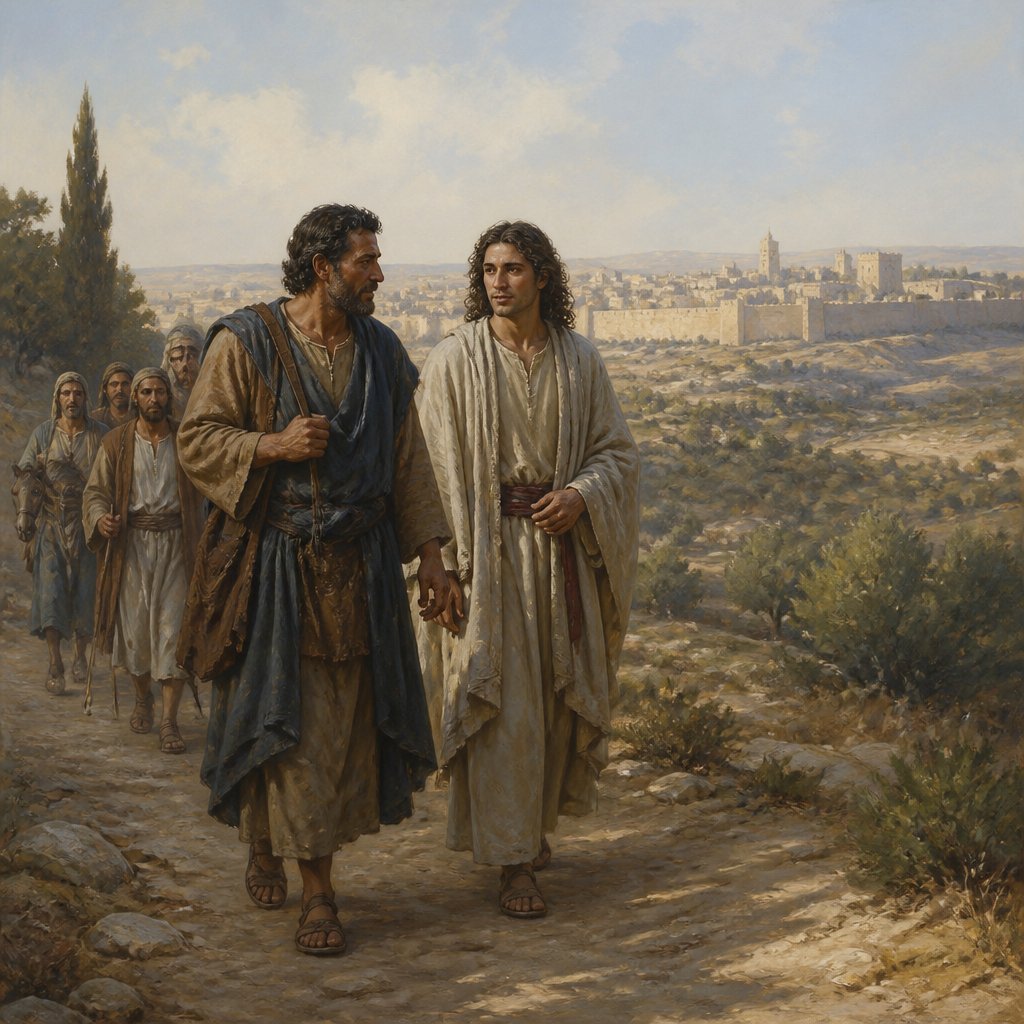
The verse 2 Samuel 14:23 in the King James Version of the Bible reads, "So Joab arose and went to Geshur, and brought Absalom to Jerusalem."
This passage comes from the book of 2 Samuel, which is part of the historical books in the Old Testament. The book of 2 Samuel focuses on the life and reign of King David, highlighting both his successes and his failures. In this particular verse, the character of Joab is acting as a key figure in the story.
To properly understand the context of 2 Samuel 14:23, it is important to look at the events leading up to this verse. Absalom, the son of David, had killed his half-brother Amnon after Amnon had raped their sister Tamar. This act of vengeance caused Absalom to flee from Jerusalem and seek refuge in Geshur. Joab, who was the commander of David's army, intervened and devised a plan to reconcile Absalom with David, the king. Joab's actions were motivated by a desire for reconciliation between father and son, as well as a strategic move to potentially gain favor with Absalom.
In this verse, when Joab goes to Geshur and brings Absalom back to Jerusalem, it marks a significant turning point in the story. Absalom's return to the capital city sets the stage for a series of events that ultimately lead to a rebellion against David.
The theme of family reconciliation is evident in this verse. Joab's actions reflect a desire to mend the broken relationship between David and Absalom, despite the serious transgressions committed by Absalom. This emphasis on reconciliation aligns with the larger thematic context of the biblical narrative, which often centers around themes of forgiveness, redemption, and restoration.
Symbolically, the act of Joab bringing Absalom back to Jerusalem can be seen as a symbol of hope for reconciliation and restoration. It demonstrates the possibility of healing and forgiveness even in the midst of deep family wounds and betrayal. Additionally, this event foreshadows the larger narrative of David and Absalom's relationship, as well as the consequences that result from their strained bond.
Furthermore, the verse also highlights the character of Joab and his strategic prowess. Joab's actions in this passage demonstrate his loyalty to David and his willingness to take risks in order to bring about a desired outcome. However, Joab's motives and methods are not without controversy, as his actions ultimately set in motion a series of events that lead to civil unrest and violence.
In summary, 2 Samuel 14:23 captures a pivotal moment in the biblical narrative, showcasing themes of reconciliation, family dynamics, and the complex motivations of its characters. Joab's role in bringing Absalom back to Jerusalem sets the stage for a series of tragic events, highlighting the far-reaching consequences of familial strife and the complexities of human relationships. This verse serves as a reminder of the larger biblical themes of forgiveness and redemption, while also acknowledging the difficult realities of human nature and the consequences of our actions.
Get our apps


Artwork for 2 Samuel 14:23

2 Samuel 14:23 - "So Joab arose and went to Geshur, and brought Absalom to Jerusalem."
"So Joab arose and went to Geshur, and brought Absalom to Jerusalem." - 2 Samuel 14:23

2 Samuel 23:14 - "And David was then in an hold, and the garrison of the Philistines was then in Beth-lehem."

"And David was then in an hold, and the garrison of the Philistines was then in Beth-lehem." - 2 Samuel 23:14

2 Samuel 23:38 - "Ira an Ithrite, Gareb an Ithrite,"

2 Samuel 23:28 - "Zalmon the Ahohite, Maharai the Netophathite,"

2 Samuel 23:35 - "Hezrai the Carmelite, Paarai the Arbite,"

2 Samuel 23:27 - "Abiezer the Anethothite, Mebunnai the Hushathite,"

2 Samuel 23:25 - "Shammah the Harodite, Elika the Harodite,"

2 Samuel 23:2 - "The Spirit of the LORD spake by me, and his word was in my tongue."

2 Samuel 23:31 - "Abi-albon the Arbathite, Azmaveth the Barhumite,"

2 Samuel 23:39 - "Uriah the Hittite: thirty and seven in all."

2 Samuel 23:30 - "Benaiah the Pirathonite, Hiddai of the brooks of Gaash,"

2 samuel 23:8-21

2 Samuel 23:32 - "Eliahba the Shaalbonite, of the sons of Jashen, Jonathan,"

2 Samuel 23:33 - "Shammah the Hararite, Ahiam the son of Sharar the Hararite,"

2 Samuel 23:26 - "Helez the Paltite, Ira the son of Ikkesh the Tekoite,"

2 Samuel 6:14

2 Samuel 23:36 - "Igal the son of Nathan of Zobah, Bani the Gadite,"

2 Samuel 23:23 - "He was more honourable than the thirty, but he attained not to the first three. And David set him over his guard."

2 Samuel 23:37 - "Zelek the Ammonite, Naharai the Beerothite, armourbearer to Joab the son of Zeruiah,"

2 Samuel 6:14–22

2 Samuel 6:23 - "Therefore Michal the daughter of Saul had no child unto the day of her death."

1 Samuel 23:14 - "And David abode in the wilderness in strong holds, and remained in a mountain in the wilderness of Ziph. And Saul sought him every day, but God delivered him not into his hand."

2 Samuel 23:34 - "Eliphelet the son of Ahasbai, the son of the Maachathite, Eliam the son of Ahithophel the Gilonite,"

2 Samuel 23:24 - "Asahel the brother of Joab was one of the thirty; Elhanan the son of Dodo of Beth-lehem,"

2 Samuel 23:29 - "Heleb the son of Baanah, a Netophathite, Ittai the son of Ribai out of Gibeah of the children of Benjamin,"

2 Samuel 23:12 - "But he stood in the midst of the ground, and defended it, and slew the Philistines: and the LORD wrought a great victory."

"Shammah the Harodite, Elika the Harodite," - 2 Samuel 23:25

2 Samuel 23:22 - "These things did Benaiah the son of Jehoiada, and had the name among three mighty men."