What does 2 Samuel 14:31 mean?
“Then Joab arose, and came to Absalom unto his house, and said unto him, Wherefore have thy servants set my field on fire?” — 2 Samuel 14:31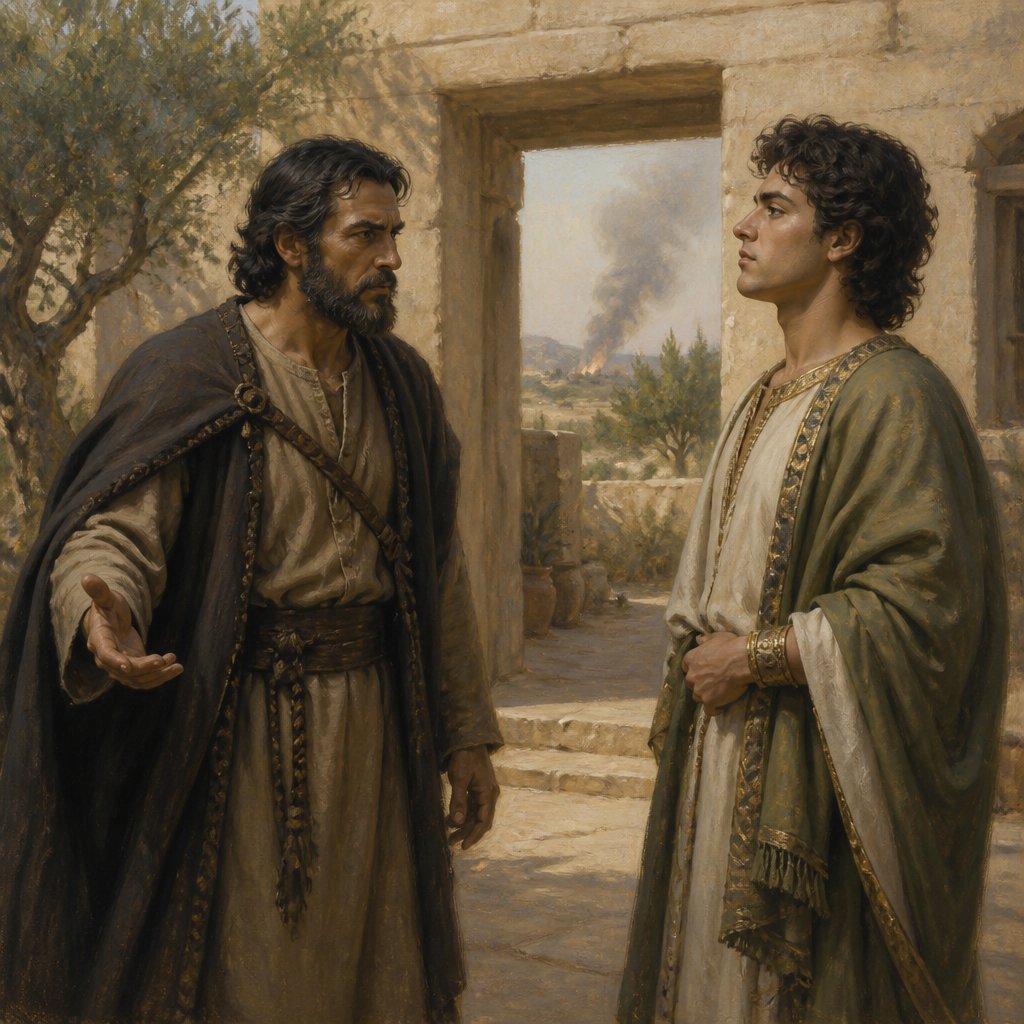
2 Samuel 14:31 (KJV) states: "Then Joab arose, and came to Absalom unto his house, and said unto him, Wherefore have thy servants set my field on fire?"
The verse comes from the book of 2 Samuel in the Old Testament. This verse is part of a larger narrative that tells the story of Absalom's rebellion against his father, King David. In this particular passage, Joab, who was the commander of King David's army, goes to visit Absalom at his house and questions him about why his servants had set Joab's field on fire.
To fully understand the meaning and context of this verse, it is important to examine the surrounding passages and the broader narrative of Absalom's rebellion. Absalom was one of King David's sons, known for his striking appearance and charisma. However, Absalom grew increasingly resentful of his father and sought to seize the throne for himself. As part of his rebellion, Absalom gathered support and eventually declared himself king.
In the verses leading up to 2 Samuel 14:31, Absalom's rebellion is well underway, and he has gained a significant number of followers. In this context, Joab's visit to Absalom's house and his inquiry about the burning of his field serves to illustrate the tense and tumultuous political atmosphere of the time. Joab's property being set on fire by Absalom's servants is emblematic of the conflict and discord within David's kingdom.
The symbolic significance of this verse can be interpreted in several ways. Firstly, Joab's decision to confront Absalom in person shows the complex dynamics of loyalty and betrayal at play in this story. Joab, as David's loyal commander, is in a difficult position, torn between his allegiance to the king and the fact that Absalom is also his nephew. His visit to Absalom's house is a demonstration of the internal conflict that many characters in this narrative face.
Furthermore, the mention of the burning field also carries symbolic weight. In biblical literature, fire is often used as a symbol of destruction and purification. The burning of Joab's field can be seen as a metaphor for the destructive nature of Absalom's rebellion and the division it has caused within Israel. It also serves as a metaphor for the turmoil and chaos that often accompanies disobedience and rebellion against God's chosen leaders.
Additionally, the verse highlights the themes of justice and retribution. Joab's question to Absalom about the burning of his field implies a call for accountability and justice. The injustice of the act is evident, and Joab is seeking to hold Absalom responsible for the actions of his servants. This theme of justice and accountability is central to the broader narrative of Absalom's rebellion and the eventual consequences that follow.
In conclusion, 2 Samuel 14:31 is a significant verse within the larger narrative of Absalom's rebellion. It captures the intense political and familial tension that plagued David's kingdom at the time. Furthermore, it carries symbolic weight, serving as a metaphor for the division, destruction, and pursuit of justice that defines this tumultuous period in biblical history. This verse serves as a reminder of the complexities of human relationships and the consequences of disobedience and rebellion against God's established order.
Get our apps


Artwork for 2 Samuel 14:31

2 Samuel 14:31 - "Then Joab arose, and came to Absalom unto his house, and said unto him, Wherefore have thy servants set my field on fire?"
"Then Joab arose, and came to Absalom unto his house, and said unto him, Wherefore have thy servants set my field on fire?" - 2 Samuel 14:31

1 Samuel 14:31 - "And they smote the Philistines that day from Michmash to Aijalon: and the people were very faint."

2 Samuel 23:31 - "Abi-albon the Arbathite, Azmaveth the Barhumite,"

2 Samuel 2:31 - "But the servants of David had smitten of Benjamin, and of Abner's men, so that three hundred and threescore men died."

2 Samuel 6:14

2 Samuel 22:31 - "As for God, his way is perfect; the word of the LORD is tried: he is a buckler to all them that trust in him."

2 Samuel 13:31 - "Then the king arose, and tare his garments, and lay on the earth; and all his servants stood by with their clothes rent."

"Abi-albon the Arbathite, Azmaveth the Barhumite," - 2 Samuel 23:31

2 Samuel 6:14–22

2 Samuel 19:31 - "¶ And Barzillai the Gileadite came down from Rogelim, and went over Jordan with the king, to conduct him over Jordan."

1 Samuel 31:2 - "And the Philistines followed hard upon Saul and upon his sons; and the Philistines slew Jonathan, and Abinadab, and Malchi-shua, Saul's sons."

2 Samuel 23:14 - "And David was then in an hold, and the garrison of the Philistines was then in Beth-lehem."
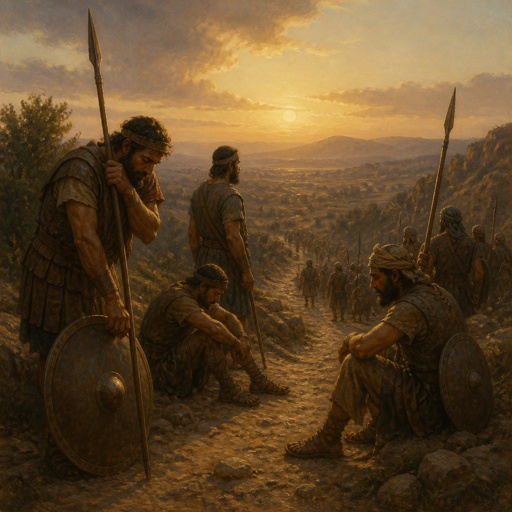
"And they smote the Philistines that day from Michmash to Aijalon: and the people were very faint." - 1 Samuel 14:31

1 Samuel 2:31 - "Behold, the days come, that I will cut off thine arm, and the arm of thy father's house, that there shall not be an old man in thine house."

2 Samuel 14:23 - "So Joab arose and went to Geshur, and brought Absalom to Jerusalem."
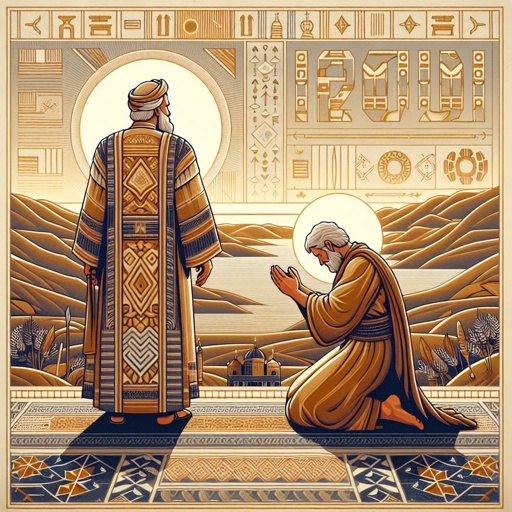
1 Samuel 15:31 - "So Samuel turned again after Saul; and Saul worshipped the LORD."

2 Samuel 22:14 - "The LORD thundered from heaven, and the most High uttered his voice."

2 Samuel 16:14 - "And the king, and all the people that were with him, came weary, and refreshed themselves there."

2 Samuel 14:1 - "Now Joab the son of Zeruiah perceived that the king's heart was toward Absalom."

2 Samuel 15:31 - "¶ And one told David, saying, Ahithophel is among the conspirators with Absalom. And David said, O LORD, I pray thee, turn the counsel of Ahithophel into foolishness."

2 Samuel 14:28 - "¶ So Absalom dwelt two full years in Jerusalem, and saw not the king's face."

2 Samuel 11:14 - "¶ And it came to pass in the morning, that David wrote a letter to Joab, and sent it by the hand of Uriah."

2 Samuel 18:31 - "And, behold, Cushi came; and Cushi said, Tidings, my lord the king: for the LORD hath avenged thee this day of all them that rose up against thee."

2 Samuel 2:14 - "And Abner said to Joab, Let the young men now arise, and play before us. And Joab said, Let them arise."

2 Chronicles 31:14 - "And Kore the son of Imnah the Levite, the porter toward the east, was over the freewill offerings of God, to distribute the oblations of the LORD, and the most holy things."

2 Samuel 5:14 - "And these be the names of those that were born unto him in Jerusalem; Shammua, and Shobab, and Nathan, and Solomon,"

2 Samuel 6:14 - "And David danced before the LORD with all his might; and David was girded with a linen ephod."

2 Samuel 3:31 - "¶ And David said to Joab, and to all the people that were with him, Rend your clothes, and gird you with sackcloth, and mourn before Abner. And king David himself followed the bier."

2 Samuel 14:3 - "And come to the king, and speak on this manner unto him. So Joab put the words in her mouth."