What does 2 Samuel 3:9 mean?
“So do God to Abner, and more also, except, as the LORD hath sworn to David, even so I do to him;” — 2 Samuel 3:9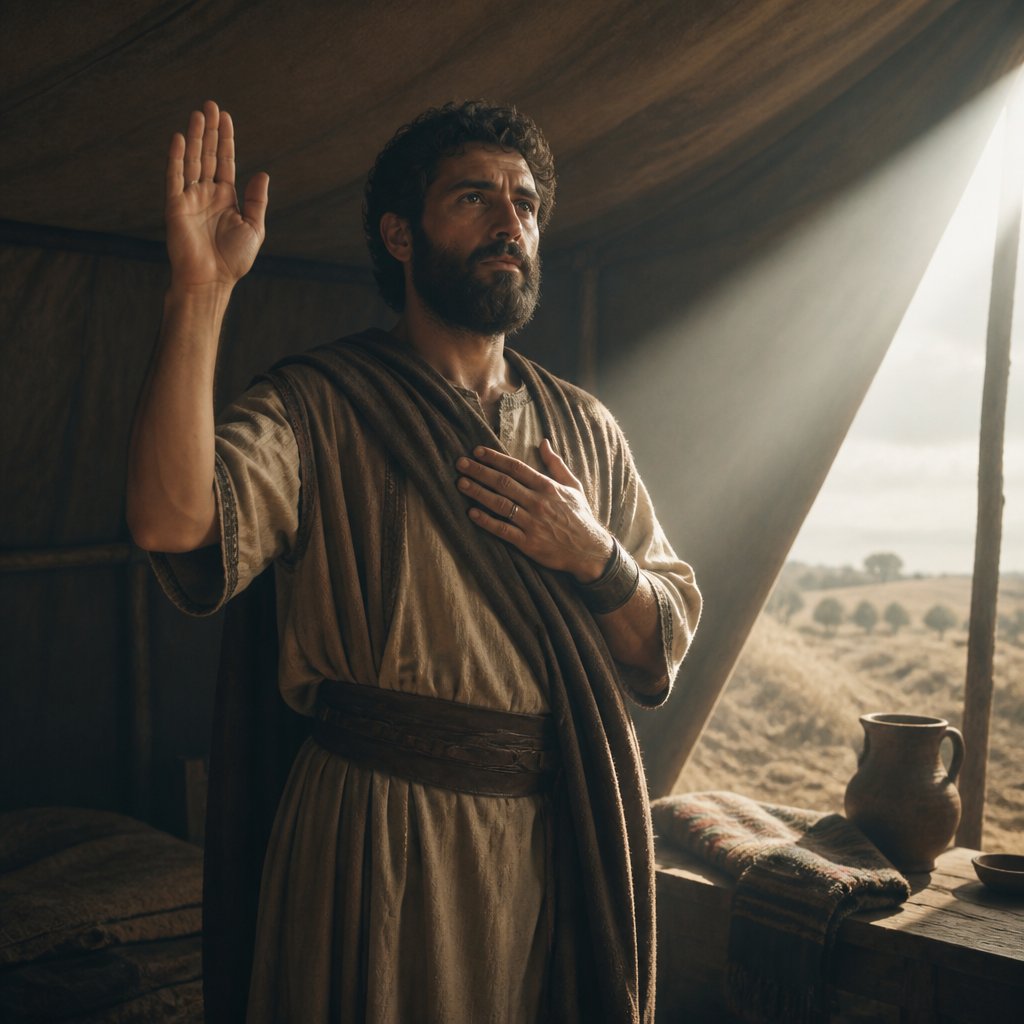
The Bible verse 2 Samuel 3:9 in the King James Version reads: "So do God to Abner, and more also, except, as the Lord hath sworn to David, even so I do to him;"
To fully grasp the meaning and significance of this verse, we must examine the context in which it is situated. In the larger narrative of the Bible, the book of 2 Samuel details the tumultuous and often violent events surrounding the establishment of King David as the ruler of Israel. In this particular verse, we find Joab, the commander of David's army, speaking to Abner, who was previously the commander of the army of Saul, David's predecessor. At this point in the story, Abner is seeking to make amends with David and facilitate the reunification of the kingdom under his rule.
However, Joab's response to Abner's overtures is one of skepticism and suspicion. In this verse, he invokes the name of God as a witness to his declaration concerning Abner, saying "So do God to Abner, and more also, except, as the Lord hath sworn to David, even so I do to him." Essentially, Joab is calling upon God to hold Abner accountable for his actions and to bring about justice. He also alludes to the sworn promises that the Lord has made to David, indicating that he will ensure that these promises are fulfilled in relation to Abner.
From a thematic standpoint, this verse touches on several important elements of the biblical narrative. Firstly, it underscores the concept of divine justice and the belief that God will ultimately bring about retribution for wrongdoing. Joab's invocation of God's authority in this context serves as a reminder that all actions have consequences, and that ultimately, God's will is sovereign.
Additionally, the verse speaks to the theme of loyalty and the fulfillment of promises. Throughout the Bible, the importance of honoring commitments and remaining steadfast in one's allegiances is a recurring motif. In this case, Joab is affirming his commitment to David and emphasizing the significance of God's promises in shaping the course of events.
Symbolically, this verse can be seen as serving as a representation of the larger struggle for power and stability within the kingdom of Israel. The interactions between Joab and Abner reflect the broader tensions and conflicts that characterized this period in biblical history. By invoking God's name in this context, the verse also symbolizes the overarching presence of divine authority in human affairs.
In conclusion, 2 Samuel 3:9 in the King James Version encapsulates several key themes and motifs that are central to the biblical narrative. Through its depiction of Joab's invocation of God's authority and his emphasis on the fulfillment of God's promises, the verse provides a glimpse into the complex interplay between human actions and divine will. Its broader thematic and symbolic implications make it a rich and thought-provoking passage within the larger context of the Bible.
Get our apps


Artwork for 2 Samuel 3:9

2 Samuel 3:9 - "So do God to Abner, and more also, except, as the LORD hath sworn to David, even so I do to him;"
"So do God to Abner, and more also, except, as the LORD hath sworn to David, even so I do to him;" - 2 Samuel 3:9

2 Samuel 9:3 - "And the king said, Is there not yet any of the house of Saul, that I may shew the kindness of God unto him? And Ziba said unto the king, Jonathan hath yet a son, which is lame on his feet."

2 Samuel 11:9
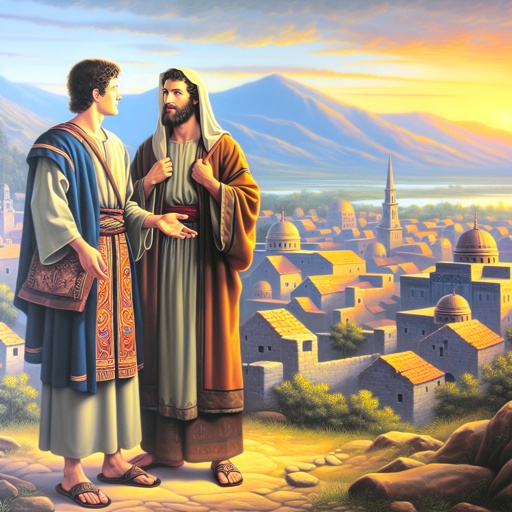
1 Samuel 9:1-2

2 samuel 9:7 fhdhdhdhhd

1 Samuel 3:9 - "Therefore Eli said unto Samuel, Go, lie down: and it shall be, if he call thee, that thou shalt say, Speak, LORD; for thy servant heareth. So Samuel went and lay down in his place."

2 Samuel 3:2 - "¶ And unto David were sons born in Hebron: and his firstborn was Amnon, of Ahinoam the Jezreelitess;"

2 Samuel 4:3 - "And the Beerothites fled to Gittaim, and were sojourners there until this day.)"

2 Samuel 3:4 - "And the fourth, Adonijah the son of Haggith; and the fifth, Shephatiah the son of Abital;"

2 Samuel 2:9 - "And made him king over Gilead, and over the Ashurites, and over Jezreel, and over Ephraim, and over Benjamin, and over all Israel."

2 Samuel 3:3 - "And his second, Chileab, of Abigail the wife of Nabal the Carmelite; and the third, Absalom the son of Maacah the daughter of Talmai king of Geshur;"

2 Samuel 8:9 - "¶ When Toi king of Hamath heard that David had smitten all the host of Hadadezer,"

2 Samuel 3:11 - "And he could not answer Abner a word again, because he feared him."

2 Samuel 9:9 - "¶ Then the king called to Ziba, Saul's servant, and said unto him, I have given unto thy master's son all that pertained to Saul and to all his house."

2 Samuel 6:9 - "And David was afraid of the LORD that day, and said, How shall the ark of the LORD come to me?"

2 Samuel 15:9 - "And the king said unto him, Go in peace. So he arose, and went to Hebron."

2 Samuel 3:33 - "And the king lamented over Abner, and said, Died Abner as a fool dieth?"

2 Samuel 3:5 - "And the sixth, Ithream, by Eglah David's wife. These were born to David in Hebron."

2 Samuel 2:3 - "And his men that were with him did David bring up, every man with his household: and they dwelt in the cities of Hebron."

2 Samuel 9:1 - "And David said, Is there yet any that is left of the house of Saul, that I may shew him kindness for Jonathan's sake?"

2 Samuel 7:3 - "And Nathan said to the king, Go, do all that is in thine heart; for the LORD is with thee."

1 Samuel 9:3 - "And the asses of Kish Saul's father were lost. And Kish said to Saul his son, Take now one of the servants with thee, and arise, go seek the asses."

2 Samuel 11:9 - "But Uriah slept at the door of the king's house with all the servants of his lord, and went not down to his house."

1 Samuel 2:9 - "He will keep the feet of his saints, and the wicked shall be silent in darkness; for by strength shall no man prevail."

2 Samuel 9:5 - "¶ Then king David sent, and fetched him out of the house of Machir, the son of Ammiel, from Lo-debar."

2 Samuel 3:37 - "For all the people and all Israel understood that day that it was not of the king to slay Abner the son of Ner."

2 Samuel 22:9 - "There went up a smoke out of his nostrils, and fire out of his mouth devoured: coals were kindled by it."

2 Samuel 9:13 - "So Mephibosheth dwelt in Jerusalem: for he did eat continually at the king's table; and was lame on both his feet."

2 Samuel 5:9 - "So David dwelt in the fort, and called it the city of David. And David built round about from Millo and inward."