What does 2 Samuel 5:24 mean?
“And let it be, when thou hearest the sound of a going in the tops of the mulberry trees, that then thou shalt bestir thyself: for then shall the LORD go out before thee, to smite the host of the Philistines.” — 2 Samuel 5:24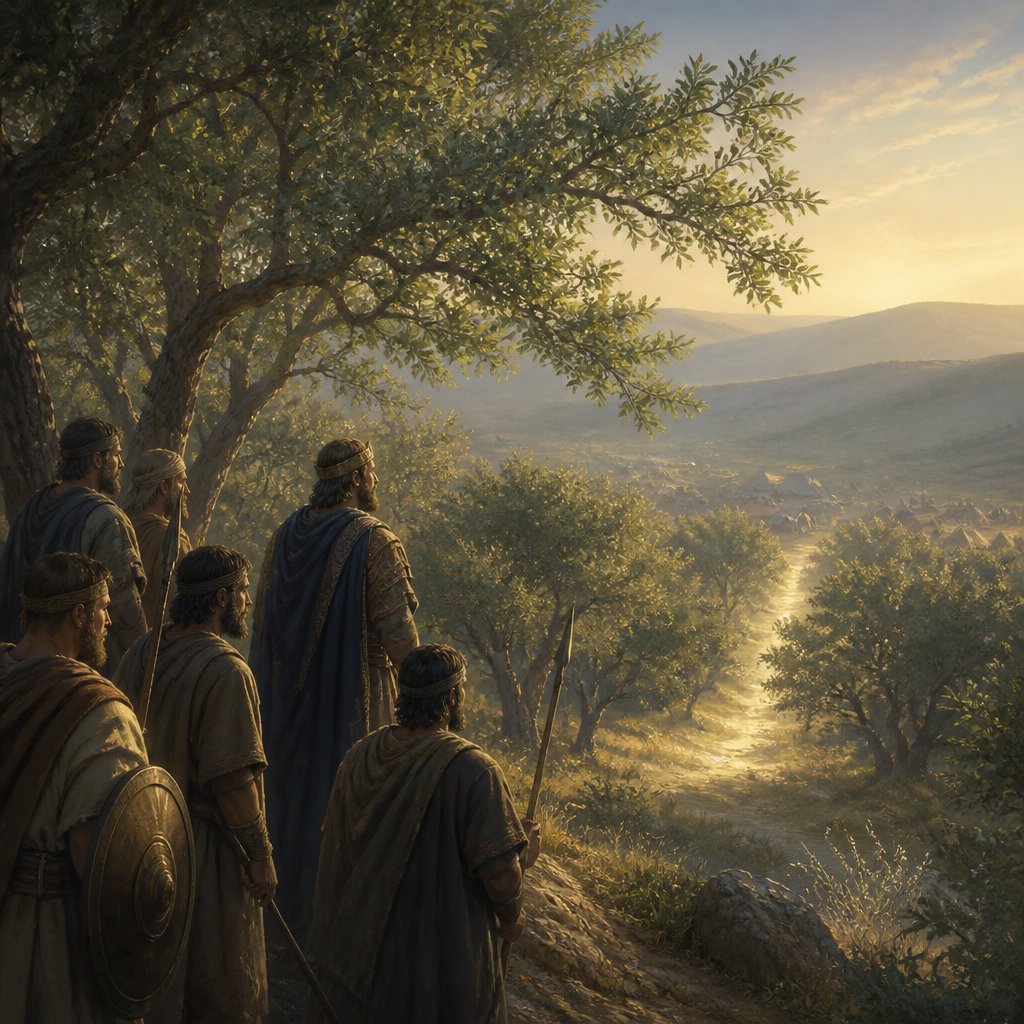
2 Samuel 5:24 (KJV) "And let it be, when thou hearest the sound of a going in the tops of the mulberry trees, that then thou shalt bestir thyself: for then shall the Lord go out before thee, to smite the host of the Philistines."
The book of 2 Samuel is part of the historical books of the Old Testament and it details the reign of King David. This particular verse comes at a time when David is facing the Philistines in battle. The verse describes the sound of a going in the tops of the mulberry trees as a signal for David to engage in battle because the Lord will go out before him to defeat the Philistines.
This verse is rich in symbolism, imagery, and themes that are both timeless and relevant to contemporary life. One of the primary themes is the idea of divine guidance and intervention. The sound of a going in the tops of the mulberry trees represents the presence and movement of God, signaling to David that he should act and that the Lord will be with him. This highlights the belief in the Old Testament that God was directly involved in the affairs of humanity, especially in matters of war and conquest. This theme of divine intervention and guidance is a central tenet of many religious traditions and continues to be a source of comfort and hope for believers today.
Another important theme in this verse is the idea of obedience and attentiveness to God's signs and guidance. David is instructed to listen for the sound in the mulberry trees and to act when he hears it. This implies a deep level of trust and responsiveness to God's prompting, a willingness to act in faith even when the outcome is uncertain. This theme of obedience and faithfulness is a recurring motif throughout the Bible, exemplified in the lives of biblical figures such as Abraham, Moses, and the prophets. It speaks to the importance of aligning one's will with God's and following His guidance, even when it may seem counterintuitive or difficult.
The specific imagery of the mulberry trees and the sound in their tops is also significant. In the ancient Near East, the mulberry tree was often associated with mourning and sorrow, as it was believed to be the tree on which King David would retreat to lament the loss of his son Absalom. Yet in this verse, the mulberry trees are used as a symbol of hope and victory, as their sound signals God's triumph over the Philistines. This juxtaposition of mourning and victory serves as a reminder that God can bring about redemption and joy even in the midst of sorrow and hardship. It also underscores the idea that God can work through unexpected and ordinary means to accomplish His purposes.
In a broader context, this verse also speaks to the larger narrative of the Davidic monarchy and the establishment of Israel as a powerful and favored nation. The defeat of the Philistines was a pivotal moment in David's reign, solidifying his authority and fulfilling God's promise to deliver His people from their enemies. It reinforces the theme of God's faithfulness to His covenant and His commitment to protecting and preserving Israel as His chosen people.
In conclusion, 2 Samuel 5:24 is a verse rich in symbolism and themes that resonate across time and culture. It speaks to the enduring beliefs of divine intervention, obedience, and the triumph of God's will over human adversity. Its imagery and language evoke a sense of awe and reverence for the power of God and His ability to work through ordinary circumstances to accomplish His purposes. As such, it continues to inspire and encourage readers to trust in God's guidance and to remain obedient to His will, even in the face of uncertainty and challenge.
Get our apps


Artwork for 2 Samuel 5:24

2 Samuel 5:24 - "And let it be, when thou hearest the sound of a going in the tops of the mulberry trees, that then thou shalt bestir thyself: for then shall the LORD go out before thee, to smite the host of the Philistines."
"And let it be, when thou hearest the sound of a going in the tops of the mulberry trees, that then thou shalt bestir thyself: for then shall the LORD go out before thee, to smite the host of the Philistines." - 2 Samuel 5:24

2 Samuel 24:5 - "¶ And they passed over Jordan, and pitched in Aroer, on the right side of the city that lieth in the midst of the river of Gad, and toward Jazer:"

2 Samuel 5:12

2 Samuel 19:24

2 Samuel 24:22

2 Samuel 24:22

2 Samuel 24:22

2 Samuel 20:24 - "And Adoram was over the tribute: and Jehoshaphat the son of Ahilud was recorder:"

1 Samuel 24:5 - "And it came to pass afterward, that David's heart smote him, because he had cut off Saul's skirt."

2 Samuel 5:15 - "Ibhar also, and Elishua, and Nepheg, and Japhia,"

2 Samuel 5:16 - "And Elishama, and Eliada, and Eliphalet."

2 Samuel 24:19 - "And David, according to the saying of Gad, went up as the LORD commanded."
"¶ And they passed over Jordan, and pitched in Aroer, on the right side of the city that lieth in the midst of the river of Gad, and toward Jazer:" - 2 Samuel 24:5

"And Elishama, and Eliada, and Eliphalet." - 2 Samuel 5:16

2 Samuel 24:6 - "Then they came to Gilead, and to the land of Tahtim-hodshi; and they came to Dan-jaan, and about to Zidon,"

2 Samuel 23:24 - "Asahel the brother of Joab was one of the thirty; Elhanan the son of Dodo of Beth-lehem,"

2 Samuel 22:24 - "I was also upright before him, and have kept myself from mine iniquity."

2 Samuel 17:24 - "Then David came to Mahanaim. And Absalom passed over Jordan, he and all the men of Israel with him."

1 Samuel 2:24 - "Nay, my sons; for it is no good report that I hear: ye make the LORD'S people to transgress."

2 Samuel 5:18 - "The Philistines also came and spread themselves in the valley of Rephaim."

2 Samuel 5:7 - "Nevertheless David took the strong hold of Zion: the same is the city of David."

2 Samuel 24:11 - "For when David was up in the morning, the word of the LORD came unto the prophet Gad, David's seer, saying,"

2 Samuel 5:22 - "¶ And the Philistines came up yet again, and spread themselves in the valley of Rephaim."

2 Samuel 5:21 - "And there they left their images, and David and his men burned them."

2 Samuel 24:8 - "So when they had gone through all the land, they came to Jerusalem at the end of nine months and twenty days."

"Ibhar also, and Elishua, and Nepheg, and Japhia," - 2 Samuel 5:15

2 Samuel 2:24 - "Joab also and Abishai pursued after Abner: and the sun went down when they were come to the hill of Ammah, that lieth before Giah by the way of the wilderness of Gibeon."

2 Samuel 5:10 - "And David went on, and grew great, and the LORD God of hosts was with him."

2 Samuel 5:4 - "¶ David was thirty years old when he began to reign, and he reigned forty years."