What does 2 Timothy 1:9-10 mean?
“Who hath saved us, and called us with an holy calling, not according to our works, but according to his own purpose and grace, which was given us in Christ Jesus before the world began, But is now made manifest by the appearing of our Saviour Jesus Christ, who hath abolished death, and hath brought life and immortality to light through the gospel:” — 2 Timothy 1:9-10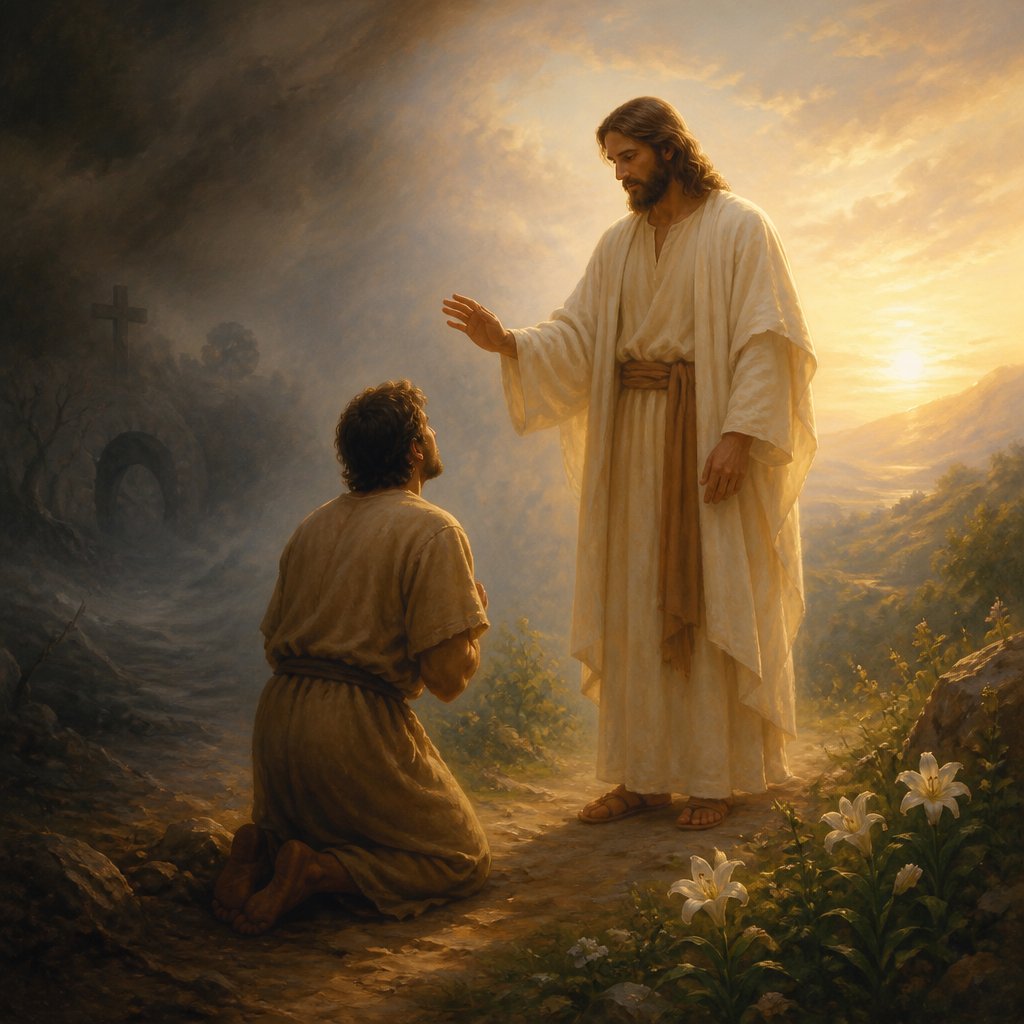
2 Timothy 1:9-10 (KJV) states: "Who hath saved us, and called us with an holy calling, not according to our works, but according to his own purpose and grace, which was given us in Christ Jesus before the world began, But is now made manifest by the appearing of our Saviour Jesus Christ, who hath abolished death, and hath brought life and immortality to light through the gospel."
In these two verses, the apostle Paul is writing to his dear friend and fellow servant of Christ, Timothy. The verses are a powerful declaration of the salvation and calling that all believers in Christ have received. The passages highlight the grace of God and the redemptive work of Jesus Christ, making them central themes in the Christian faith.
The verses begin by emphasizing the source of salvation and calling, which is not based on the good deeds or merit of individuals, but on God's purpose and grace. This is a foundational Christian belief that salvation is a gift of God, given freely by His grace and not earned through human effort. This truth is reiterated in several other New Testament passages, including Ephesians 2:8-9, which states, "For by grace are ye saved through faith; and that not of yourselves: it is the gift of God: Not of works, lest any man should boast." This serves as a reminder that God's love for humanity is so great that He offers salvation as a free gift, not something that can be earned or deserved.
The verses also speak to the eternal nature of God's purpose and grace, as they were given to believers in Christ before the world began. This emphasizes the sovereignty of God in His plan of redemption, which has been in place since the beginning of time. It also underscores the preeminence of Christ, as the plan of salvation was given in Him before the foundation of the world.
The passage then shifts to the manifestation of God's purpose and grace through the appearing of Jesus Christ. This refers to the incarnation of Christ, His earthly ministry, crucifixion, and resurrection. Through His life and sacrificial death, Jesus fulfilled the purpose and grace of God, making them visible and accessible to humanity.
The verses further declare the impact of Christ's work, stating that He abolished death and brought life and immortality to light through the gospel. This reflects the victory of Christ over sin and death through His resurrection. In 1 Corinthians 15:55-57, Paul writes, "O death, where is thy sting? O grave, where is thy victory? The sting of death is sin; and the strength of sin is the law. But thanks be to God, which giveth us the victory through our Lord Jesus Christ." The gospel message proclaims that through Christ's triumph over death, believers have the hope of eternal life and immortality.
In terms of context, these verses were written during Paul's second imprisonment in Rome, where he faced impending martyrdom. Despite his circumstances, Paul's letter to Timothy was one of encouragement and exhortation to remain steadfast in the faith. In this sense, the verses serve as a reminder of the eternal significance of the gospel, even in the face of persecution and death. They point to the hope and assurance that believers have in Christ, regardless of their earthly circumstances.
Symbolically, these verses represent the core tenets of the Christian faith – salvation by grace through faith in Christ, the eternal purpose of God, the manifestation of His plan through Jesus, and the victory over sin and death. They encapsulate the hope and assurance that believers have in Christ, as well as the steadfastness of God's purpose and grace throughout history. Ultimately, 2 Timothy 1:9-10 serves as a powerful declaration of the foundational truths of Christianity and the hope that believers have in Christ.
Get our apps


Artwork for 2 Timothy 1:9-10

2 Timothy 1:9-10 - "Who hath saved us, and called us with an holy calling, not according to our works, but according to his own purpose and grace, which was given us in Christ Jesus before the world began, But is now made manifest by the appearing of our Saviour Jesus Christ, who hath abolished death, and hath brought life and immortality to light through the gospel."
"Who hath saved us, and called us with an holy calling, not according to our works, but according to his own purpose and grace, which was given us in Christ Jesus before the world began, But is now made manifest by the appearing of our Saviour Jesus Christ, who hath abolished death, and hath brought life and immortality to light through the gospel." - 2 Timothy 1:9-10

1 Timothy 2:9-10 - "In like manner also, that women adorn themselves in modest apparel, with shamefacedness and sobriety; not with broided hair, or gold, or pearls, or costly array; But (which becometh women professing godliness) with good works."

1 Timothy 2:10 - "But (which becometh women professing godliness) with good works."

2 Timothy 1:9 - "Who hath saved us, and called us with an holy calling, not according to our works, but according to his own purpose and grace, which was given us in Christ Jesus before the world began,"

1 Timothy 2:9 - "In like manner also, that women adorn themselves in modest apparel, with shamefacedness and sobriety; not with broided hair, or gold, or pearls, or costly array;"

2 Timothy 1:7

2 Timothy 1:7

2 Timothy 1:7

2 Timothy 1:7

2 Timothy 1:7

2 Timothy 1:7

2 Timothy 1:7

2 Timothy 1:7

2 Timothy 1:7

2 Timothy 1:7

2 Timothy 1:7

2 Timothy 1:7

2 Timothy 1:7

2 Timothy 1:7

2 Timothy 1:7

2 Timothy 1:7
2 Timothy 1:7

2 Timothy 1:7

2 Timothy 1:7

2 Timothy 1:7

2 Timothy 1:7

2 Timothy 1:7

2 Timothy 1:7

2 Timothy 1:7