What does 2 Timothy 2:21 mean?
“If a man therefore purge himself from these, he shall be a vessel unto honour, sanctified, and meet for the master’s use, and prepared unto every good work.” — 2 Timothy 2:21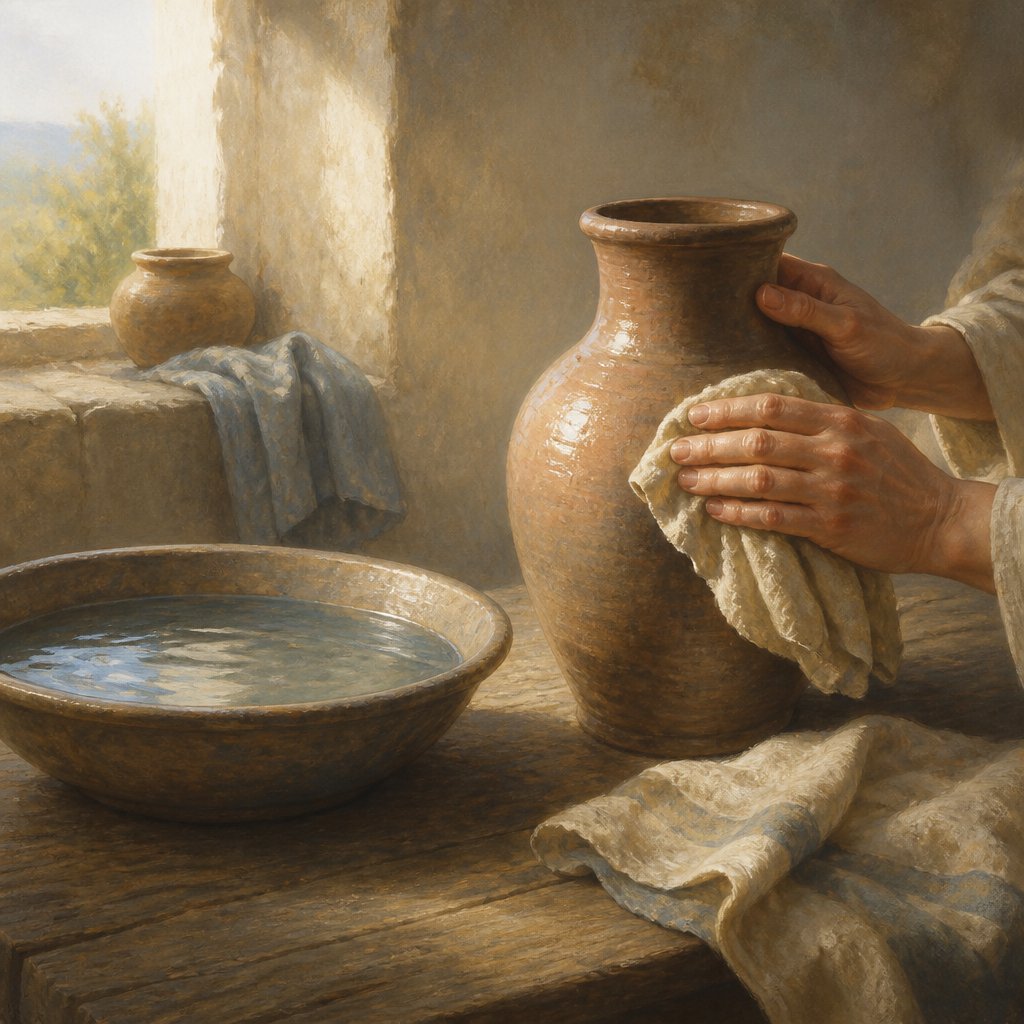
The verse 2 Timothy 2:21 from the King James Version of the Bible reads:
"If a man therefore purge himself from these, he shall be a vessel unto honour, sanctified, and meet for the master's use, and prepared unto every good work."
This verse is a part of the second letter that the Apostle Paul wrote to his disciple, Timothy. In this letter, Paul provides instructions and encouragement to Timothy, who was a young pastor in the early Christian church. In the immediate context of this verse, Paul discusses the behavior that is appropriate for a servant of God. He advises Timothy to avoid quarreling, to be gentle and patient, and to correct opponents with kindness and humility. This verse specifically addresses the idea of purging oneself from ungodly behavior in order to be used by God for honorable purposes.
The overarching theme of this verse is the concept of sanctification. The verse emphasizes the idea that in order to be used by God for His purposes, one must actively purify themselves from ungodly behavior. This purification process is essential for believers to become vessels of honor, sanctified and suitable for God's use. This theme is consistent with other teachings in the Bible about the importance of holiness and sanctification in the lives of believers.
The verse begins with the conditional statement, "If a man therefore purge himself from these." This implies that the process of sanctification is an active and personal endeavor. It requires a conscious effort on the part of the individual to rid themselves of sinful behavior and attitudes. The word "therefore" points back to the previous verses, which discuss the need for believers to turn away from unrighteousness and pursue righteousness.
The phrase "he shall be a vessel unto honour" speaks to the outcome of the purging process. Those who actively seek to remove ungodliness from their lives will become vessels of honor in God's service. This imagery of being a vessel conveys the idea of being a useful instrument in the hands of God. It suggests that those who are sanctified can be used by God for His purposes and to bring glory to Him.
The next phrase, "sanctified, and meet for the master's use," further emphasizes the result of the purging process. Sanctification is the process of being set apart for God's purposes and being made holy. Those who are sanctified are now suitable for the master's use. This highlights the idea that God has specific purposes for His people, and those who are sanctified are prepared and available for His use.
The verse concludes with the phrase, "and prepared unto every good work." This emphasizes the ultimate purpose of sanctification – to be prepared for every good work that God has planned for His people. This highlights the idea that sanctification is not just about personal holiness, but also about being proactive in fulfilling God's will and advancing His kingdom.
Symbolically, the image of being a vessel unto honor indicates that believers are called to be set apart and useful for God's purposes. This imagery highlights the idea of being a willing and available instrument in the hands of God. The process of purging oneself from ungodliness can be likened to the refining of metal, where impurities are removed to make the metal suitable for a specific purpose. In the same way, believers need to actively remove sinful attitudes and behaviors in order to be used by God for His purposes.
In conclusion, 2 Timothy 2:21 emphasizes the importance of sanctification in the life of a believer. It highlights the need for believers to actively remove ungodliness from their lives in order to be vessels of honor, sanctified and suitable for God's use. This verse encourages believers to pursue personal holiness and readiness to carry out God's good work. The imagery and language used in this verse serve as a powerful reminder of the call to be set apart and available for God's purposes.
Get our apps


Artwork for 2 Timothy 2:21

2 Timothy 2:21 - "If a man therefore purge himself from these, he shall be a vessel unto honour, sanctified, and meet for the master's use, and prepared unto every good work." The image should not depict explicit or offensive content but be symbolic.

"If a man therefore purge himself from these, he shall be a vessel unto honour, sanctified, and meet for the master's use, and prepared unto every good work." - 2 Timothy 2:21

2 Timothy 2:1 - "Thou therefore, my son, be strong in the grace that is in Christ Jesus."

"Thou therefore, my son, be strong in the grace that is in Christ Jesus." - 2 Timothy 2:1

2 Timothy 4:21 - "Do thy diligence to come before winter. Eubulus greeteth thee, and Pudens, and Linus, and Claudia, and all the brethren."

2 Timothy 2:22

2 Timothy 2:15

1 Timothy 2:1-7

1 Timothy 2:1-7

2 Timothy 1:2 - "To Timothy, my dearly beloved son: Grace, mercy, and peace, from God the Father and Christ Jesus our Lord."

2 Timothy 2:6 - "The husbandman that laboureth must be first partaker of the fruits."

2 Timothy 2:17 - "And their word will eat as doth a canker: of whom is Hymenaeus and Philetus;"

2 Timothy 2:3 - "Thou therefore endure hardness, as a good soldier of Jesus Christ."

2 Timothy 2:16 - "But shun profane and vain babblings: for they will increase unto more ungodliness."

2 Timothy 2:23 - "But foolish and unlearned questions avoid, knowing that they do gender strifes."

2 Timothy 2:13 - "If we believe not, yet he abideth faithful: he cannot deny himself."

2 Timothy 2:11 - "It is a faithful saying: For if we be dead with him, we shall also live with him:"

2 Timothy 2:7 - "Consider what I say; and the Lord give thee understanding in all things."

2 Timothy 1:7

2 Timothy 1:7

1 Timothy 2:8

2 Timothy 1:7

2 Timothy 1:7

2 Timothy 1:7

2 Timothy 1:7

2 Timothy 1:7

2 Timothy 4 7

2 Timothy 1:7

2 Timothy 1:7

2 Timothy 1:7