What does Acts 11:8 mean?
“But I said, Not so, Lord: for nothing common or unclean hath at any time entered into my mouth.” — Acts 11:8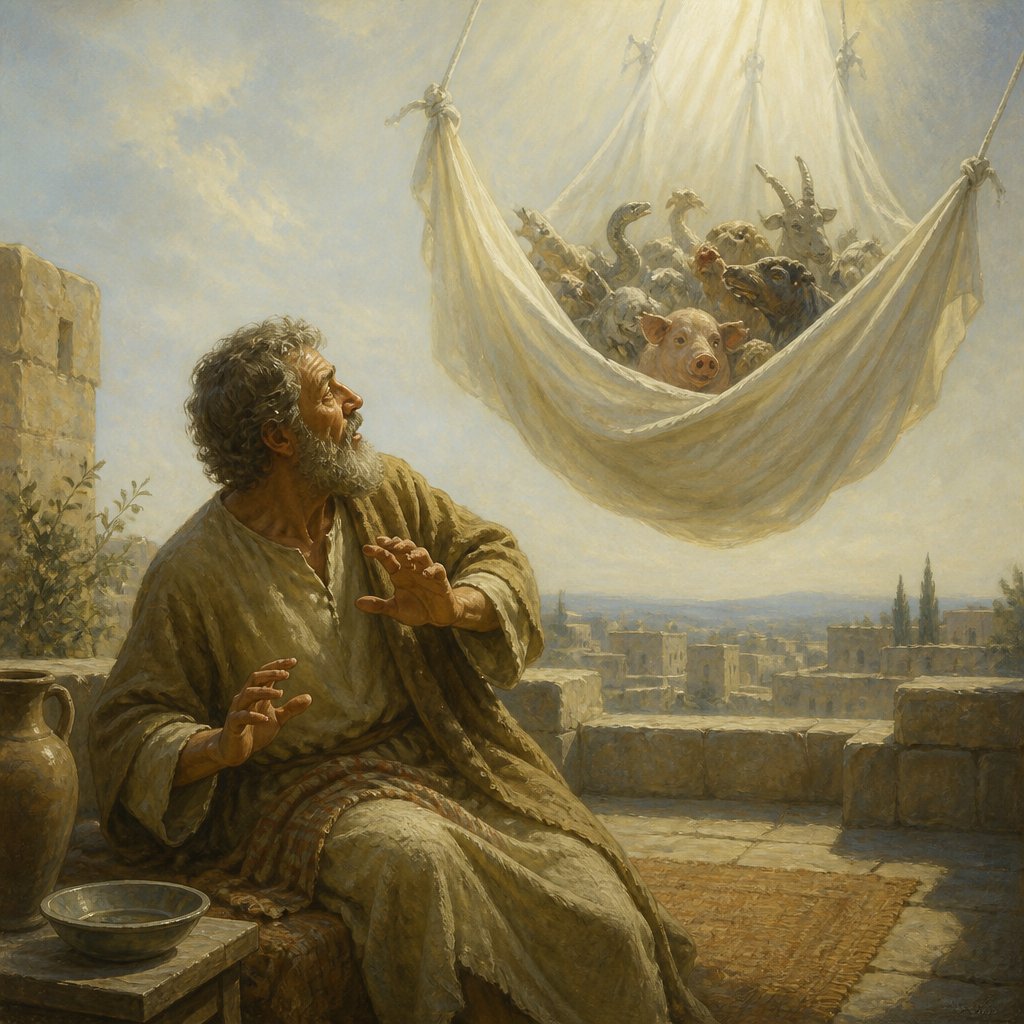
The Bible verse Acts 11:8 from the King James Version (KJV) reads: "But I said, Not so, Lord: for nothing common or unclean hath at any time entered into my mouth."
This verse is part of a larger passage in the book of Acts that recounts the revelation Peter received from God regarding the acceptance of Gentiles into the Christian community. To fully understand the meaning and significance of Acts 11:8, it is important to delve into the historical and cultural context, as well as the theological themes and symbolism present in the verse.
The book of Acts is a continuation of the Gospel of Luke and is traditionally attributed to the authorship of Luke, a companion of the Apostle Paul. It is primarily a historical account of the early Christian church and the spread of the gospel following the death and resurrection of Jesus Christ. Acts 11:8 is situated within the larger narrative of Peter's vision and his subsequent visit to the house of the Gentile centurion Cornelius. In this vision, Peter is instructed by God to eat unclean animals, which he initially refuses to do so, stating "Not so, Lord: for nothing common or unclean hath at any time entered into my mouth."
This verse captures Peter's initial reluctance to accept and associate with Gentiles, as they were considered unclean and outside the bounds of Jewish religious and social practice. The Mosaic law, which governed the lives of the Jewish people, contained strict dietary and purity regulations that set them apart from other nations. By declaring that nothing common or unclean had entered into his mouth, Peter is reaffirming his commitment to upholding these laws and customs.
However, this verse also serves as a pivotal moment in Peter's understanding of God's plan for the inclusion of Gentiles in the Christian community. The broader context of the passage reveals that God responds to Peter's refusal by declaring, "What God hath cleansed, that call not thou common" (Acts 11:9). This statement challenges Peter's preconceived notions of purity and inclusion, and prepares him for his encounter with Cornelius, a Gentile who receives the Holy Spirit and is baptized into the faith.
The theological themes present in Acts 11:8 include the universal nature of the gospel and the breaking down of barriers between Jew and Gentile. The verse underscores the transformative power of God's grace and challenges the ethnocentric view held by many early Jewish Christians. It also emphasizes the importance of obedience and openness to God's leading, even when it contradicts one's cultural or religious background.
Symbolically, Peter's vision and his subsequent actions serve as a metaphor for the broader mission of the early church to reach all nations with the message of salvation. The inclusion of Acts 11:8 in the biblical narrative serves as a reminder for Christians to reexamine their own prejudices and practices, and to embrace the diversity and unity found in the body of Christ.
In conclusion, Acts 11:8 from the King James Version of the Bible holds deep theological and symbolic significance within the broader context of the book of Acts. It challenges traditional boundaries and exclusions, and calls for a radical reimagining of God's inclusive and redemptive work in the world. This verse encourages believers to embrace the transformative power of God's grace and to reach out to those who may be considered "common or unclean" in the eyes of the world. It stands as a powerful reminder of the universal nature of the gospel and the boundless love of God for all people.
Get our apps


Artwork for Acts 11:8

Acts 11:8 - "But I said, Not so, Lord: for nothing common or unclean hath at any time entered into my mouth."
"But I said, Not so, Lord: for nothing common or unclean hath at any time entered into my mouth." - Acts 11:8

Acts 8:11 - "And to him they had regard, because that of long time he had bewitched them with sorceries."
"And to him they had regard, because that of long time he had bewitched them with sorceries." - Acts 8:11

Acts 8:8 - "And there was great joy in that city."

Acts 20:11

Acts 11:2

Acts 11:2

Acts 19: 11

Acts 19:11

acts 3 11

Acts 11:2

"And there was great joy in that city." - Acts 8:8

Acts 1:8

Acts 8:33

1 Kings 11:41 - "¶ And the rest of the acts of Solomon, and all that he did, and his wisdom, are they not written in the book of the acts of Solomon?"

Acts 1:1-11

Acts 1:1-11

Acts 4:8-12

Acts 11:25 - "Then departed Barnabas to Tarsus, for to seek Saul:"

Acts 16:8 - "And they passing by Mysia came down to Troas."

Acts 19:11 - "And God wrought special miracles by the hands of Paul:"

ACTS 8:30 Philip and the Ethiopian

Acts 11:11 - "And, behold, immediately there were three men already come unto the house where I was, sent from Caesarea unto me."

Acts 8:17 - "Then laid they their hands on them, and they received the Holy Ghost."

Acts 11:27 - "¶ And in these days came prophets from Jerusalem unto Antioch."

Acts 17:8 - "And they troubled the people and the rulers of the city, when they heard these things."

Acts 8:28 - "Was returning, and sitting in his chariot read Esaias the prophet."

Acts 11:30 - "Which also they did, and sent it to the elders by the hands of Barnabas and Saul."

Acts 11:3 - "Saying, Thou wentest in to men uncircumcised, and didst eat with them."