What does Acts 14:18 mean?
“And with these sayings scarce restrained they the people, that they had not done sacrifice unto them.” — Acts 14:18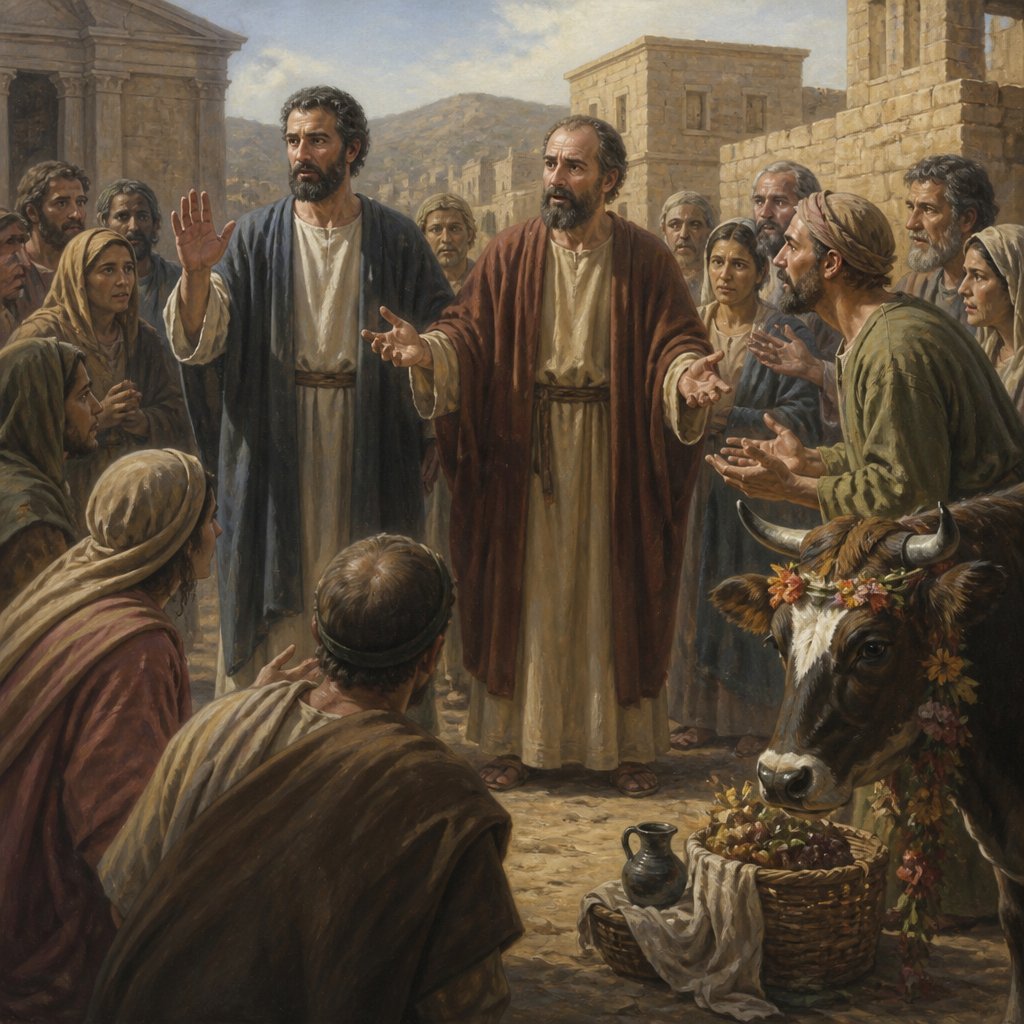
The Bible verse Acts 14:18 in the King James Version (KJV) states: "And with these sayings scarce restrained they the people, that they had not done sacrifice unto them."
This verse comes from the book of Acts, which is the fifth book of the New Testament and serves as a continuation of the Gospel of Luke. It is primarily focused on the spread of Christianity after the death and resurrection of Jesus Christ. The verse in question is part of the passage in which Paul and Barnabas are in Lystra, and the people mistake them for gods after witnessing a miraculous healing.
The context of this verse is crucial to understanding its meaning. Paul and Barnabas are preaching the gospel in Lystra when they encounter a man who had been crippled from birth. Paul, filled with the Holy Spirit, commands the man to stand up, and he miraculously begins to walk. The people witnessing this miracle are so amazed that they believe Paul and Barnabas to be gods in human form, specifically Hermes and Zeus, and they begin to prepare sacrifices for them.
When Paul and Barnabas realize what is happening, they tear their clothes and emphasize that they are mere men, not gods. They urge the people to turn from their idols and worship the living God. Afterward, they are able to restrain the people from making sacrifices to them, as described in Acts 14:18.
The theme of this verse can be understood in the context of the larger passage as a commentary on the dangers of idolatry and the truth of the one living God. In the ancient world, idol worship was prevalent, and people often attributed divine qualities to humans, animals, or objects. In this instance, the people of Lystra were so impressed by the miraculous healing that they immediately sought to worship Paul and Barnabas as gods. This reaction reflects the human propensity to elevate the extraordinary, whether it be individuals or ideas, to divine status.
The verse also underscores the power of the gospel to transform lives and redirect worship to its rightful object. Paul and Barnabas firmly reject the offering of sacrifices, insisting that the people should instead focus on the one true God. This rejection of idolatry and proclamation of the gospel points to the central message of Christianity: the worship of the one living God, who has revealed Himself through Jesus Christ.
Furthermore, the symbolism in this verse is rich and multilayered. It serves as a powerful reminder that humanity's tendency toward idolatry and the worship of false gods is nothing new. The people of Lystra, like many others throughout history, were easily swayed by the extraordinary and were willing to attribute divine status to fallible human beings.
In addition, the tearing of clothes by Paul and Barnabas signifies an act of desperation and denial. The tearing of clothes in ancient Jewish culture was a sign of mourning, distress, or shock. By tearing their clothes, Paul and Barnabas are expressing their horror at the people's misguided beliefs and their insistence that they are simply human messengers of the true God.
Overall, Acts 14:18 in the King James Version presents a compelling narrative with profound themes and symbolism. It highlights the danger of idolatry, the power of the gospel to redirect worship, and the enduring struggle of humanity to recognize and worship the one living God. It ultimately serves as a powerful testament to the truth and authority of Christianity.
Get our apps


Artwork for Acts 14:18

Acts 14:18 - "And with these sayings scarce restrained they the people, that they had not done sacrifice unto them."
"And with these sayings scarce restrained they the people, that they had not done sacrifice unto them." - Acts 14:18

2 Kings 14:18 - "And the rest of the acts of Amaziah, are they not written in the book of the chronicles of the kings of Judah?"

"And the rest of the acts of Amaziah, are they not written in the book of the chronicles of the kings of Judah?" - 2 Kings 14:18
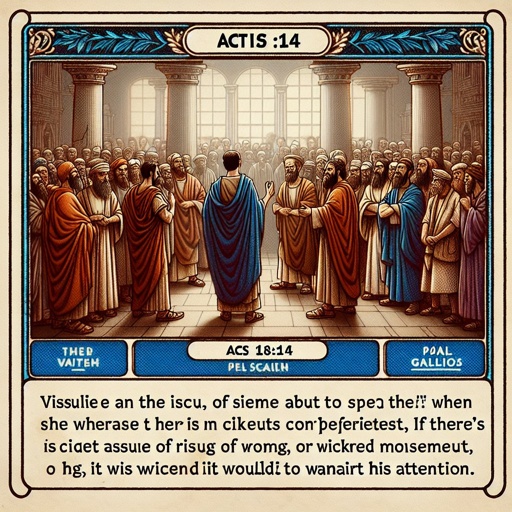
Acts 18:14 - "And when Paul was now about to open his mouth, Gallio said unto the Jews, If it were a matter of wrong or wicked lewdness, O ye Jews, reason would that I should bear with you:"

Acts 18:12

Acts 18:12

Acts 14:17

Acts 14:7 - "And there they preached the gospel."

Acts 14:28 - "And there they abode long time with the disciples."

Acts 18:16 - "And he drave them from the judgment seat."

Acts 19:18 - "And many that believed came, and confessed, and shewed their deeds."

Acts 14:14 - "Which when the apostles, Barnabas and Paul, heard of, they rent their clothes, and ran in among the people, crying out,"

Acts 7:18 - "Till another king arose, which knew not Joseph."
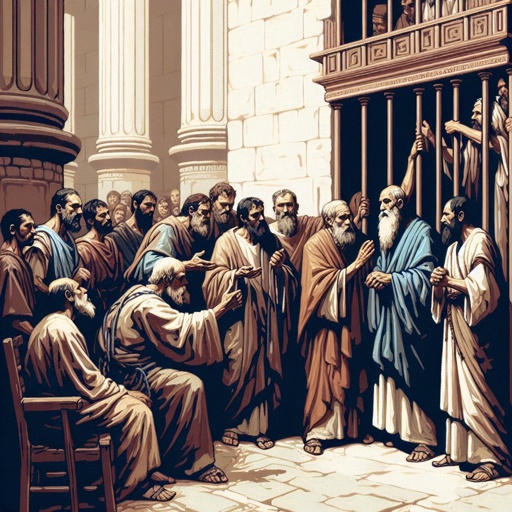
Acts 5:18 - "And laid their hands on the apostles, and put them in the common prison."

"And there they preached the gospel." - Acts 14:7

Acts 18:1 - "After these things Paul departed from Athens, and came to Corinth;"

Acts 18:13 - "Saying, This fellow persuadeth men to worship God contrary to the law."

Acts 18:4 - "And he reasoned in the synagogue every sabbath, and persuaded the Jews and the Greeks."

Acts 13:18 - "And about the time of forty years suffered he their manners in the wilderness."

Genesis 18-14

Acts 15:18 - "Known unto God are all his works from the beginning of the world."

Acts 18:28 - "For he mightily convinced the Jews, and that publickly, shewing by the scriptures that Jesus was Christ."

Acts 10:18 - "And called, and asked whether Simon, which was surnamed Peter, were lodged there."

Acts 14:24 - "And after they had passed throughout Pisidia, they came to Pamphylia."

Acts 27:18 - "And we being exceedingly tossed with a tempest, the next day they lightened the ship;"

Acts 18:20 - "When they desired him to tarry longer time with them, he consented not;"

Depict the events of Acts 19:14-17

Acts 4:18 - "And they called them, and commanded them not to speak at all nor teach in the name of Jesus."

Acts 18:9 - "Then spake the Lord to Paul in the night by a vision, Be not afraid, but speak, and hold not thy peace:"